Industry Knowledge Extension
Uses of a Shell Core Machine
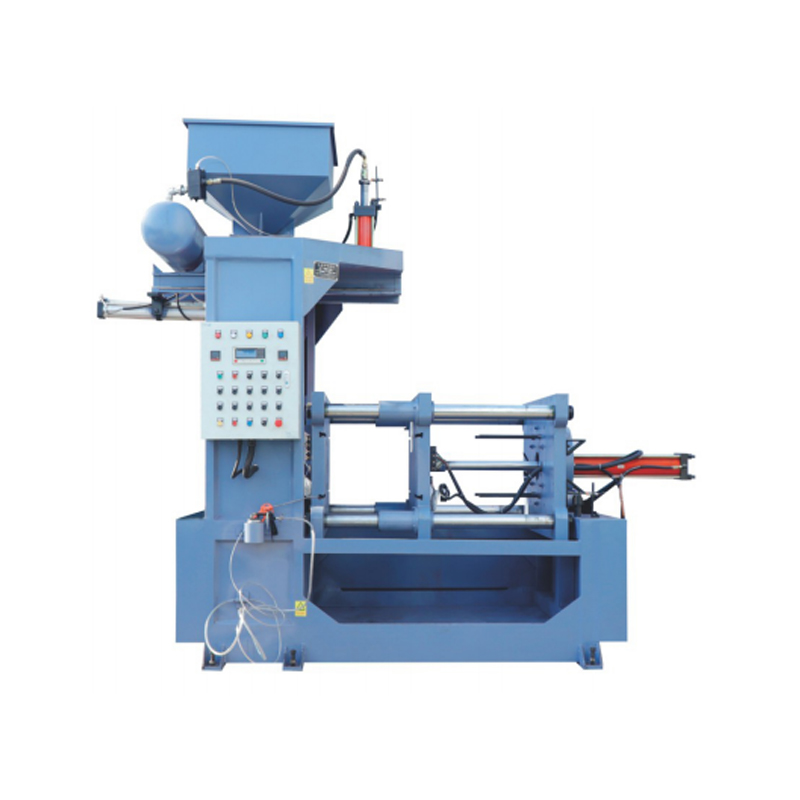
Shell core machines are essential in foundry operations for producing precise sand cores used in metal casting. These machines allow foundries to create complex internal geometries within castings that would be difficult or impossible to achieve using conventional molding techniques. The primary function of a shell core machine is to apply a thin, uniform layer of resin-coated sand onto heated core boxes. The heat cures the resin, forming a hard shell that can be removed and assembled into the mold for casting.
Shell cores are widely applied in industries requiring high-quality castings, including automotive, aerospace, and heavy machinery manufacturing. For example, in automotive engine production, shell cores are used to form intricate passages for coolant and oil flow. In aerospace, precision shell cores enable the creation of lightweight components with complex internal cavities, enhancing overall performance and reducing material waste.
Shell core machines offer advantages in efficiency and consistency. Compared to traditional hand-molded cores, these machines significantly reduce labor intensity while maintaining uniform core thickness. This consistency improves the dimensional accuracy of castings, minimizes post-casting machining, and ensures structural integrity. Shell core machines play a vital role in modern foundry operations, combining precision, repeatability, and productivity.
Manual and Automatic Shell Core Machines
Shell core machines can generally be categorized into manual and automatic types, each with distinct operational features and applications. The following table summarizes the differences:
|
Feature
|
Manual Shell Core Machine
|
Automatic Shell Core Machine
|
|
Operation
|
Operator manually rotates and applies sand to core boxes
|
Machine automatically rotates core boxes and applies sand
|
|
Labor Requirement
|
High; requires skilled operator
|
Low; minimal human intervention
|
|
Production Speed
|
Moderate; limited by operator efficiency
|
High; continuous and uniform operation
|
|
Core Complexity
|
Suitable for simple to moderately complex cores
|
Handles highly complex and intricate cores
|
|
Consistency
|
Dependent on operator skill; may vary
|
High; uniform core thickness and quality
|
|
Maintenance
|
Simple; easy to troubleshoot
|
More complex; requires technical knowledge
|
|
Cost
|
Lower initial investment
|
Higher initial investment, offset by productivity gains
|
Manual machines are often used in small-scale foundries or for prototyping due to their lower cost and flexibility. Operators can adjust rotation speed and sand application manually, which is useful when producing cores of varying sizes. Automatic machines, in contrast, are favored in large-scale production environments where consistency, speed, and repeatability are critical. They can run continuously with minimal operator supervision, producing high volumes of cores with uniform quality.
Common Malfunctions of Vertical Parting Line Shell Core Shooter Machines
Despite their reliability, vertical parting line shell core shooter machines can experience certain malfunctions that affect performance. Awareness of these common issues helps operators maintain efficiency and reduce downtime.
1. Uneven Shell Thickness
One of the frequent problems is inconsistent shell thickness. This may occur due to improper sand-resin mixture, uneven core box heating, or irregular rotation speed. The result is cores that may crack or fail during casting. Regular inspection of the sand-resin ratio and calibration of heating elements can mitigate this issue.
2. Incomplete Shell Curing
Incomplete curing happens when the core box temperature is too low or curing time is insufficient. This soft cores that cannot withstand handling or mold assembly. Ensuring proper temperature settings and cycle timing is essential to achieve fully cured cores.
3. Mechanical Malfunctions
Mechanical failures, such as worn gears, faulty bearings, or misaligned core box rotation mechanisms, can disrupt operation. Regular preventive maintenance, lubrication, and timely replacement of worn parts help minimize these breakdowns.
4. Resin Overflow or Leakage
Resin overflow can occur if the injection system is over-pressurized or nozzle alignment is incorrect. Excess resin may form uneven surfaces or clog the machine. Periodic checks of the injection system and precise calibration prevent resin-related problems.
5. Electrical or Control Issues
For machines with automated functions, electrical or control system faults can stop production or cause erratic operation. Issues may arise from damaged wiring, malfunctioning sensors, or software errors. Routine inspections and adherence to the manufacturer’s guidelines for control systems are necessary for smooth operation.
 En
En
 русский
 Español
 عربى
عربى Deutsch