 En
En
 русский
 Español
 عربى
عربى Deutsch
Aluminum Alloy Castings: Versatility in Modern Manufacturing
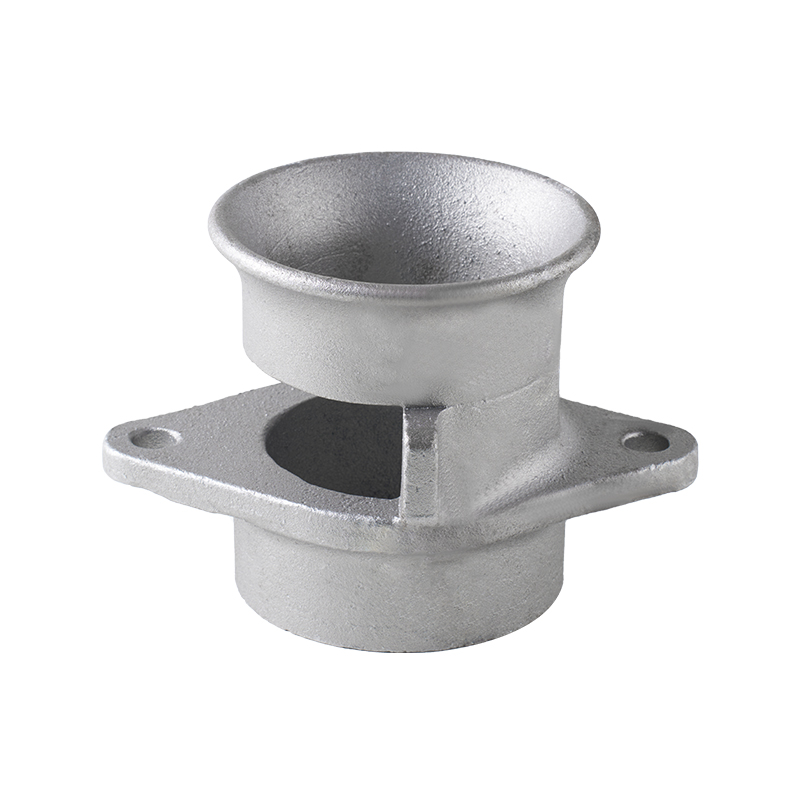
Industry News-Aluminum alloy castings are fundamental components found in countless products, from the engine block in a car to the intricate frame of a smartphone. Their widespread use is no accident; it is the result of a favorable combination of material properties, manufacturing flexibility, and economic efficiency. As industries push for lighter, stronger, and more sustainable products, understanding the multifaceted nature of aluminum castings becomes essential.
Inherent Advantages of Material Properties
The popularity of aluminum alloys for casting stems from a unique set of physical and mechanical characteristics. First and foremost is their excellent strength-to-weight ratio. Aluminum is about one-third the density of steel, yet when alloyed with elements like silicon, copper, or magnesium, it can achieve substantial strength suitable for structural applications. This makes it ideal for weight-sensitive industries like automotive and aerospace, where reducing mass directly improves fuel efficiency and performance. Secondly, aluminum offers good corrosion resistance. It naturally forms a thin, protective oxide layer when exposed to air, which shields the base material from further degradation, enhancing product longevity with minimal need for coatings. Furthermore, aluminum alloys exhibit high thermal and electrical conductivity, making them the material of choice for heat sinks, motor housings, and electrical components. Finally, the castability of many aluminum alloys is superb; they flow easily into complex molds, replicate fine details, and shrink predictably, allowing for the production of intricate shapes that would be difficult or costly to machine from solid billet.
Primary Manufacturing Processes and Techniques
Not all aluminum castings are made the same. The chosen process significantly impacts the part's integrity, cost, and suitable applications. Die casting is a high-pressure process where molten aluminum is injected into a reusable steel mold. It is excellent for high-volume production of thin-walled components with excellent dimensional consistency, such as transmission cases or power tool housings. Sand casting uses expendable sand molds formed around a pattern. It is far more economical for low volumes or very large parts, like engine blocks or pump housings, though with a slightly rougher surface finish. Permanent mold casting (also known as gravity die casting) uses reusable metal molds but relies on gravity to fill the cavity. It strikes a balance, offering better mechanical properties and surface finish than sand casting with higher throughput. For the highest integrity aerospace or military components, investment casting (the lost-wax process) is employed. It creates extremely complex, near-net-shape parts with superior surface finish and dimensional accuracy, though at a higher cost per unit.
Diverse Applications Across Major Industries
The utility of aluminum castings is demonstrated by their penetration into nearly every engineering sector. In the automotive industry, they are pivotal for lightweighting, used in engine blocks, cylinder heads, wheels, and structural brackets, directly contributing to improved mileage and reduced emissions. The aerospace and defense sector relies on high-integrity castings for critical components in aircraft actuators, missile housings, and satellite fittings, where reliability is paramount. Consumer electronics utilize thin-walled, heat-conductive die castings for the structural frames of laptops and smartphones, as well as for dissipating heat in LEDs and processors. Furthermore, industrial machinery depends on the durability and wear resistance of aluminum castings for pump impellers, compressor parts, and housing for robotic arms. This broad applicability underscores the material's adaptability to different performance requirements and economic constraints.
Design, Quality, and Specification Considerations
Successfully implementing an aluminum casting requires careful attention to design and specification. Key considerations include alloy selection, as each series offers a different balance of strength, corrosion resistance, and castability. For instance, A356 (Al-Si-Mg) is known for excellent castability and good strength with heat treatment, while 380 (Al-Si-Cu) is a common high-production die-casting alloy. Design for manufacturability is crucial, involving appropriate draft angles, uniform wall thicknesses, and judicious use of ribs to prevent defects like porosity or shrinkage during solidification. Quality is ensured through various post-casting treatments and inspections. Common treatments include heat treatment (T6 temper) to enhance strength, and shot peening to improve fatigue resistance. Inspection methods range from dimensional checks to advanced non-destructive testing like X-ray radiography to detect internal flaws. The following table summarizes some key alloy choices and their typical uses:
|
Alloy Series |
Primary Alloying Elements |
Key Characteristics |
Common Applications |
|
3xx.x (e.g., 380) |
Silicon, Copper |
Excellent fluidity, good strength, fair corrosion resistance |
High-volume die castings: automotive transmissions, appliance housings. |
|
4xx.x (e.g., 443) |
Silicon |
Good corrosion resistance, moderate strength, excellent castability |
General-purpose castings: cooking utensils, marine fittings. |
|
5xx.x (e.g., 518) |
Magnesium |
High corrosion resistance, good machinability, moderate strength |
Marine and architectural components. |
|
7xx.x (e.g., A357) |
Silicon, Magnesium |
High strength with heat treatment, good ductility, aerospace quality |
Aerospace structural castings, high-performance automotive parts. |
Related products
-

The HZ700-C Fully Automatic Core Shooter With Core Pulling is an advanced molding solution designed ...
See Details -

The Fully Automatic Environmentally Friendly Core Shooting Machine is a highly advanced, eco-conscio...
See Details -

The HZ700-X Fully Automatic Core Shooting Machine With Lower Mold Removal is designed to make core p...
See Details -

The HZ700-X Fully Automatic Core Shooting Machine With Lower Mold Removal is designed for molding ap...
See Details -

The HZ800-X Hydraulic Fully Automatic Core Shooting Machine is designed for efficient and accurate c...
See Details -

The environmentally friendly core shooting machine with lower mold removable is a high-performance s...
See Details -

The Lower Mold Removable Type Environmentally Friendly Core Shooting Machine with Door is an advance...
See Details -

The HZ800-X Hydraulic Environmentally Friendly Core Shooting Machine is an advanced automatic core p...
See Details

Welcome to our company to design according to your design and sample proofing.
Contact Infor
-
 Haixi Town, Pingyang County, Wenzhou City, Zhejiang Province, China
-
 +86-13868387823
-
 +86-577-65197155
-
 +86-577-65197166
-
 13868387823@139.com
huazhultd@outlook.com
Quick Links
Products
Copyright © Ruian Huazhu Machinery Co., Ltd. All Rights Reserved.

