 En
En
 русский
 Español
 عربى
عربى Deutsch
Engineering Machinery Castings: Process and Considerations
Industry News-Engineering machinery castings are metal components formed by pouring molten metal into a mold cavity that holds the shape of a required part. This manufacturing method is foundational for producing large, complex, or strong parts used in construction, mining, agricultural, and material handling equipment. The process allows for the integration of features that would be difficult or inefficient to machine from solid stock or fabricate from plate. The viability of a casting is evaluated through its specific advantages in design and material properties, balanced against inherent product issues that require careful management throughout design and production.
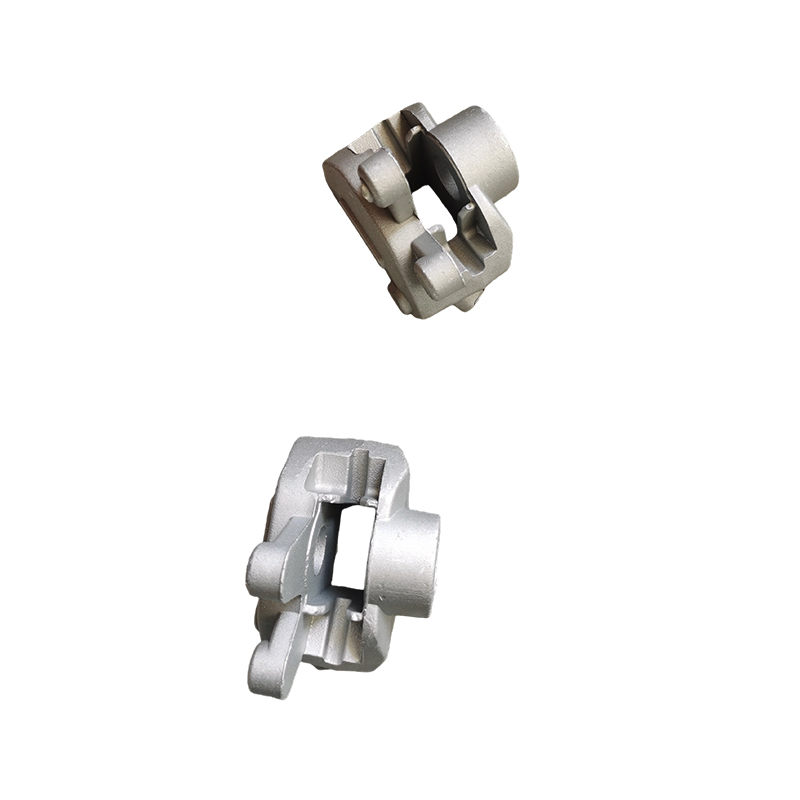
The Process of Engineering Machinery Castings
The production of a casting follows a defined sequence, from pattern creation to finished machining.
• Pattern and Mold Creation: A physical replica of the part, called a pattern, is made from wood, metal, or plastic. For sand casting—the most common method for large machinery parts—a mold is formed by packing refractory sand around the pattern in a flask. The pattern is removed, leaving a cavity. Cores (separate sand shapes) may be placed in the mold to form internal passages.
• Melting and Pouring: Metal, typically grey iron, ductile iron, or carbon steel, is melted in a furnace to a specified temperature and chemistry. The molten metal is then poured from a ladle into the sprue (entry channel) of the prepared mold, filling the cavity.
• Solidification and Cooling: The metal is allowed to cool and solidify within the mold. Cooling rates are controlled, as rapid cooling in certain areas can create internal stresses or variations in material structure.
• Shakeout and Cleaning: Once solidified, the mold is broken apart in a shakeout process, and the raw casting is removed. Adherent sand and the internal core sand are cleaned off using shot blasting or other methods. The gating system (channels that delivered the metal) is cut off.
• Heat Treatment and Finishing: Many castings undergo heat treatment, such as annealing or normalizing, to relieve internal stresses and achieve desired mechanical properties. Finally, critical surfaces are machined to precise dimensions and tolerances on machine tools.
Advantages of Engineering Machinery Castings
The use of castings in heavy machinery is driven by several distinct benefits related to design, material, and production.
Design Flexibility and Integration
Casting allows for the creation of complex, three-dimensional geometries that are challenging to produce otherwise. Components like hydraulic valve bodies, engine blocks, and structural housings can be formed with internal passages, mounting bosses, and reinforcement ribs integrated into a single piece. This consolidates assemblies, reducing part count, weight, and potential leak paths compared to fabrication from multiple welded plates.
Material Property Suitability
Foundries can select alloys whose properties are matched to the part's function. Grey iron offers good vibration damping and wear resistance for bases and frames. Ductile iron provides higher strength and toughness for gears and high-stress components. Steel castings are used for the most demanding applications requiring high yield strength and impact resistance. The casting process itself can be tailored to influence grain structure and properties in different sections of the part.
Economic Viability for Volume and Size
For medium to high production volumes, casting can be a cost-effective method. While pattern and mold tooling require initial investment, the per-unit cost for subsequent parts is often lower than extensive machining from a solid forging. Crucially, casting is one of the few practical methods for manufacturing very large, single-piece components—such as the mainframe of a mining excavator—that would be otherwise impossible or prohibitively expensive to make as a monolithic unit.
Product Issues of Engineering Machinery Castings
Despite their advantages, castings can exhibit specific defects that must be controlled through rigorous process design and quality assurance.
| Product Issue Category | Common Defects | Primary Causes and Control Measures |
| Internal Integrity | Porosity (gas or shrinkage), inclusions (sand or slag). | Improventing gating/riser design to ensure directional solidification; degassing molten metal; maintaining clean melt and mold surfaces. |
| Dimensional Accuracy | Shrinkage variation, warpage, mismatched mold halves. | Accounting for precise shrinkage allowances in pattern design; ensuring mold rigidity and correct clamping; controlling cooling rates. |
| Surface Quality | Sand burn-on, rough surface finish, cold shuts (imperfect fusion of metal streams). | Using finer facing sand; controlling pour temperature and speed to ensure complete filling without turbulence. |
| Material Property | Hard spots, inconsistent microstructure, low mechanical strength in certain sections. | Precise control of alloy chemistry and pouring temperature; application of correct heat treatment cycles post-casting. |
These issues are not inevitable but represent known challenges in the foundry process. Their management is the focus of quality control protocols, including non-destructive testing (like ultrasonic or radiographic inspection) and destructive testing of sample castings to verify mechanical properties. Close collaboration between the machinery designer and the foundry during the part design phase is essential to mitigate these risks by designing the part for manufacturability.
Related products
-

The Fully Automatic Core Shooter with Core Pulling is designed to streamline the production process,...
See Details -

The Fully Automatic Environmentally Friendly Core Shooting Machine is a highly advanced, eco-conscio...
See Details -

The fully automatic core shooting machine with lower mold removal is a front-end solution designed t...
See Details -

The Lower Mold Removable Core Shooting Machine is designed to offer high flexibility and reliability...
See Details -

The Hydraulic Fully Automatic Core Shooting Machine is an essential tool in modern casting operation...
See Details -

The environmentally friendly core shooting machine with lower mold removable is a high-performance s...
See Details -

The Lower Mold Removable Type Environmentally Friendly Core Shooting Machine with Door is an advance...
See Details -

The Hydraulic Environmentally Friendly Core Shooting Machine is a front-end technology designed to o...
See Details

Welcome to our company to design according to your design and sample proofing.
Contact Infor
-
 Haixi Town, Pingyang County, Wenzhou City, Zhejiang Province, China
-
 +86-13868387823
-
 +86-577-65197155
-
 +86-577-65197166
-
 13868387823@139.com
huazhultd@outlook.com
Quick Links
Products
Copyright © Ruian Huazhu Machinery Co., Ltd. All Rights Reserved.

