 En
En
 русский
 Español
 عربى
عربى Deutsch
The Evolving Performance of Stainless Steel Castings
Industry News-The Evolving Performance of Stainless Steel Castings
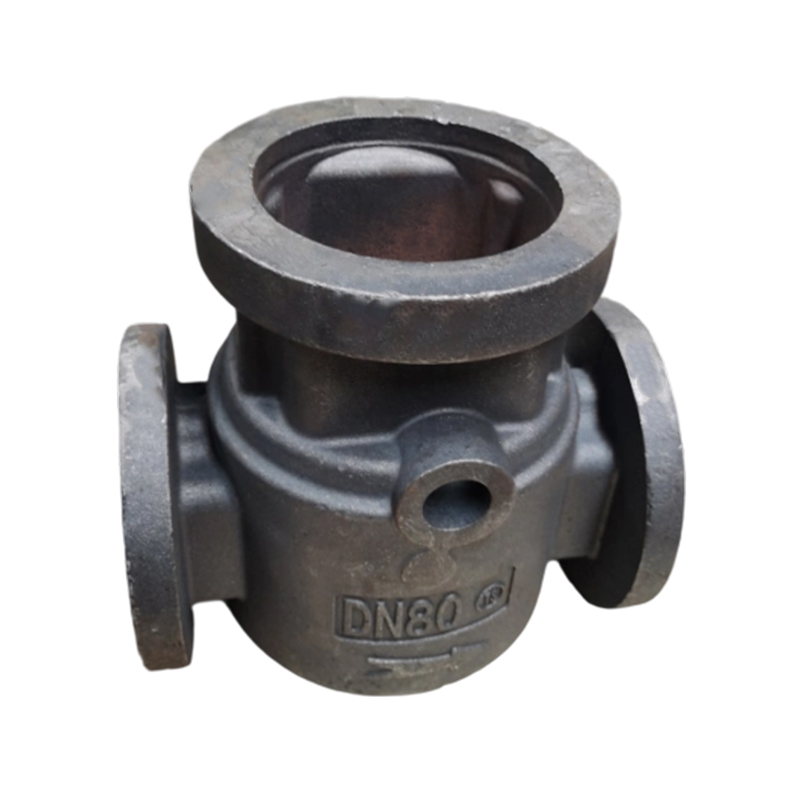
Stainless steel castings have long been a cornerstone of demanding industrial applications, prized for their inherent corrosion resistance and mechanical strength. However, their performance profile is not static; it has undergone significant evolution driven by advancements in metallurgy, foundry technology, and quality control. This continuous improvement has expanded their capabilities, allowing them to meet more rigorous standards across diverse sectors, from energy generation to biomedical engineering. The journey of these castings reflects a broader trend in manufacturing: the pursuit of greater reliability, complexity, and efficiency in component production.
Advancements in Metallurgical Control and Alloy Development
Enhanced Consistency and Purity: Historically, the performance of stainless steel castings could be variable due to inconsistencies in melt chemistry and the presence of impurities. Modern foundries employ advanced melting furnaces, often using Argon Oxygen Decarburization (AOD) or vacuum induction melting. These processes allow for exceptionally precise control over the chemical composition, reducing impurities like sulfur and phosphorus that can weaken grain boundaries. This results in more predictable and homogeneous mechanical properties throughout the casting.
Tailored Alloy Formulations: Beyond standard grades like CF-8M (316 equivalent) or CN-7M (alloy 20), the development of "super" duplex and super austenitic stainless steels has been pivotal. These alloys, such as CD3MWCuN (super duplex) or CK3MCuN (super austenitic), offer dramatically improved strength and resistance to pitting and stress corrosion cracking in aggressive chloride environments. This allows for thinner, lighter, and longer-lasting cast components in offshore and chemical processing applications.
Grain Structure Optimization: Foundries now better control the solidification process through techniques like controlled pouring and the use of specialized chills and risers. The goal is to promote a finer, more uniform grain structure. A fine grain size generally improves the casting's tensile strength, toughness, and fatigue resistance, leading to enhanced performance under cyclic loading conditions.
Evolution in Integrity, Precision, and Application
Improvement in Internal Soundness: A major historical limitation was internal porosity and shrinkage, which could compromise pressure integrity and mechanical strength. The adoption of simulation software has been transformative. Foundries can now digitally simulate the mold filling and solidification process before any metal is poured, identifying potential defect locations and optimizing the gating and feeding system design to ensure sound, dense castings.
Increased Geometric Complexity and Precision: Traditional sand casting had limitations on dimensional accuracy and surface finish. The rise of investment casting (lost-wax) and improved no-bake sand systems has enabled the production of castings with extremely complex internal passages, near-net shapes, and superior surface finishes (often under 125 Ra microinches). This reduces costly secondary machining and allows for more optimized, integrated component designs.
Expansion into High-Tech Sectors: As performance reliability has increased, stainless steel castings have entered new frontiers. In the biomedical field, investment-cast implants and surgical instrument components benefit from the material's biocompatibility and the process's ability to create complex forms. In power generation, advanced austenitic and high-alloy castings are critical for turbine housings and valves that must withstand ultra-supercritical steam conditions, demonstrating exceptional creep resistance at elevated temperatures.
Key Performance Changes Over Time
|
Performance Aspect |
Historical Characteristic |
Modern Advancement |
Driving Technology |
|
Mechanical Properties |
Adequate but variable strength and toughness. |
Higher, more consistent yield & tensile strength; improved fatigue life. |
AOD/VIM melting, grain refinement, heat treatment control. |
|
Corrosion Resistance |
Good general resistance in standard grades. |
Superior resistance to pitting/crevice corrosion in harsh chlorides. |
Development of super duplex & super austenitic alloys with high Mo, N content. |
|
Internal Soundness |
Potential for shrinkage and porosity defects. |
High-integrity, radiographically sound castings. |
Solidification modeling software, optimized feeding systems. |
|
Design Flexibility |
Limited complexity and surface finish. |
Extreme geometric complexity, near-net shape, excellent surface finish. |
Advanced investment casting, precision sand molding techniques. |
|
Application Scope |
Primarily industrial valves, pumps, and general hardware. |
Expanded to biomedical implants, aerospace, and advanced energy systems. |
Enhanced reliability meeting stringent sector-specific standards. |
Related products
-

The HZ700-C Fully Automatic Core Shooter With Core Pulling is an advanced molding solution designed ...
See Details -

The Fully Automatic Environmentally Friendly Core Shooting Machine is a highly advanced, eco-conscio...
See Details -

The HZ700-X Fully Automatic Core Shooting Machine With Lower Mold Removal is designed to make core p...
See Details -

The HZ700-X Fully Automatic Core Shooting Machine With Lower Mold Removal is designed for molding ap...
See Details -

The HZ800-X Hydraulic Fully Automatic Core Shooting Machine is designed for efficient and accurate c...
See Details -

The environmentally friendly core shooting machine with lower mold removable is a high-performance s...
See Details -

The Lower Mold Removable Type Environmentally Friendly Core Shooting Machine with Door is an advance...
See Details -

The HZ800-X Hydraulic Environmentally Friendly Core Shooting Machine is an advanced automatic core p...
See Details

Welcome to our company to design according to your design and sample proofing.
Contact Infor
-
 Haixi Town, Pingyang County, Wenzhou City, Zhejiang Province, China
-
 +86-13868387823
-
 +86-577-65197155
-
 +86-577-65197166
-
 13868387823@139.com
huazhultd@outlook.com
Quick Links
Products
Copyright © Ruian Huazhu Machinery Co., Ltd. All Rights Reserved.

