Industry Knowledge Extension
Dynamic Mold Flip Shell Core Machine: The Science and Technology Behind It
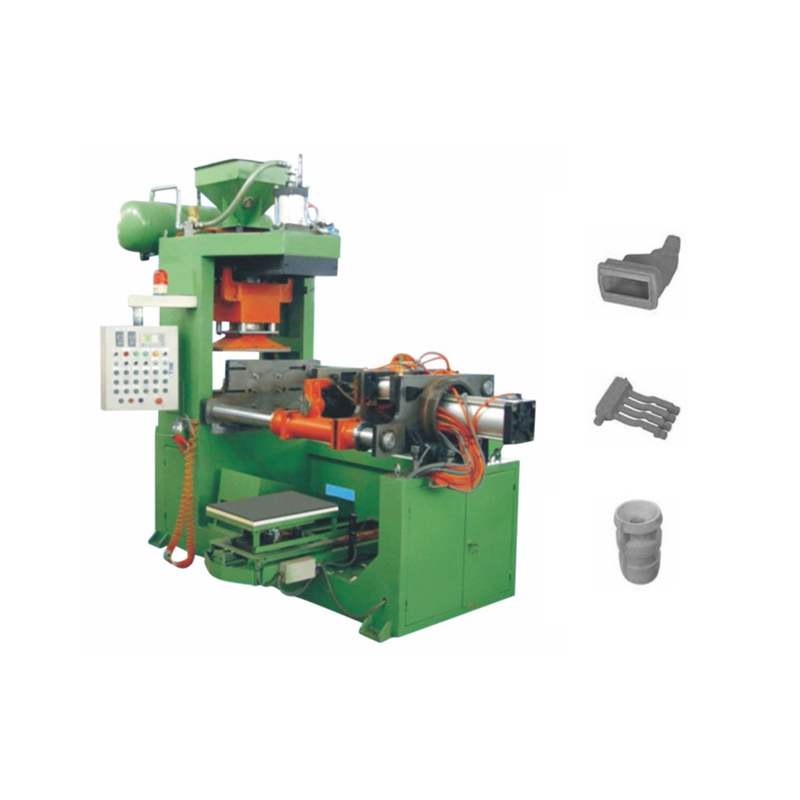
The dynamic mold flip shell core machine represents a significant advancement in foundry technology, designed to improve the precision and efficiency of core production. Unlike traditional stationary core shooters, this machine features a flipping mechanism that rotates the core box during the shell formation process. By doing so, it ensures even sand-resin distribution, reduces voids, and enhances the structural integrity of the final shell core.
The technology behind these machines integrates controlled heating, automated rotation, and precise sand-resin deposition. Heat is applied to the core box to cure the resin-coated sand quickly and evenly. At the same time, the flipping mechanism rotates the core box at calculated intervals to allow uniform coating on all surfaces, including intricate internal cavities. Advanced sensors monitor temperature and rotation speed, ensuring that each core meets the required specifications.
Dynamic mold flip shell core machines are especially valuable in producing complex engine components, aerospace parts, and other castings with detailed internal geometries. Their ability to maintain consistent shell thickness and reduce manual intervention results in fewer defective cores, lower labor costs, and higher productivity. In addition, the machine’s automation minimizes operator exposure to resin dust, contributing to a safer working environment. Overall, this machine exemplifies how precise engineering and automation enhance foundry efficiency while ensuring high-quality castings.
The Convenience of Metal Casting Hot Box Shell Core Shooters in Modern Society
Metal casting hot box shell core shooters have become an indispensable tool in modern manufacturing, offering a combination of speed, accuracy, and repeatability. These machines utilize heated core boxes to cure resin-coated sand rapidly, creating durable cores for various casting applications. In contemporary industries, where production cycles are shorter and quality demands are higher, hot box shell core shooters deliver significant advantages.
One of the primary benefits of these machines is their efficiency. Automated or semi-automated hot box systems allow for continuous core production, reducing manual labor and accelerating the overall casting process. This is particularly important in automotive and machinery industries, where high-volume production is essential. By producing cores consistently, these machines also ensure dimensional accuracy, reducing post-casting adjustments and material wastage.
In addition, hot box shell core shooters enhance workplace convenience and safety. Operators can produce multiple cores simultaneously, with minimal direct contact with hot surfaces or resin-coated sand. The machines’ automation reduces repetitive manual tasks, allowing workers to focus on inspection, maintenance, and process optimization. Furthermore, the predictability and precision of these machines support environmentally conscious manufacturing by lowering scrap rates and improving energy efficiency. Overall, hot box shell core shooters are a critical component of modern foundry operations, combining speed, quality, and operational convenience.
Advantages of Horizontal Parting Shell Core Shooters
Horizontal parting shell core shooters offer a unique set of benefits, particularly in applications where precise alignment and large core sizes are required.
Enhanced Core Accuracy
By utilizing a horizontal parting mechanism, these machines allow the resin-coated sand to flow uniformly along the horizontal plane. This ensures consistent shell thickness and reduces the risk of weak spots or cracks. The horizontal alignment simplifies the insertion and removal of cores from the mold box, minimizing handling errors and preserving dimensional accuracy.
Improved Production Efficiency
Horizontal shell core shooters can operate continuously, producing multiple cores in sequence with minimal intervention. Their design accommodates larger molds, making them ideal for casting sizable automotive components, industrial machinery parts, and other complex items. The horizontal layout also allows easier access for maintenance and monitoring, reducing downtime and enhancing overall production throughput.
Versatility in Core Design
These machines can handle a wide range of core sizes and shapes, from simple cavities to intricate geometries. The horizontal parting line reduces stress concentrations during flipping or assembly, making it possible to produce more elaborate cores without compromising structural integrity. Additionally, the horizontal configuration can be adapted for both manual and automated operations, providing flexibility for different production scales.
Safety and Ergonomics
The horizontal layout improves operator ergonomics by providing easier access to core boxes and injection points. Workers can perform inspection and maintenance without excessive bending or lifting, reducing physical strain. The automation potential of these machines also minimizes direct exposure to hot resin or sand, contributing to a safer working environment.
Horizontal parting shell core shooters combine precision, efficiency, and versatility. By facilitating uniform shell formation and supporting complex core designs, they address both the practical and technological needs of modern foundries.
 En
En
 русский
 Español
 عربى
عربى Deutsch