 En
En
 русский
 Español
 عربى
عربى Deutsch
What Types of Casting Parts Are Used in Automobiles?
Industry News-A mechanic pulls a cracked bracket off a car with fairly low mileage on the odometer, and the owner wants to know why something that looked fine at delivery gave out so soon. A parts buyer orders a batch of housings that fit the blueprint but warp slightly once installed because nobody checked whether the material could handle engine bay heat. Situations like these happen more often than people expect, mostly because not every casting part inside a vehicle does the same job or faces the same stress. Understanding Casting Parts in Automobile applications helps engineers, buyers, and shop owners make sense of why one component works fine for years while a similar-looking one fails early.
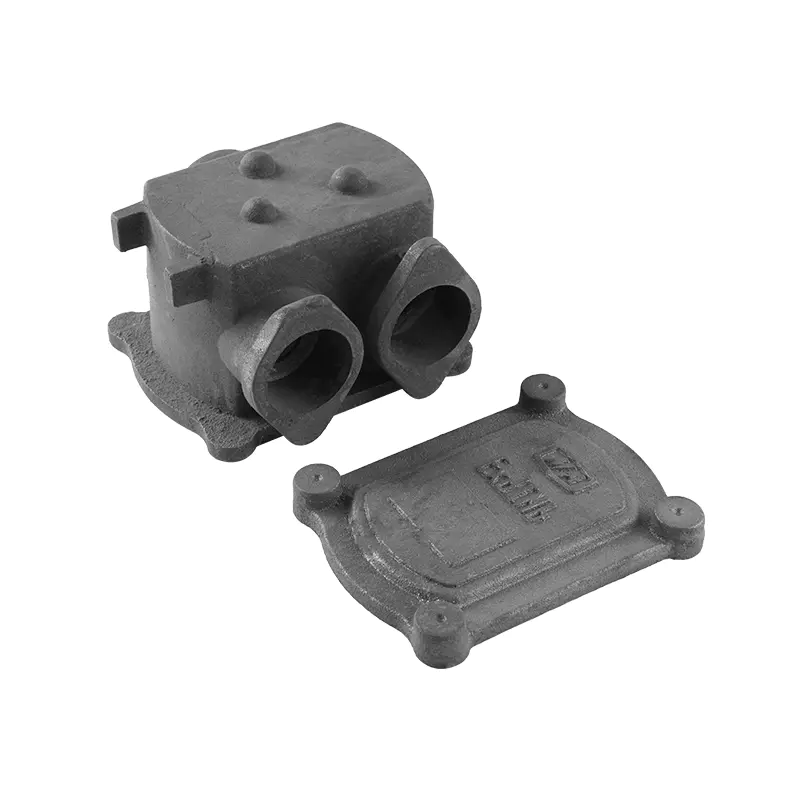
Casting parts turn up almost everywhere on a car once someone starts looking for them. From structural sections buried under the body to smaller brackets tucked behind a wheel well, casting lets manufacturers form shapes that would take a long time to build any other way. Where a part sits inside the vehicle, what kind of punishment it takes during a normal drive, and how tightly it needs to fit against neighboring parts all shape which casting approach makes sense for that spot.
Why Do Automakers Rely on Casting So Much?
A single car rolling off the line carries a huge number of parts, and quite a few of them spend their whole working life absorbing vibration, heat, or repeated strain. Think about a pothole-heavy street, a stretch of highway in July heat, or a driveway that ices over every winter. Parts sitting near the engine or underneath the chassis deal with all of that, and cutting or welding metal into the shapes those spots demand isn't always practical.
Pouring molten metal into a mold and letting it cool solves a lot of that problem. A single casting can replace what would otherwise need several welded pieces bolted together, cutting down on weak spots where things eventually crack or loosen. It also means a factory can turn out part after part without much variation between an early unit off the line and one made much later in the same run.
A few practical reasons casting shows up so often on a factory floor:
| Practical Need | What Casting Offers |
|---|---|
| Odd or detailed shapes | Forms internal channels and curves hard to machine |
| Material waste | Uses roughly what's needed rather than cutting away excess |
| Tight engine bay space | Lets parts wrap around obstacles instead of bolting around them |
| Repeatable output | Keeps each part close to the one made before it |
Casting shows up under the hood, underneath the car, inside the body panels, and in plenty of spots many drivers never think to look.
What Gets Cast Around the Engine?
Open the hood on almost any car and casting parts are staring back. An engine block alone needs internal tunnels for coolant and oil, plus flat mounting spots for accessories bolted on afterward. Building that as one solid casting beats welding a dozen separate pieces together, since every weld seam is a spot that might eventually seep oil or crack under heat cycling.
Beyond the block itself, casting handles several supporting jobs under the hood:
- Covers that keep road grit and moisture off sensitive internals
- Housings that cradle belts, pumps, and other spinning hardware
- Brackets that anchor components against constant engine vibration
- Connector pieces linking one engine section to another
A pickup truck hauling a trailer up a grade puts different stress on these parts than a compact car creeping through city gridlock. That difference in daily punishment shapes how each manufacturer designs the casting for its particular lineup.
How Does Casting Show Up in the Transmission?
Power moving from engine to wheels runs through a transmission built largely around cast housings. Anyone who's had a transmission rebuilt knows how many gears, shafts, and bearings sit crammed inside one case, all spinning at different speeds while staying properly lined up with each other.
That housing does double duty, shielding delicate internals from road debris while keeping every shaft exactly where it needs to sit. A housing that's even slightly off can throw components out of alignment, causing a whine or grind that eventually sends a car back into the shop.
Casting handles a few other transmission jobs too:
| Cast Part | Job It Does |
|---|---|
| Transmission housing | Shields and aligns everything spinning inside |
| Gear supports | Keeps rotating parts positioned correctly |
| Connector housings | Ties separate mechanical sections together |
None of this works if the housing doesn't mate cleanly with everything bolted around it, which is exactly why sourcing teams spend real time checking fit before signing off on a supplier.
Where Does Casting Fit Into the Chassis?
Everything from the suspension to the steering rack hangs off the chassis, so whatever holds those pieces together needs to survive years of bumps, sharp turns, and the occasional curb scrape. A driveway with a steep dip or a gravel road with washboard ruts puts real strain on whatever bracket or mount sits underneath.
Casting handles a lot of that structural work because it lets engineers build a shape that fits snug against tight undercarriage space while still carrying real load.
Common chassis spots where casting turns up:
- Suspension mounts and support arms
- Steering component housings
- Brackets anchoring parts to the frame
- Connector pieces joining structural sections
Car designs shift every few model years, and chassis layouts shift right along with them. Casting gives engineers room to shape a new bracket around a redesigned suspension geometry instead of forcing an older part to squeeze into a newer layout.
Does Casting Turn Up in the Body Itself?
Many people picture casting under the hood and stop there, but body structures use cast components too, especially where different sections of the frame need to join together cleanly. As automakers push toward simpler assembly, cast connectors increasingly replace what used to be several stamped pieces welded in sequence.
Body-related casting handles jobs like:
- Joining points where structural rails meet
- Support sections carrying load through the frame
- Connectors tying separate body panels into one stable shell
Roughly how casting spreads across a typical vehicle:
| Vehicle Section | Typical Cast Components |
|---|---|
| Under the hood | Blocks, covers, accessory housings |
| Transmission | Cases, gear supports, connectors |
| Chassis | Suspension mounts, brackets |
| Body structure | Frame connectors, support sections |
Not every automaker leans on casting the same amount for body work. Some models use it heavily in structural spots, while others stick with stamped or welded panels for those same sections.
Which Materials Show Up in Automotive Casting?
Pick up a cast aluminum bracket and a cast iron one side by side, and the weight difference alone tells part of the story. Material choice comes down to what a part faces once it's bolted into place, whether that's constant heat next to an exhaust manifold or road salt eating away at an underbody bracket every winter.
| Material | Where It Tends to Show Up |
|---|---|
| Aluminum-based alloys | Lightweight housings and structural brackets |
| Iron-based alloys | Spots needing heavier, sustained support |
| Other metal blends | Specialized or niche applications |
Aluminum has become a common pick across a lot of newer designs, mostly because shaving weight off a vehicle helps with fuel use or, in electric models, helps stretch range per charge. Iron still holds its ground wherever long-term durability under heavy load matters more than trimming a few pounds.
Nobody solves this by grabbing whatever material sounds toughest on a spec sheet. The real question is whether that material actually matches the heat, vibration, and weather the part will face for years after installation, a decision that connects directly to how Casting Parts in Automobile systems hold up on ordinary roads rather than in a lab.
What Should a Buyer Actually Check Before Sourcing?
A part that looks clean and well-finished on a sample table can still let a buyer down once it's installed across a full production run and driven through a full range of weather. A few areas deserve real attention before signing off on a supplier:
-
Where the part actually goes
An engine-area part faces different punishment than something bolted into a door frame. Pinning down the exact location narrows the field fast.
-
What the material needs to survive
Heat, road salt, repeated stress cycles, none of these treat every material the same way over years of use.
-
How consistent the supplier's output really is
One good sample doesn't guarantee the rest of the batch matches it. Checking a supplier's actual production history matters more than a single prototype.
-
Whether it actually fits everything around it
A part that needs grinding or shimming to fit during assembly creates delays nobody budgeted for.
-
Whether it holds up over the vehicle's life, not just at delivery
A bracket that passes inspection today but corrodes within a few seasons costs more down the line than it saved upfront.
Buyers who skip these checks often end up chasing warranty claims later, tracing problems back to a decision made months earlier over a spec sheet.
What Actually Decides How Well a Cast Part Performs?
Material grade alone doesn't decide how a part holds up. Design choices, how carefully the casting process gets controlled, and how the part gets installed all factor into whether it lasts.
Things worth weighing when judging a cast part's design:
- Exactly where it sits once installed
- What kind of stress or load it takes on regularly
- How tightly it fits against surrounding parts
- What conditions surround that section of the vehicle
- How often it's expected to need attention over its service life
A bracket mounted a bit closer to a heat source than intended, or a housing with walls slightly thinner than the original design called for, can shave real years off a part's working life even though it looked identical to spec on paper.
None of these parts work in isolation. A slightly warped transmission housing throws off gear alignment. A cracked chassis mount lets a suspension component shift under load. A worn engine cover lets in enough grit to wear down a belt faster than expected. Each of these problems tends to show up as something small at first, a rattle that's hard to pin down, a slow oil stain on the garage floor, a slight vibration at highway speed, before growing into a bigger repair bill. Paying close attention to how each part's job, material, and design line up with where it actually sits in the vehicle gives engineers and buyers a real edge over just checking a box on a spec sheet.
Related products
-

The HZ700-C Fully Automatic Core Shooter With Core Pulling is an advanced molding solution designed ...
See Details -

The Fully Automatic Environmentally Friendly Core Shooting Machine is a highly advanced, eco-conscio...
See Details -

The HZ700-X Fully Automatic Core Shooting Machine With Lower Mold Removal is designed to make core p...
See Details -

The HZ700-X Fully Automatic Core Shooting Machine With Lower Mold Removal is designed for molding ap...
See Details -

The HZ800-X Hydraulic Fully Automatic Core Shooting Machine is designed for efficient and accurate c...
See Details -

The environmentally friendly core shooting machine with lower mold removable is a high-performance s...
See Details -

The Lower Mold Removable Type Environmentally Friendly Core Shooting Machine with Door is an advance...
See Details -

The HZ800-X Hydraulic Environmentally Friendly Core Shooting Machine is an advanced automatic core p...
See Details

Welcome to our company to design according to your design and sample proofing.
Contact Infor
-
 Haixi Town, Pingyang County, Wenzhou City, Zhejiang Province, China
-
 +86-13868387823
-
 +86-577-65197155
-
 +86-577-65197166
-
 13868387823@139.com
huazhultd@outlook.com
Quick Links
Products
Copyright © Ruian Huazhu Machinery Co., Ltd. All Rights Reserved.

