 En
En
 русский
 Español
 عربى
عربى Deutsch
Casting Small Metal Part Guide: Types, Processes & Benefits
Industry News-A bike shop owner replaces a broken derailleur bracket and notices something odd about the part he's holding — no seams, no obvious weld marks, just one solid, oddly-shaped piece of metal that clearly wasn't cut or bent into that form. It was poured. That small, unassuming bracket, along with countless other small metal pieces tucked inside bikes, kitchen appliances, and car engines, likely started out as liquid metal that got shaped inside a mold rather than machined from a solid block. That process is casting, and it's been around a long time precisely because it handles a job that cutting and bending tools often can't — creating oddly shaped, detailed metal parts without wasting a pile of material getting there.
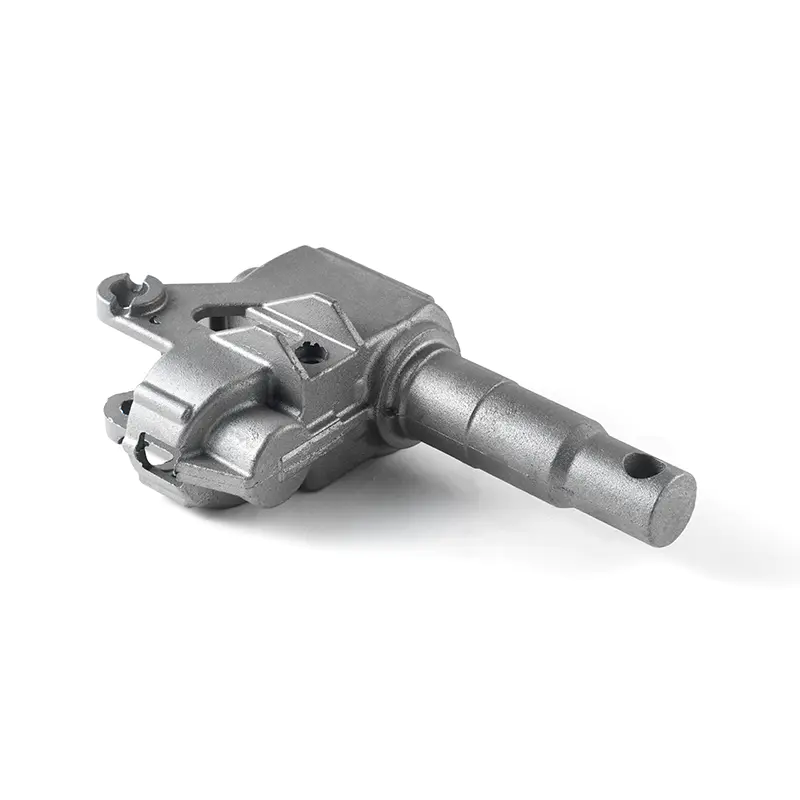
What Actually Happens During Casting?
Casting Small Metal Parts means pouring melted metal into a mold shaped exactly like the part someone needs, letting it cool and harden, then popping it out once it's solid.
That's a fundamentally different approach compared to methods that start with a solid chunk of metal and cut away everything that doesn't belong. Casting builds the shape directly, rather than carving it out from something bigger.
This matters for parts with awkward curves, hollow sections, or shapes that would be a nightmare to machine from a solid block. A bracket with an oddly angled hole running through it, for instance, is often far easier to cast than to cut.
Different projects call for different metals and alloys, chosen based on how the finished part actually needs to perform — how much stress it'll handle, whether it'll sit somewhere hot or humid, how heavy or light it needs to be.
Getting a cast part right isn't just about pouring metal into a shape and hoping for the best. It takes real planning around the design itself, picking the right mold approach, choosing suitable material, and figuring out what finishing work the part needs once it comes out.
What Different Casting Methods Actually Exist?
Not every casting job calls for the same approach. The method depends heavily on what the part looks like and how many of them actually need to get made.
| Method | How It Works | Where It Tends to Fit |
|---|---|---|
| Die casting | Metal gets forced into a reusable metal mold | Consumer products, machinery parts made repeatedly |
| Investment casting | A wax pattern gets coated, then melted away, leaving a detailed mold cavity | Parts with fine detail or complex geometry |
| Sand casting | Metal fills a mold packed from sand | Larger components, industrial equipment |
| Gravity casting | Metal simply flows into the mold under normal gravity, no forced pressure | General-purpose functional parts |
| Custom casting | Built around whatever a specific product actually needs | Specialized or unusual applications |
Die casting tends to get used when a factory needs to churn out the same part over and over with a smooth, consistent finish each time — think small brackets or housings that go into consumer electronics by the batch.
Investment casting handles the trickier jobs — parts with fine detail, thin walls, or complicated internal shapes that would be genuinely hard to produce any other way. Jewelry-making actually uses a version of this same idea, which says something about how much detail the process can capture.
Sand casting has stuck around for a long time simply because it's flexible. It handles bigger parts reasonably well and doesn't require the kind of expensive tooling that some other methods demand upfront.
Gravity casting keeps things simple — no forced pressure involved, just letting metal settle naturally into the mold shape. It works fine for a lot of everyday functional parts that don't need extreme precision.
Custom casting exists for the situations where none of the standard approaches quite fit a product's particular shape or performance needs, so the whole process gets built around that specific requirement instead.
What Actually Happens Step by Step?
Getting from a rough idea to a finished cast part involves several connected stages, each one shaping how the next one goes.
Working out the design first
Before anything gets poured, engineers work through exactly what shape the part needs, what job it'll do, and what conditions it'll face once it's installed. Getting this right upfront tends to save a lot of headaches once actual production starts.
Building the mold
The mold essentially defines everything about the final part's shape. Different casting methods call for very different mold types — a die casting mold looks nothing like a sand casting setup, and the choice depends heavily on what the part actually needs.
Getting the material ready
Whatever metal's been chosen gets prepared specifically for the casting process ahead. Picking the right material here directly shapes how the finished part looks, performs, and holds up over time.
Pouring and forming
Melted metal goes into the mold and takes its shape as it cools. Once it's solid enough, the part comes out of the mold and moves on to whatever comes next.
Finishing and checking the work
A freshly cast part often isn't quite ready to ship straight out of the mold. Surface cleanup, trimming excess material, or other adjustments usually come next, followed by inspection to make sure everything matches what was actually planned.
Why Do So Many Manufacturers Actually Rely on Casting?
There's a real, practical reason casting keeps showing up across so many different industries, decade after decade.
It handles awkward shapes well
Parts with curves, hollow sections, or unusual geometry that would be a real pain to machine from solid stock often come together far more easily through casting instead.
It doesn't waste much material
Since the part forms directly from liquid metal rather than getting carved out of something bigger, there's generally a lot less leftover scrap compared to subtractive methods.
It works across a genuinely wide range of industries
Machinery, cars, electronics, medical devices, everyday consumer goods — casting shows up in all of these because the underlying need is the same everywhere: functional metal parts shaped to a specific job.
It holds up well for repeat production
Once a process is dialed in properly, casting tends to produce consistent results run after run, which matters a lot for companies that need the same part made over and over without surprises.
It handles genuinely complicated shapes
Some designs just aren't practical to make any other way. Casting gives manufacturers another route when a part's geometry rules out simpler manufacturing methods.
Where Does This Actually Show Up in Real Products?
Cast metal parts turn up in more everyday objects than most people ever notice.
Industrial machinery
Equipment running on factory floors often depends on cast components built into gears, housings, or structural brackets that keep the whole machine holding together properly.
Cars and vehicles
Engines, transmissions, and countless smaller components under the hood rely on cast parts designed to handle heat, stress, and constant vibration without failing.
Electronics and household products
A lot of the metal structure inside everyday electronics — connectors, small housings, protective shells — actually started life as cast components rather than stamped or machined ones.
Medical devices
Specialized equipment used in healthcare settings often needs precisely shaped metal parts, and casting gives manufacturers a way to hit those exact specifications reliably.
Energy and infrastructure systems
Pipelines, power equipment, and other infrastructure rely on cast components built to handle demanding, sometimes harsh operating environments over long stretches of time.
How Should a Company Actually Pick a Casting Method?
Landing on the right approach really comes down to understanding the specific part and the actual production goals behind it.
Look closely at the part's shape first
A simple, blocky part has very different requirements than something with fine internal detail or thin, delicate walls. The geometry itself narrows down which casting method actually makes sense.
Think through what the material actually needs to do
Different applications call for different material properties — strength, weight, resistance to heat or corrosion. Working that out before committing to a method avoids picking something that doesn't hold up once it's in use.
Factor in how many parts actually need making
A one-off custom part calls for a different approach than a component that'll get produced by the thousands. Production volume shapes tooling decisions in a big way.
Work directly with people who actually do this for a living
Talking through the project with an experienced casting manufacturer tends to surface options a company might not have considered on its own, based on what's realistically achievable for that specific part.
What Actually Determines Whether a Cast Part Turns Out Well?
A handful of connected factors decide whether a cast metal part ends up performing the way it's supposed to.
Design planning matters from the very start — a design that's been thought through carefully tends to move through production a lot more smoothly than one that gets rushed.
Material choice shapes practically everything about how the finished part behaves once it's actually in use, from how much stress it can handle to how long it'll last in a demanding environment.
The manufacturing process itself needs consistent, careful management throughout. Small inconsistencies at any stage tend to show up as real problems in the finished part.
Post-processing work often makes a real difference too. Cleaning up surfaces, trimming excess material, or applying protective treatments can shift how well a part actually functions once it's installed.
Ongoing quality checks throughout production help catch issues early, before a whole batch of parts turns out to be unusable.
How Does This Fit Into Manufacturing Today?
Modern manufacturing keeps looking for approaches that balance design flexibility with practical, everyday production needs, and casting keeps earning its place by doing exactly that. Casting Small Metal Parts continues to support that balance, giving manufacturers a genuinely flexible way to build functional components across a wide range of industries without needing a completely different process for every new shape that comes along. As product designs keep getting more specialized, casting methods keep adjusting right along with them, with manufacturers exploring better processes and more adaptable approaches to keep up with changing needs. For a company developing any kind of metal component, having a real understanding of how casting actually works tends to lead toward smarter design choices and manufacturing plans that genuinely fit the product, rather than forcing a product to fit whatever manufacturing process happened to be familiar.
Related products
-

The HZ700-C Fully Automatic Core Shooter With Core Pulling is an advanced molding solution designed ...
See Details -

The Fully Automatic Environmentally Friendly Core Shooting Machine is a highly advanced, eco-conscio...
See Details -

The HZ700-X Fully Automatic Core Shooting Machine With Lower Mold Removal is designed to make core p...
See Details -

The HZ700-X Fully Automatic Core Shooting Machine With Lower Mold Removal is designed for molding ap...
See Details -

The HZ800-X Hydraulic Fully Automatic Core Shooting Machine is designed for efficient and accurate c...
See Details -

The environmentally friendly core shooting machine with lower mold removable is a high-performance s...
See Details -

The Lower Mold Removable Type Environmentally Friendly Core Shooting Machine with Door is an advance...
See Details -

The HZ800-X Hydraulic Environmentally Friendly Core Shooting Machine is an advanced automatic core p...
See Details

Welcome to our company to design according to your design and sample proofing.
Contact Infor
-
 Haixi Town, Pingyang County, Wenzhou City, Zhejiang Province, China
-
 +86-13868387823
-
 +86-577-65197155
-
 +86-577-65197166
-
 13868387823@139.com
huazhultd@outlook.com
Quick Links
Products
Copyright © Ruian Huazhu Machinery Co., Ltd. All Rights Reserved.

