 En
En
 русский
 Español
 عربى
عربى Deutsch
What Is the Sand Core Shooting Machine and How Does It Work?
Industry News-Pick up a car engine block and look inside, and you'll find a maze of internal passages that let coolant and oil flow exactly where they need to go. Nobody carved those channels out after the metal cooled. They were shaped into existence during the casting process itself, using a sand structure placed inside the mold before the molten metal ever got poured. A Sand Core Shooting Machine is the equipment responsible for producing that internal sand structure, and it's a piece of the casting process that rarely gets attention outside the foundry floor, despite shaping some fairly critical parts of everyday machinery.
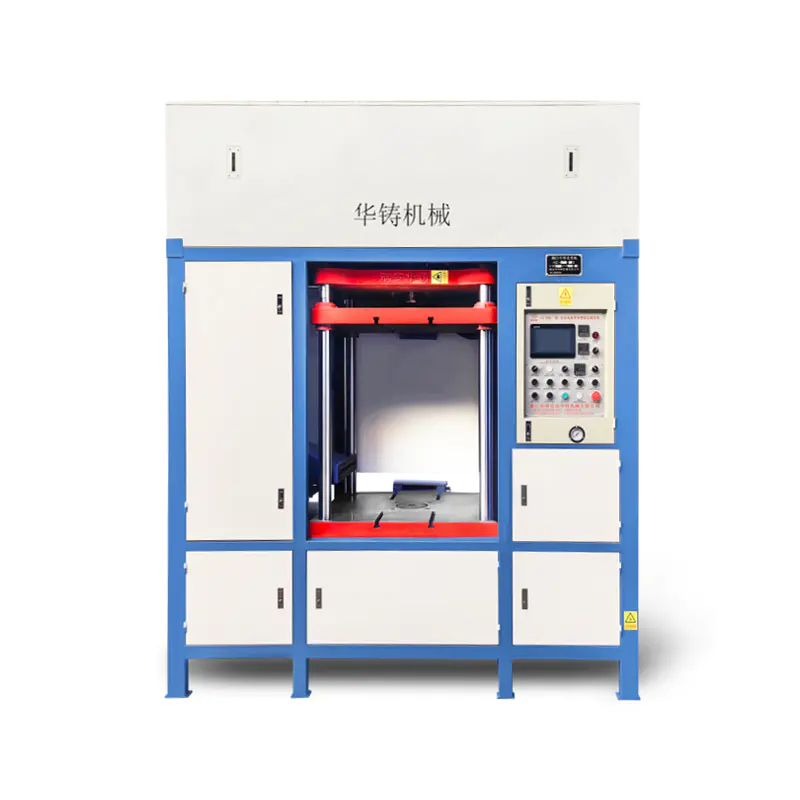
Casting a solid metal part is one thing. Casting a part with hollow channels, curved passages, or internal cavities running through it is a different challenge entirely, and that's exactly the gap sand cores fill.
Why Sand Cores Matter in the First Place
A mold on its own shapes the outside of a cast part. It can't create hollow spaces or internal channels running through the middle of that part, since there's nothing there to block the molten metal from filling every available space.
A sand core solves that by sitting inside the mold cavity before the metal gets poured, occupying the space where a hollow section needs to exist. Once the metal cools and solidifies around it, the sand core gets broken apart and removed, leaving behind exactly the internal shape the design called for.
| What the Core Does | Why It Matters |
|---|---|
| Occupies space inside the mold | Blocks molten metal from filling areas meant to stay hollow |
| Holds its shape during pouring | Keeps internal passages accurate and consistent |
| Gets removed after casting | Leaves behind the finished internal structure |
| Supports complex internal designs | Makes shapes possible that a mold alone couldn't create |
A water pump housing with internal channels for fluid flow depends entirely on a properly shaped sand core sitting in exactly the right position during casting. Get that core even slightly off, and the finished part ends up with uneven wall thickness or blocked passages that make it unusable.
What a Sand Core Shooting Machine Actually Does
Producing a sand core by hand used to mean workers packing sand mixture into a mold by hand, tool by tool, one core at a time. That approach worked, but it left plenty of room for inconsistency between one core and the next, especially across a long shift.
A Sand Core Shooting Machine changes that by mechanizing the whole process. Instead of manually packing sand into a mold cavity, the machine uses controlled force to shoot core material into position quickly and consistently.
| Machine Part | What It Handles |
|---|---|
| Material storage | Holds the prepared sand mixture ready for use |
| Shooting mechanism | Pushes material into the mold under controlled pressure |
| Mold structure | Shapes the material into the required core form |
| Release system | Removes the finished core once it's stable |
A foundry running hundreds of identical cores in a single day relies on this consistency to keep quality steady from the first core produced to the last, something that's genuinely difficult to guarantee with purely manual methods.
How the Process Actually Runs, Step by Step
Watching a Sand Core Shooting Machine in operation reveals a fairly logical sequence, even though the individual steps happen quickly.
Getting the Material Ready
Everything starts with a sand mixture prepared specifically for core-making, blended with additional materials that help it hold its shape once formed. That mixture gets loaded into the machine's storage area, staged and ready before production actually begins.
Shooting the Material Into the Mold
This is the step that gives the machine its name. Rather than pouring sand loosely into a cavity, the machine forces the material into the mold using controlled pressure, filling the space evenly and quickly. That controlled push matters because uneven filling leads to weak spots or gaps in the finished core.
Letting the Core Take Shape
Once the mold cavity is filled, the material needs a brief period to gain enough stability to hold its shape independently. The mold itself defines the outer form, while the internal cavity shape determines the actual passage or space the core will create inside the final cast part.
Releasing the Finished Core
After the core firms up sufficiently, the machine opens and releases it from the mold. From there, the core moves on to the next stage of the casting process, typically getting positioned inside the larger mold assembly before metal pouring begins.
A foundry producing engine components repeats this entire sequence continuously throughout a shift, and the machine's consistency across hundreds of repetitions is exactly what makes large-scale casting production realistic in the first place.
What Manufacturers Actually Gain From Using This Equipment
Switching from manual core production to machine-based shooting isn't just about speed, though that's certainly part of it. The bigger shift tends to show up in consistency and workflow organization.
- Steadier quality across every core produced, rather than variation tied to individual worker technique
- Smoother coordination between core production and the rest of the casting line
- Less physical strain on workers, who shift toward monitoring and quality checks rather than repetitive manual packing
- Support for more complicated shapes that would be difficult to reproduce consistently by hand
A foundry producing transmission housings with intricate internal oil passages benefits directly from this consistency, since a design with that level of internal complexity leaves very little room for the kind of variation manual core-making tends to introduce.
Where This Equipment Shows Up Across Industry
Casting with internal cavities isn't limited to one type of product, which means Sand Core Shooting Machines end up serving a fairly wide range of manufacturing sectors.
| Industry | Typical Use |
|---|---|
| Automotive | Engine blocks, cylinder heads, and components needing internal fluid passages |
| Machinery manufacturing | Pump housings and equipment parts requiring precise internal structures |
| Construction equipment | Cast components with internal channels for hydraulic or mechanical function |
| General industrial casting | Various metal parts requiring hollow or complex internal shapes |
An equipment manufacturer producing hydraulic pump housings, for example, depends on sand cores to form the internal fluid pathways that the pump's function relies on, and a shooting machine keeps that core production steady enough to support ongoing manufacturing runs.
How This Machine Actually Improves the Broader Production Line
Core production doesn't happen in isolation. It's one step feeding directly into everything that follows in the casting process, which means problems at the core stage tend to ripple forward into later production steps.
A Sand Core Shooting Machine helps by:
- Cutting down on repetitive manual tasks that slow down overall production
- Managing material use more carefully, since the machine controls exactly how much sand goes into each core
- Making it easier to plan and coordinate timing across different stages of casting production
- Freeing workers to focus on inspection and process management rather than repetitive physical labor
None of this replaces the need for skilled staff on the foundry floor. A machine still needs someone monitoring output, checking for defects, and adjusting settings when the material or design calls for it. The equipment supports that work rather than eliminating the need for it.
What to Think About Before Choosing a Machine
Picking the right Sand Core Shooting Machine involves matching the equipment to actual production needs, not just choosing based on general capability.
| Factor | Why It Matters |
|---|---|
| Type of cores being produced | Different shapes and sizes call for different mold and machine setups |
| Ease of daily operation | Equipment that's straightforward to run reduces training time and daily friction |
| Maintenance demands | Regular upkeep keeps the machine running reliably over years of use |
| Safety features | Protects operators working closely with the equipment during daily production |
| Room for future changes | Equipment flexible enough to handle new core designs as production needs shift |
A foundry that regularly switches between different product lines benefits from equipment adaptable enough to handle varied mold setups, rather than machinery built around a single fixed core design that can't adjust as production needs change.
How This Equipment Fits Into Where Casting Is Headed
Casting keeps moving toward production methods that are more organized and easier to manage consistently across large volumes. Sand Core Shooting Machines represent one piece of that shift, taking a manufacturing step that used to depend heavily on manual technique and giving it a repeatable, controlled process instead.
As cast products keep demanding more complicated internal designs — think intricate cooling channels in modern engine components or precise internal passages in hydraulic equipment — the role of reliable core-making equipment isn't likely to shrink. It'll keep supporting foundries in producing the kind of detailed internal structures that today's manufacturing standards increasingly call for, quietly doing its job somewhere in the middle of a process that most people never think about until they're holding the finished part in their hands.
Related products
-

The HZ700-C Fully Automatic Core Shooter With Core Pulling is an advanced molding solution designed ...
See Details -

The Fully Automatic Environmentally Friendly Core Shooting Machine is a highly advanced, eco-conscio...
See Details -

The HZ700-X Fully Automatic Core Shooting Machine With Lower Mold Removal is designed to make core p...
See Details -

The HZ700-X Fully Automatic Core Shooting Machine With Lower Mold Removal is designed for molding ap...
See Details -

The HZ800-X Hydraulic Fully Automatic Core Shooting Machine is designed for efficient and accurate c...
See Details -

The environmentally friendly core shooting machine with lower mold removable is a high-performance s...
See Details -

The Lower Mold Removable Type Environmentally Friendly Core Shooting Machine with Door is an advance...
See Details -

The HZ800-X Hydraulic Environmentally Friendly Core Shooting Machine is an advanced automatic core p...
See Details

Welcome to our company to design according to your design and sample proofing.
Contact Infor
-
 Haixi Town, Pingyang County, Wenzhou City, Zhejiang Province, China
-
 +86-13868387823
-
 +86-577-65197155
-
 +86-577-65197166
-
 13868387823@139.com
huazhultd@outlook.com
Quick Links
Products
Copyright © Ruian Huazhu Machinery Co., Ltd. All Rights Reserved.

