 En
En
 русский
 Español
 عربى
عربى Deutsch
What Is a Sand Core Shooting Machine and Its Uses?
Industry News-A foundry worker who spent years hand-packing sand into core boxes for engine block castings used to joke that his back knew every single core he'd ever made. Each one took a few minutes of manual packing, tamping, and checking, and no two came out exactly identical no matter how careful he was. When his shop finally brought in a Sand Core Shooting Machine, that whole process compressed down to seconds per core, and suddenly every single one looked like the last. His back thanked him, and so did the quality control department. That shift from hand-packed to machine-shot cores is basically the story of modern foundry work. A Sand Core Shooting Machine produces the sand cores that go inside casting molds to create hollow spaces, channels, and internal shapes that the outer mold alone just can't form on its own.
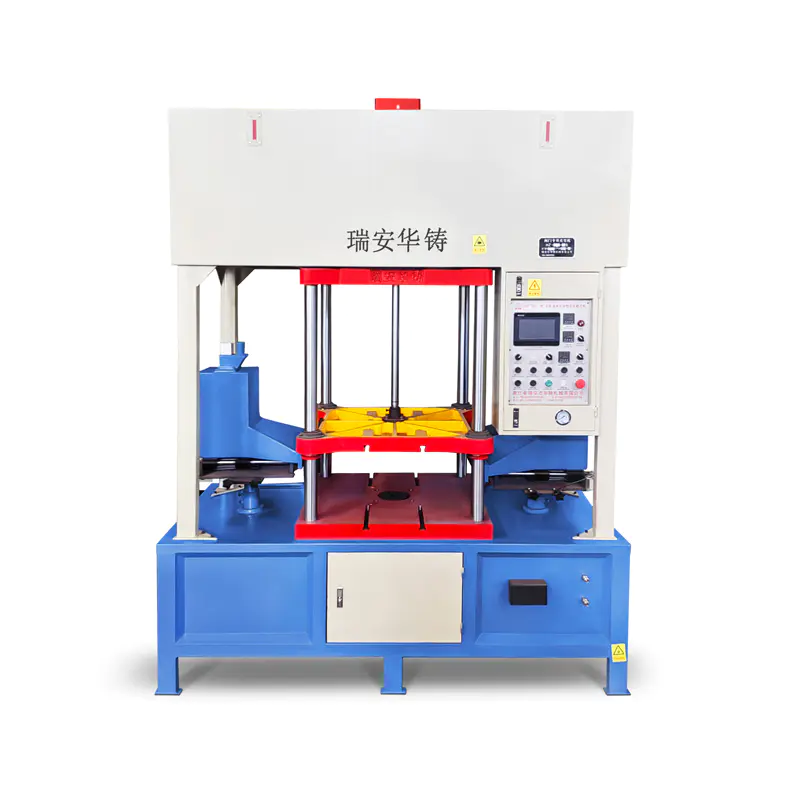
What's Actually Inside One of These Machines?
Casting a metal part often means dealing with more than just an outer shape. Engine blocks need internal cooling passages, pump housings need hollow chambers, plenty of industrial parts need channels running through their interior that would be impossible to create if the whole thing were just poured as solid metal. That's where sand cores come in — they get placed inside the mold before pouring, occupy the space where a hollow section needs to end up, then get broken away and removed once the metal cools and solidifies.
Instead of a person packing sand by hand into a core box, a shooting machine blasts sand into that box under pressure, filling every corner of the cavity quickly and consistently.
A typical machine breaks down into a handful of working sections:
| Part | What It Actually Does |
|---|---|
| Machine frame | Holds everything steady during operation |
| Sand delivery section | Moves prepared sand into the core box |
| Core box area | Shapes the sand into the actual core form |
| Control system | Runs the timing and sequence of each cycle |
| Ejection section | Pushes the finished core out once it's set |
Each part does its job in sequence, and the whole cycle repeats over and over throughout a shift, turning out core after core without the physical strain a hand-packing process puts on a worker's body.
Why Do Sand Cores Actually Matter So Much in Casting?
A lot of cast metal parts aren't solid all the way through — they have hollow sections, internal passages, or complex cavities built right into their structure. An engine block, for instance, needs coolant to flow through internal channels that get shaped by cores rather than the outer mold.
Without sand cores, foundries would be stuck making only relatively simple, solid shapes, since there'd be no practical way to form those internal features.
Sand cores commonly show up wherever a casting needs:
- hollow internal cavities
- passages for fluid or air flow
- complex internal geometry that can't be machined in afterward
- functional internal spaces built directly into the part
How well a core is shaped and how consistent it comes out directly affects whether the finished casting actually matches its intended design. A slightly warped or inconsistent core can throw off dimensions in ways that only show up after the metal's already poured and cooled, which is an expensive mistake to catch that late.
That's really why foundries put so much attention into getting core production right in the first place, rather than treating it as an afterthought before the "real" casting work happens.
How Does a Sand Core Shooting Machine Actually Do Its Job?
The basic process follows a pretty logical sequence, even though the details vary between different machine designs.
Prepared sand — usually mixed with a binding agent to help it hold shape — gets loaded into the machine. From there, it gets shot into a core box under pressure, filling the cavity quickly rather than requiring manual packing. Once the sand has taken the shape of the box and set enough to hold together, the machine ejects the finished core, and the cycle starts over for the next one.
A simplified version of that sequence looks like this:
| Stage | What's Happening |
|---|---|
| Sand preparation | Getting the material ready before it enters the machine |
| Filling the core box | Shooting sand into the cavity under pressure |
| Core formation | Letting the sand set into its final shape |
| Core removal | Ejecting the finished core, ready for the next cycle |
Different machines handle these steps with different mechanisms, but the underlying goal stays consistent across the board — turning out sand cores that come out the same way, cycle after cycle, without relying on manual variation from one worker's technique to another.
Why Do Foundries Actually Bother With This Equipment?
Hand-packing cores works, technically speaking, but it comes with real limitations — it's slow, physically demanding, and prone to small inconsistencies that build up over a long production run.
A shooting machine addresses those limitations in a few concrete ways:
- keeps the production floor running on a more predictable schedule
- produces cores that come out consistent from batch to batch
- cuts down significantly on physically demanding manual labor
- supports the kind of continuous, higher-volume runs that hand-packing just can't keep up with
Rather than relying entirely on a worker's individual skill and stamina to get consistent results, a foundry can lean on the machine to handle the repetitive part of the job while people focus on oversight, adjustments, and catching problems early.
That shift also makes it a lot easier to coordinate core production with everything else happening on the casting floor, since output becomes a lot more predictable to plan around.
Where Does This Equipment Actually Show Up?
Casting remains a genuinely widespread manufacturing method, which means Sand Core Shooting Machines end up serving a pretty broad mix of industries.
Automotive parts
Engine blocks, cylinder heads, and plenty of other vehicle components rely on sand cores to form the internal cavities and passages that make them function properly.
Industrial machinery
Both large and small machine components often depend on cast parts that need internal features only a sand core can create during the pouring process.
Construction and heavy equipment
Equipment built to handle demanding outdoor conditions frequently relies on cast components, many of which need internal structures shaped by cores.
General manufacturing
A lot of everyday industrial products that people never think twice about actually started as cast parts built around sand core technology somewhere upstream in their production.
Each of these industries needs different core shapes and different production volumes, which is part of why foundry equipment setups look pretty different from shop to shop depending on what they're actually producing.
How Does Automating This Process Actually Change Things?
Bringing automation into core production doesn't mean pushing skilled workers out of the picture. It mostly means shifting what those workers actually spend their time doing.
A Sand Core Shooting Machine supports that shift in a few practical ways:
| What's Happening | How the Machine Helps |
|---|---|
| Making cores repeatedly | Produces consistent shapes cycle after cycle |
| Keeping production on schedule | Fits into a planned, organized workflow |
| Reducing variation | Cuts down on the inconsistency hand-packing tends to create |
| Coordinating with other production stages | Fits into the broader casting workflow |
Instead of a worker spending physical energy packing every single core by hand, that same person can focus on watching the machine, catching issues early, adjusting settings when something's off, and generally supervising quality rather than doing the repetitive labor itself.
That shift also tends to improve how smoothly different stages of the casting process talk to each other, since core output becomes something that's actually predictable enough to plan around.
What Should a Foundry Actually Think About Before Buying One?
Picking out equipment like this involves more than just comparing machine specs on a sales sheet.
A few practical questions worth working through:
- what types of parts are actually being produced
- how complex the core designs tend to be
- how the machine will physically fit into the existing shop floor
- what the realistic production targets actually look like
- what ongoing maintenance access will require
- whether future product lines might demand different core shapes or volumes
Getting a machine that matches both current needs and where the business might be headed tends to save a lot of frustration down the line, rather than ending up with equipment that only handles what was needed a couple years back.
The machine really needs to fit naturally into the existing production flow, rather than forcing a shop to redesign its whole workflow around one piece of equipment.
How Does Regular Maintenance Keep Things Running Smoothly?
Like most manufacturing equipment, a Sand Core Shooting Machine performs a lot more reliably when it gets consistent care rather than running until something breaks.
A few habits worth keeping up with regularly:
| Task | Why It Actually Matters |
|---|---|
| Cleaning machine surfaces | Keeps sand residue from building up and interfering with operation |
| Checking moving sections | Catches wear before it turns into a bigger problem |
| Inspecting control systems | Keeps the whole cycle running predictably |
| Reviewing overall machine condition | Makes future maintenance planning a lot easier |
How often these checks need to happen really depends on how heavily the machine gets used and what kind of environment it's operating in — a shop running multiple shifts a day needs a tighter maintenance schedule than one running occasional smaller batches.
Staying on top of these small habits tends to keep the whole production line moving smoothly, avoiding the kind of surprise breakdown that stops a job cold in the middle of a shift.
Why Does Digital Manufacturing Keep Shaping Foundry Equipment?
Manufacturing floors keep getting more connected overall, with production planning, equipment tracking, and quality checks increasingly running through digital systems instead of paper logs and verbal handoffs.
A Sand Core Shooting Machine fits comfortably into that shift because its repeatable, controlled process lends itself naturally to being tracked and coordinated digitally alongside everything else happening on the floor.
Rather than sitting off as its own isolated piece of equipment, it becomes one part of a bigger connected setup, feeding into scheduling and quality tracking rather than operating as a disconnected island.
That kind of integration lets a foundry respond more quickly when production needs shift, without having to rebuild its whole workflow from scratch every time something changes.
Where Does This Leave Foundry Work Going Forward?
Casting as an industry keeps balancing decades of hands-on manufacturing knowledge with newer, more automated production methods, and Sand Core Shooting Machines sit right at that intersection. This equipment supports that balance by helping foundries produce cores through a process that's structured and repeatable rather than dependent entirely on individual manual skill. Its role goes beyond just shaping sand into a cavity. It feeds into broader production planning, helps keep manufacturing consistent across long runs, and lets casting operations adapt more easily as industry demands keep shifting. As foundry work keeps evolving, equipment that combines dependable, repeatable output with the flexibility to fit into a modern, connected workflow keeps earning its place on the shop floor — the same way that veteran foundry worker's back finally got a break once the machine started doing the heavy lifting he used to handle by hand.
Related products
-

The HZ700-C Fully Automatic Core Shooter With Core Pulling is an advanced molding solution designed ...
See Details -

The Fully Automatic Environmentally Friendly Core Shooting Machine is a highly advanced, eco-conscio...
See Details -

The HZ700-X Fully Automatic Core Shooting Machine With Lower Mold Removal is designed to make core p...
See Details -

The HZ700-X Fully Automatic Core Shooting Machine With Lower Mold Removal is designed for molding ap...
See Details -

The HZ800-X Hydraulic Fully Automatic Core Shooting Machine is designed for efficient and accurate c...
See Details -

The environmentally friendly core shooting machine with lower mold removable is a high-performance s...
See Details -

The Lower Mold Removable Type Environmentally Friendly Core Shooting Machine with Door is an advance...
See Details -

The HZ800-X Hydraulic Environmentally Friendly Core Shooting Machine is an advanced automatic core p...
See Details

Welcome to our company to design according to your design and sample proofing.
Contact Infor
-
 Haixi Town, Pingyang County, Wenzhou City, Zhejiang Province, China
-
 +86-13868387823
-
 +86-577-65197155
-
 +86-577-65197166
-
 13868387823@139.com
huazhultd@outlook.com
Quick Links
Products
Copyright © Ruian Huazhu Machinery Co., Ltd. All Rights Reserved.

