 En
En
 русский
 Español
 عربى
عربى Deutsch
Benefits of Sand Core Shooting Machine in Modern Casting Production
Industry News-A foundry worker inspects a batch of finished castings and finds a handful with rough internal channels that don't match the drawing specs. Tracing the problem back, it's not the metal pour that went wrong — it's the sand cores that shaped those internal passages, formed slightly differently from one to the next because each one was packed by hand under slightly different pressure. That kind of inconsistency is exactly what a Sand Core Shooting Machine is built to prevent.
What a Sand Core Shooting Machine Actually Does
A Sand Core Shooting Machine produces the sand cores used inside casting molds to shape internal cavities, channels, and hollow sections that the outer mold alone can't create. The machine takes core material, packs it into a core mold under controlled conditions, and forms it into the shape a specific casting design calls for.
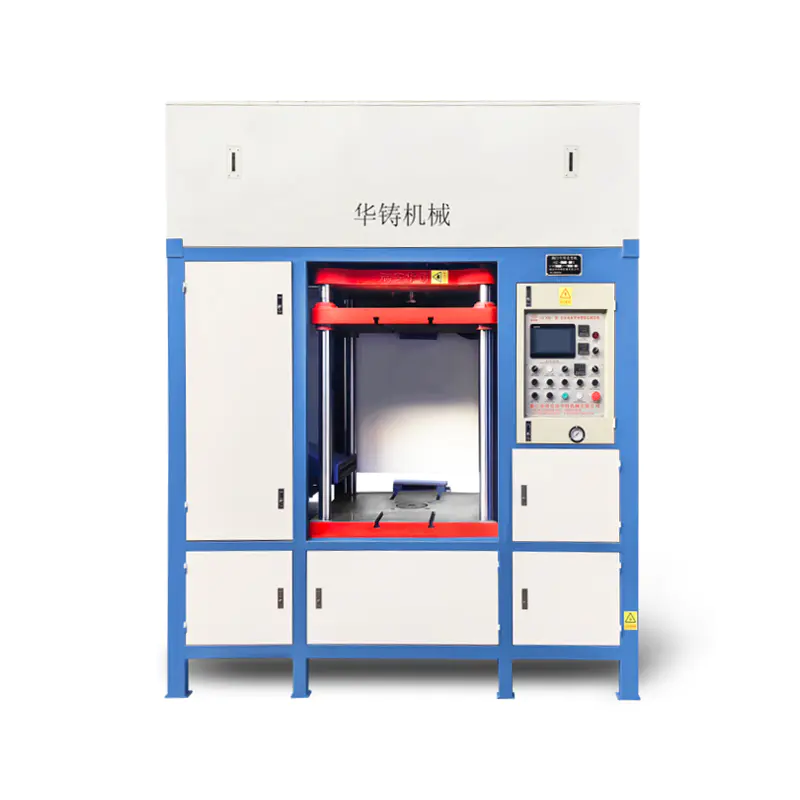
Before this kind of equipment became common, workers handled most of this by hand — measuring material, packing it into molds, shaping cores, and checking each one individually. That approach depends heavily on an individual worker's technique staying consistent from the first core of the day to the last, which isn't always realistic during a long shift.
| Function | Purpose |
|---|---|
| Material preparation support | Keeps core-making materials organized before forming |
| Mold filling | Places material into the core mold in a controlled way |
| Core forming | Shapes the material into the required core design |
| Core removal | Helps prepare finished cores for handling and use |
None of this replaces what a skilled worker brings to the process. The machine handles the repetitive physical part of core-making, while the worker still watches over conditions, checks results, and steps in when something needs adjusting.
Why Sand Cores Carry So Much Weight in Casting
Plenty of metal parts need something more complicated than a solid block — hollow sections, internal channels, or detailed inner geometry that the outer mold simply can't shape on its own. Sand cores fill that gap, sitting inside the mold cavity during the pour to create exactly those internal features.
The problem is that a core's shape has a direct effect on how the finished casting turns out. A core that's slightly off in dimension or density can throw off wall thickness, create rough internal surfaces, or leave a part failing dimensional checks after it's already been cast and cooled — a mistake that's expensive to catch that late in the process.
A Sand Core Shooting Machine addresses this by keeping the forming process consistent from one core to the next. Manufacturers get cores that match closely across a full production run, rather than dealing with the kind of variation that naturally creeps into manual work over the course of a shift.
Where the Efficiency Gains Actually Come From
Manual core-making eats up time in ways that aren't always obvious until someone tracks it closely. Preparing material, packing it by hand, shaping each core individually — these are repetitive physical tasks that add up across a full day of production.
Once a Sand Core Shooting Machine is set up and running, it handles that repetitive forming work in a more organized sequence, freeing workers to focus on things that actually need human attention.
| Production Improvement | Practical Effect |
|---|---|
| Reduced repeated manual work | Frees workers up for other production tasks |
| Organized production flow | Makes core preparation easier to plan around |
| Stable operation | Supports steady output without constant adjustment |
| Better task planning | Helps coordinate core production with the rest of casting |
A foundry running multiple casting jobs in the same week benefits directly from this kind of organization, since planning around a steady, predictable core output is a lot easier than working around manual production that varies depending on which worker is handling it that day.
How Machine Support Changes Core Quality
Quality problems in core-making rarely show up as one dramatic failure — they usually show up as small, cumulative differences between individual cores that eventually affect how well castings turn out. A slightly under-packed core here, a shape that's a touch off there, and over enough repetitions those small differences start showing up in the finished product.
A Sand Core Shooting Machine helps by keeping material placement and forming pressure consistent across the whole run, which cuts down on the kind of variation that's almost unavoidable when the same task gets repeated manually hundreds of times.
This support shows up as:
- More consistent shapes across a full batch of cores
- Steadier control over how material gets packed into the mold
- Fewer differences between individual cores from the same run
- A more organized, repeatable production procedure overall
Quality here comes from pairing machine consistency with a worker who's still paying attention — the equipment doesn't replace judgment, it just gives that judgment a more stable foundation to work from.
What Changes for the People Running the Line
Core production involves a fair amount of repetitive physical work, and that repetition takes a toll over a full shift regardless of how skilled or careful a worker is. A Sand Core Shooting Machine takes over much of that repetitive forming, shifting what workers actually spend their time doing.
Instead of packing cores by hand for hours, workers end up focused on:
- Monitoring how the production run is progressing
- Managing and adjusting the equipment as needed
- Running quality checks on finished cores
- Looking for ways to improve the overall process
This shift tends to make the shop floor feel more organized, since work gets distributed based on where a person's judgment actually adds value rather than spreading everyone thin across repetitive manual tasks. Skilled workers stay essential here — understanding production conditions and knowing when something needs adjusting is still a human judgment call, just supported by more consistent equipment.
Where This Equipment Actually Gets Used
Different industries need castings with different internal designs, but the underlying requirement — accurate, consistent sand cores — stays the same across all of them.
| Industry Area | Application |
|---|---|
| Automotive manufacturing | Components with internal structures, like housings and manifolds |
| Machinery production | Parts for industrial equipment that need shaped internal cavities |
| Transportation equipment | Metal components requiring detailed internal geometry |
| General manufacturing | Customized cast parts across varied product lines |
A shop producing automotive parts one month and machinery components the next benefits from the flexibility this equipment offers, since adjusting for a new core shape doesn't require rebuilding the entire production process from scratch.
Where the Cost Advantages Actually Show Up
Cost control in a foundry isn't just about the price tag on the equipment itself — it's about how that equipment affects labor, material use, and the number of problems that show up downstream in the casting process.
Reducing manual, repetitive work eases pressure on labor scheduling. Better control over how material gets used during forming cuts down on waste that tends to build up with manual handling. And more consistent cores mean fewer casting defects traced back to core quality, which avoids the cost of scrapped parts or rework later in the process.
| Cost Factor | Possible Benefit |
|---|---|
| Labor use | Less dependence on repeated manual operations |
| Material handling | More organized, controlled material use |
| Production stability | Fewer interruptions caused by inconsistent cores |
| Workflow planning | Easier coordination across the broader production schedule |
How much of this actually plays out depends on the specific production setup, equipment choice, and how the machine gets integrated into daily operations. It's not a fixed guarantee — it's a set of possible improvements that depend on fitting the equipment to the actual job.
What to Actually Think Through Before Bringing One In
Buying a Sand Core Shooting Machine isn't just a matter of picking whatever model is available. A few practical questions determine whether the equipment actually fits a shop's real production needs.
Production needs come first — understanding what types of cores a shop regularly produces and how this equipment would slot into existing casting workflows.
Operation requirements matter next. The machine needs to be manageable for the workers who'll actually run it day to day, not just impressive on a spec sheet.
Maintenance planning deserves attention too. Regular upkeep keeps the equipment reliable over years of use, rather than becoming a source of downtime once it starts showing wear.
Production environment rounds it out — the available floor space and how the machine fits into a shop's overall layout affects whether installation goes smoothly or creates workflow bottlenecks elsewhere.
Choosing this kind of equipment is less about the purchase itself and more about finding something that actually fits into how a shop already operates, rather than forcing a shop to redesign its whole process around a new machine.
Where Foundry Core Production Seems to Be Headed
Foundries keep looking for ways to tighten up efficiency, improve quality, and organize production more clearly, and core-making is one of the steps getting closer attention as that push continues. A Sand Core Shooting Machine supports that shift by turning a step that used to depend heavily on individual manual technique into something more structured and repeatable.
Its real value comes from helping manufacturers produce sand cores with steadier consistency while cutting down on the repetitive manual work that used to define this part of the casting process. As casting applications keep expanding across different industries, equipment that supports stable, adaptable core production will likely keep playing an important role in how foundries manage their day-to-day work.
Related products
-

The HZ700-C Fully Automatic Core Shooter With Core Pulling is an advanced molding solution designed ...
See Details -

The Fully Automatic Environmentally Friendly Core Shooting Machine is a highly advanced, eco-conscio...
See Details -

The HZ700-X Fully Automatic Core Shooting Machine With Lower Mold Removal is designed to make core p...
See Details -

The HZ700-X Fully Automatic Core Shooting Machine With Lower Mold Removal is designed for molding ap...
See Details -

The HZ800-X Hydraulic Fully Automatic Core Shooting Machine is designed for efficient and accurate c...
See Details -

The environmentally friendly core shooting machine with lower mold removable is a high-performance s...
See Details -

The Lower Mold Removable Type Environmentally Friendly Core Shooting Machine with Door is an advance...
See Details -

The HZ800-X Hydraulic Environmentally Friendly Core Shooting Machine is an advanced automatic core p...
See Details

Welcome to our company to design according to your design and sample proofing.
Contact Infor
-
 Haixi Town, Pingyang County, Wenzhou City, Zhejiang Province, China
-
 +86-13868387823
-
 +86-577-65197155
-
 +86-577-65197166
-
 13868387823@139.com
huazhultd@outlook.com
Quick Links
Products
Copyright © Ruian Huazhu Machinery Co., Ltd. All Rights Reserved.

