 En
En
 русский
 Español
 عربى
عربى Deutsch
What Factors Affect Sand Core Quality in Automated Core Making
Industry News-Sand cores do a job the outer mold can't handle on its own — they form the internal spaces, passages, and shapes hidden inside a metal casting. A core that holds its shape through handling, molding, pouring, and eventual removal is closely tied to how the whole casting process turns out. Get the core wrong and the problem shows up downstream, often after a lot of work has already gone into the part. As foundries move toward automated production, attention has started drifting away from just the shape of the core and toward how consistent each step in making it actually is.
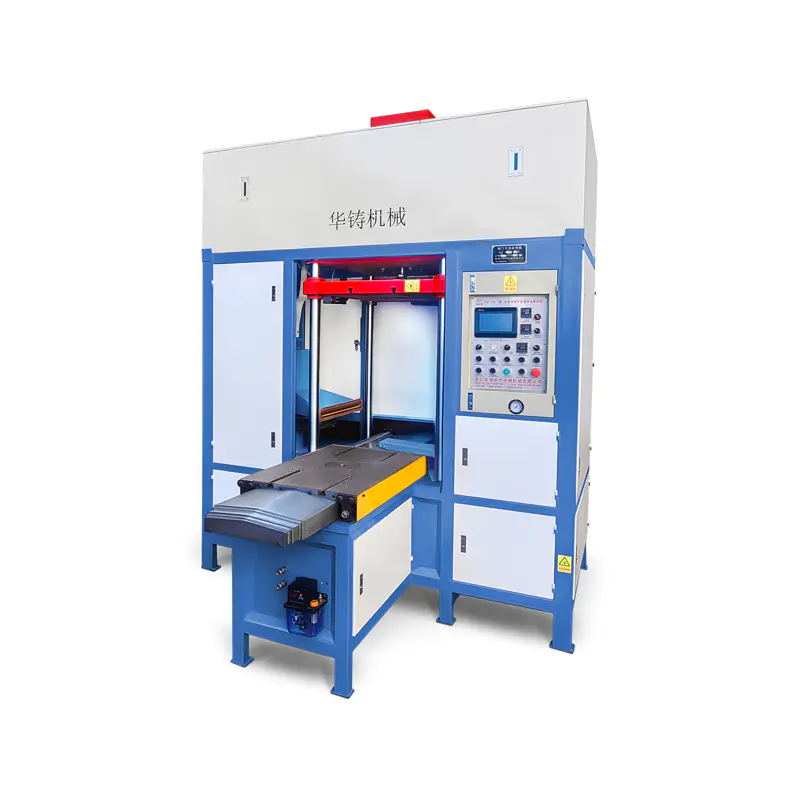
Automation helps organize repeated operations, sure, but it doesn't take away the need to control sand preparation, mold filling, curing, equipment condition, or the environment the whole process happens in.
Core quality usually comes down to several small factors lining up together rather than one machine setting doing the heavy lifting. That's why anyone evaluating a Sand Core Making Machine needs to look at the entire production process instead of judging equipment output on its own.
The Role of Core Sand Quality in Automated Production
Core sand is the physical material the finished core is made from, so its condition shapes how easily it forms and how well it holds together once it's out of the box.
The sand has to behave consistently with whatever binder system and molding method is in use, since shifts in the material can throw off filling, strength, surface condition, and how it cures.
| Core Sand Factor | Possible Influence on Core Quality |
|---|---|
| Material consistency | Supports repeatable molding |
| Moisture condition | Can affect forming and curing |
| Binder distribution | Influences core strength |
| Sand cleanliness | Helps reduce unwanted variation |
| Mixing quality | Supports even material behavior |
In an automated setup, material consistency matters more than it might seem, since the same process repeats over and over through a production run.
If the sand acts differently batch to batch, the equipment can turn out cores with noticeable differences even while the machine itself runs exactly as it should. That means more inspection work and casting results further down the line that are harder to predict.
A Sand Core Shooting Machine depends on more than its own shooting mechanism — the condition of the material going into the core box matters just as much. Good material prep gives the forming equipment a steadier starting point to work from.
How Sand Shooting Affects Core Formation
Sand shooting is the step where prepared material gets pushed into the core box to fill out the cavity.
How that material enters the box affects whether the cavity fills evenly and whether the finished core ends up with weak spots or uneven density somewhere inside.
A shooting process that's set up well lets sand reach every part of the core box without disturbing the material more than necessary.
Core box design ties directly into this, since narrow passages, deep sections, and complicated shapes all make filling harder to get right.
| Core Box Feature | Production Consideration |
|---|---|
| Complex cavity | May require careful material distribution |
| Narrow section | Can make filling more difficult |
| Deep area | Needs suitable sand access |
| Multiple openings | Requires coordinated filling |
| Uneven geometry | Can influence material movement |
Automated equipment repeats a defined shooting sequence reliably, but that sequence still has to match the actual shape of the core being produced. A setup that works fine on a simple core might need adjusting the moment the geometry gets more involved.
That's part of why core-making equipment tends to get chosen based on the specific type of casting work rather than picked as a one-size-fits-all machine.
Why Core Box Design Matters
The core box sets the shape the sand has to fill, so its design and condition connect directly to how consistent the dimensions turn out.
A box that's designed well lets sand reach where it needs to go and gives forming and curing a clear path to follow.
Poor alignment, worn surfaces, or venting that isn't suited to the job can cause trouble even when the molding equipment itself is working fine.
The relationship between core box and shooting system is worth thinking through early, during equipment planning rather than after problems show up.
A Shell Core Machine can suit applications where shell molding fits the job, but the machine still has to work in step with the specific box design and material system chosen for it.
| Core Box Consideration | Why It Matters |
|---|---|
| Alignment | Helps maintain intended core shape |
| Surface condition | Influences core release |
| Venting | Supports gas movement during forming |
| Cavity design | Affects sand distribution |
| Maintenance condition | Helps preserve repeatability |
Core boxes aren't passive containers sitting around waiting to be filled — they're production tools that wear down gradually through repeated use, handling, cleaning, and heat exposure. Checking them regularly can catch changes before they turn into a bigger source of variation across a run.
How Curing Shapes Final Core Quality
Once a core takes shape, curing gives it enough structure to survive handling and later use.
The curing process has to match the material and binder system, since curing that's uneven or falls short can hurt strength and stability. A core that looks right the moment it comes out of the box can still run into trouble later if curing wasn't matched properly to the material.
| Curing Concern | Potential Effect |
|---|---|
| Uneven curing | Different areas may behave differently |
| Incomplete curing | Core may lack sufficient handling strength |
| Excessive curing | Can affect later processing |
| Poor heat distribution | May create inconsistent results |
| Inadequate process control | Can increase variation |
Automated production makes curing consistency worth paying close attention to, since cores pass through the same process again and again. The curing system deserves treatment as part of the whole core-making line, not as some separate stage bolted on at the end.
Equipment choice, material, core box design, and curing conditions all need to work in step with each other. That connection matters even more when cores have complicated shapes or walls that vary in thickness.
Can Equipment Condition Change Core Consistency?
Production equipment wears down gradually as it handles material and repeats the same movements over and over.
Parts involved in sand delivery, shooting, clamping, opening, and core removal can all shift the final result once their condition starts to change. A machine doesn't need to break down completely before its performance drifts.
Small changes in alignment, movement, sealing, or material delivery can quietly affect how cores form over time.
A Dependable Shell Core Machine is worth judging not just on its original design, but on how easily its important parts can be inspected, maintained, and adjusted as they age.
| Equipment Area | Inspection Focus |
|---|---|
| Sand delivery | Consistent material movement |
| Core box interface | Proper positioning |
| Clamping system | Stable box contact |
| Moving components | Smooth operation |
| Release system | Clean core removal |
| Control system | Repeatable production sequence |
Maintenance goes a lot smoother when inspection points are easy to reach and routine checks are organized clearly. That lets operators spot changes in machine behavior before a pile of questionable cores builds up, and it cuts down on surprise interruptions in an automated line.
How Dimensional Consistency Affects Casting
Core dimensions shape the internal geometry of a casting, so even a small shift in core position or form can change how the final part turns out.
It's not just about whether a core looks right sitting on a workbench. It also has to fit properly into the surrounding mold and stay stable through later casting steps.
Dimensional consistency gets influenced by material prep, shooting, core box condition, curing, handling, and storage — all at once, not one at a time.
| Source of Variation | Possible Result |
|---|---|
| Sand condition | Different core formation |
| Core box wear | Shape changes |
| Uneven curing | Dimensional changes |
| Core handling | Deformation |
| Storage conditions | Changes before use |
Automated production cuts down on variation that comes from inconsistent manual work, but the whole workflow still needs oversight. Core removal deserves particular attention, since a freshly cured core can still get damaged by handling that isn't suited to it. Gentle, consistent removal helps preserve the shape the molding process created.
Inspection methods should reflect what the casting actually needs rather than judging cores on appearance alone.
What Influence Does the Production Environment Have?
The environment around a production line affects materials, equipment, and finished cores together.
Temperature, humidity, dust, storage conditions, and general cleanliness all shape how consistently a core-making process runs. Material that behaves predictably in one setting can act differently once the surrounding conditions shift.
That doesn't mean every foundry needs a tightly controlled room. It means understanding which environmental factors actually matter for the materials and process being used.
| Environmental Factor | Area That May Be Affected |
|---|---|
| Humidity | Sand and binder behavior |
| Temperature | Material and curing response |
| Dust | Equipment and workplace cleanliness |
| Storage conditions | Core condition before use |
| General cleanliness | Material and equipment stability |
The work area also needs enough room for safe material movement, equipment access, core handling, and inspection. A crowded space makes routine maintenance harder and raises the odds of a core getting damaged by accident. Good organization supports production and quality control at the same time.
How Automation Can Improve Core-Making Consistency
Automation makes repeated core-making operations more predictable by cutting down variation between individual cycles.
A programmed sequence can coordinate material shooting, box movement, clamping, curing, and core removal to match what a given application needs. That's genuinely useful when production involves the same core shapes over and over under stable conditions.
But automation doesn't guarantee consistent results on its own. If the input material changes, the core box wears down, or a component starts behaving differently, an automated process can repeat the same mistake over and over without anyone noticing right away.
| Automated Function | Quality Benefit |
|---|---|
| Controlled sand shooting | Supports repeatable filling |
| Consistent box movement | Helps maintain positioning |
| Automated curing sequence | Supports process stability |
| Controlled core removal | Reduces handling variation |
| Production monitoring | Helps identify changes |
Automation earns its keep when repeatable machine operation gets combined with suitable materials, regular maintenance, and active process management. Operators still matter a lot here — they watch equipment condition, catch unusual changes, check finished cores, and step in when the process starts drifting from what's expected.
What to Consider When Choosing Core-Making Equipment
Equipment selection should start with the actual application, not a spec sheet.
Core shape, production method, material system, core box setup, curing approach, and downstream casting requirements all shape which equipment makes sense for a given job. A Sand Core Making Machine built for one type of production won't necessarily suit every core design that comes along.
Comparing equipment works better around practical questions than around a checklist of machine features.
| Selection Question | Why It Matters |
|---|---|
| What core shapes are required? | Determines molding needs |
| Which sand system will be used? | Influences material compatibility |
| How will cores be cured? | Affects equipment configuration |
| How will cores be removed? | Influences handling requirements |
| How will quality be checked? | Helps define inspection needs |
| How will maintenance be performed? | Supports long-term operation |
The right machine also needs to fit into the production environment already in place. Material supply, core box movement, curing, inspection, storage, and transfer should connect into one workflow rather than existing as separate stops along the way.
It's worth thinking ahead to future product changes too, since casting requirements shift over time. Equipment with some flexibility built in gives a foundry more room to adjust when new core shapes or production tasks come up.
Automated core making, looked at this way, becomes a question of process coordination rather than equipment alone. Core sand, shooting, molding, curing, equipment condition, dimensional consistency, and workplace organization all shape the quality of what comes out the other end.
Considered together, automation turns into part of a controlled production system rather than just a stand-in for manual labor.
Related products
-

The HZ700-C Fully Automatic Core Shooter With Core Pulling is an advanced molding solution designed ...
See Details -

The Fully Automatic Environmentally Friendly Core Shooting Machine is a highly advanced, eco-conscio...
See Details -

The HZ700-X Fully Automatic Core Shooting Machine With Lower Mold Removal is designed to make core p...
See Details -

The HZ700-X Fully Automatic Core Shooting Machine With Lower Mold Removal is designed for molding ap...
See Details -

The HZ800-X Hydraulic Fully Automatic Core Shooting Machine is designed for efficient and accurate c...
See Details -

The environmentally friendly core shooting machine with lower mold removable is a high-performance s...
See Details -

The Lower Mold Removable Type Environmentally Friendly Core Shooting Machine with Door is an advance...
See Details -

The HZ800-X Hydraulic Environmentally Friendly Core Shooting Machine is an advanced automatic core p...
See Details

Welcome to our company to design according to your design and sample proofing.
Contact Infor
-
 Haixi Town, Pingyang County, Wenzhou City, Zhejiang Province, China
-
 +86-13868387823
-
 +86-577-65197155
-
 +86-577-65197166
-
 13868387823@139.com
huazhultd@outlook.com
Quick Links
Products
Copyright © Ruian Huazhu Machinery Co., Ltd. All Rights Reserved.

