 En
En
 русский
 Español
 عربى
عربى Deutsch
How Can Shell Core Machine Support Complex Cavity Production
Industry News-A casting can look deceptively plain on the outside while hiding a maze of passages, curves, and enclosed spaces underneath. Trying to form those internal shapes directly through the outer mold usually doesn't work. That's where sand cores come in — they give foundries a practical route to building those hidden internal areas as part of the casting process.
Casting designs keep getting more varied, and foundries need core-making methods that can turn out consistent shapes without throwing the whole production line into chaos. It's not just about shaping the sand core, either. The core has to line up with the intended cavity, hold together through handling, and fit properly alongside the surrounding mold.
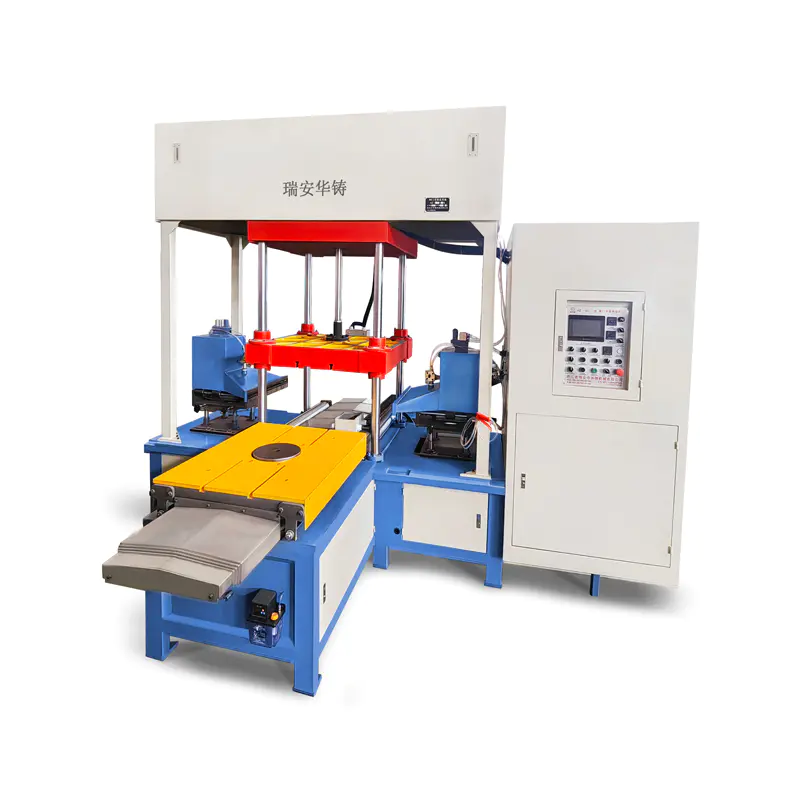
A Shell Core Machine earns its place in this process by shaping core material into forms that match the internal features a casting calls for. Its usefulness really shows up once production involves repeated core making paired with more intricate cavity structures.
Core design, forming, handling, and casting prep don't operate independently — they're tangled together. Looking at the whole chain helps explain why core-making equipment carries so much weight in complex casting work.
Why Do Sand Cores Matter for Complex Casting Cavities?
Building internal cavities with just the outer mold rarely gets the job done. A sand core sits in the space meant to stay open inside the finished part. Once casting happens, that core material comes out, leaving behind the passage or cavity the design called for.
This gives manufacturers a way to produce shapes that would otherwise demand far more complicated mold setups.
A few internal features tend to show up again and again:
| Casting Feature | Role of the Sand Core |
|---|---|
| Internal passage | Creates an open route through the casting |
| Hollow section | Forms space inside the component |
| Curved cavity | Supports internal shape formation |
| Enclosed area | Separates internal space from surrounding metal |
| Interconnected passage | Helps create multiple internal sections |
The core has to correspond closely with what the casting design actually calls for. Get that match wrong, and the resulting cavity suffers — plus extra rework tends to follow.
Core making shouldn't really be treated as a step that stands on its own. It's tied tightly to mold prep and to the final shape the casting ends up taking.
How Does a Shell Core Machine Help Form Complicated Shapes?
A core-making machine gives operators a controlled way to shape sand around a pattern. The forming process lets sand settle into the intended cavity and take on the shape needed.
With more complicated castings, the core geometry might include narrow sections, curves, sudden changes in direction, or several connected areas at once. Forming that by hand gets rough once these features need repeating across a production run.
Bringing a machine into the process tends to bring order to the forming routine. The pattern acts as a physical reference point, while the equipment carries the load of filling and shaping the sand.
What comes out isn't just a shaped lump of sand, either. It's a working piece of the casting system, one that has to mesh with everything else happening in the mold.
Solid core production, then, really starts with understanding how that internal cavity relates to the casting as a whole.
How Does Core Design Shape Casting Production?
Core design decides how easily a complex internal cavity can actually get made. A design needs to deliver the intended internal shape while still letting the core be formed, pulled free, handled, and set into place without a fight.
Complicated shapes demand extra attention around transitions and support areas. A thin section behaves nothing like a bulkier one when it comes to handling. A long core often needs proper support before it ever goes into the mold.
Core design tends to get examined from a handful of angles:
- Cavity shape — the core needs to represent whatever internal area the casting requires.
- Handling — workers have to move and position the core without beating it up unnecessarily.
- Mold placement — the core needs to seat correctly within the surrounding mold.
- Removal — once the casting is done, the core material needs a reasonable way out.
- Production repeatability — the same core form should hold up to being reproduced again and again.
None of these sit apart from each other. A shape that looks perfectly fine on paper can still demand changes the moment it hits the production floor.
How Does Sand Core Forming Affect Internal Casting Quality?
Forming is what turns sand into the physical shape that will later define the internal cavity. The sand's condition and how the forming process runs both leave a mark on how well that core actually performs.
Sand needs to fill every intended area of the pattern. Leave a section underfilled, and the finished cavity won't match what was expected.
The core also needs enough backbone to survive handling and mold placement. A chipped edge or a weak spot can throw off the cavity before casting even starts.
A Sand Core Making Machine helps keep the forming process repeatable, giving operators a consistent method for filling and shaping the material batch after batch.
That said, equipment on its own doesn't decide the outcome. Material prep, pattern condition, machine setup, and how people handle the core all factor in.
This matters even more once internal cavities involve several connected features. A small hiccup in one spot can ripple outward and affect how the core fits with the rest of the mold.
Why Does Core Handling Matter for Complex Structures?
A freshly formed core might look sturdy enough, but handling can introduce trouble fast if the shape is delicate or awkward to support.
Complex cores often carry narrow sections or uneven contours, and those spots tend to be more vulnerable during movement and placement.
Handling really deserves thought during the design stage, not as an afterthought once core production is already underway.
A few handling considerations worth keeping in mind:
| Handling Area | Practical Concern |
|---|---|
| Lifting | Avoid unnecessary stress on delicate sections |
| Storage | Protect the core from accidental contact |
| Movement | Keep the shape stable during transport |
| Placement | Align the core with the mold carefully |
| Inspection | Check for visible damage before use |
Sticking to a consistent handling routine cuts down on damage that's otherwise easy to avoid.
The core also has to stay properly seated inside the mold. Let it shift during prep, and the internal cavity might end up somewhere other than where the design intended.
How Does Automated Core Making Fit Into Production?
Once a foundry starts handling more repeated casting work, manual core making gets harder to keep organized. Every core needs its own round of prep, forming, inspection, and handling.
Automation gives these activities a more repeatable rhythm.
A Sand Core Shooting Machine helps by feeding core sand into a prepared pattern and shaping it into the required form. That equipment fits into a wider production flow, where forming leads into inspection, then handling, then mold prep.
None of this removes operators from the picture, though. People still need to keep tabs on material condition, equipment status, pattern condition, and overall core quality.
What really changes is that forming stops depending so heavily on repeated manual shaping.
That shift comes in handy when a foundry needs to churn out similar core shapes across an entire production run while keeping the workflow under control.
What Can Cause Problems When Producing Complex Sand Cores?
Complex core production juggles several conditions at once, and trouble can start almost anywhere — the pattern, the material, the equipment, or the handling process.
Common headaches include incomplete filling, damaged sections, uneven surfaces, or a core that just won't release cleanly from the pattern.
A quick look at how different areas tend to cause trouble:
| Production Area | Possible Issue |
|---|---|
| Core material | Inconsistent forming behavior |
| Pattern | Difficulty reproducing the intended shape |
| Equipment setup | Uneven or incomplete core formation |
| Core handling | Cracks or damaged sections |
| Mold placement | Incorrect cavity position |
| Storage | Changes caused by unsuitable handling conditions |
Troubleshooting works better when it stays focused on the actual stage where the problem started.
Changing too many things at once just muddies the water. Working through it step by step lets the production team connect a visible flaw back to a plausible source.
That kind of careful tracing matters even more with complicated internal cavities, since several small factors are often interacting at once.
How Can Equipment Selection Support Different Casting Structures?
Not every casting calls for the same core-making approach. A simple internal cavity might be straightforward to produce, while a tangled passage system demands far more careful planning around equipment and pattern.
Equipment choice should reflect the kind of core being made, how the production workflow runs, and how operators end up handling the finished piece.
A Dependable Shell Core Machine makes sense when a foundry wants a structured way to handle repeated shell core production. The real focus belongs on how the equipment fits the actual process, not just on a spec sheet.
A few questions worth asking:
- Does the forming method actually suit the core shape?
- Can operators load and remove the pattern without a struggle?
- Does the equipment fit the intended production routine?
- Can the core be handled without unnecessary trouble?
- Does the whole process mesh with existing mold prep?
These questions tie equipment choice back to what production actually needs day to day.
The machine ought to support the whole workflow, not sit off to the side as a standalone piece of gear.
How Can Core Making Become More Consistent in Daily Production?
Consistency comes from staying on top of small details, over and over. Core material needs preparing the same way each time. Patterns need regular checks. Equipment needs to stay in decent operating shape.
Operators also need a clear way to check finished cores before they head into mold prep.
A workable production routine might look something like this:
- Inspect the core pattern before production.
- Check the condition of the core material.
- Confirm the forming setup.
- Produce the core following the established process.
- Inspect the formed shape.
- Handle and store the core with care.
- Check the core again before mold placement.
- Review recurring problems and trace where they actually start.
A routine like this makes complex casting production far easier to keep tabs on.
Keep the core shape consistent, and mold preparation gets a lot more predictable. Keep mold placement under control, and the internal cavity becomes easier to reproduce time after time.
That chain of cause and effect explains why core-making equipment holds such an important place in modern casting workflows. A Shell Core Machine isn't just there to shape sand into a form. Its real value lies in how that shape slots into the larger sequence — forming, handling, mold assembly, and everything that follows on the way to a finished casting.
Related products
-

The HZ700-C Fully Automatic Core Shooter With Core Pulling is an advanced molding solution designed ...
See Details -

The Fully Automatic Environmentally Friendly Core Shooting Machine is a highly advanced, eco-conscio...
See Details -

The HZ700-X Fully Automatic Core Shooting Machine With Lower Mold Removal is designed to make core p...
See Details -

The HZ700-X Fully Automatic Core Shooting Machine With Lower Mold Removal is designed for molding ap...
See Details -

The HZ800-X Hydraulic Fully Automatic Core Shooting Machine is designed for efficient and accurate c...
See Details -

The environmentally friendly core shooting machine with lower mold removable is a high-performance s...
See Details -

The Lower Mold Removable Type Environmentally Friendly Core Shooting Machine with Door is an advance...
See Details -

The HZ800-X Hydraulic Environmentally Friendly Core Shooting Machine is an advanced automatic core p...
See Details

Welcome to our company to design according to your design and sample proofing.
Contact Infor
-
 Haixi Town, Pingyang County, Wenzhou City, Zhejiang Province, China
-
 +86-13868387823
-
 +86-577-65197155
-
 +86-577-65197166
-
 13868387823@139.com
huazhultd@outlook.com
Quick Links
Products
Copyright © Ruian Huazhu Machinery Co., Ltd. All Rights Reserved.

