 En
En
 русский
 Español
 عربى
عربى Deutsch
How Does a Shell Core Machine Support Stable Foundry Work
Industry News-Foundry production runs on connected steps happening one after another. A small delay in one area can ripple outward, affecting material movement, mold preparation, casting schedules, and how finished parts get handled downstream.
Core making sits in the middle of this chain. Sand cores create the internal spaces and shapes inside cast components, so the condition of every core produced shapes what happens later on the shop floor.
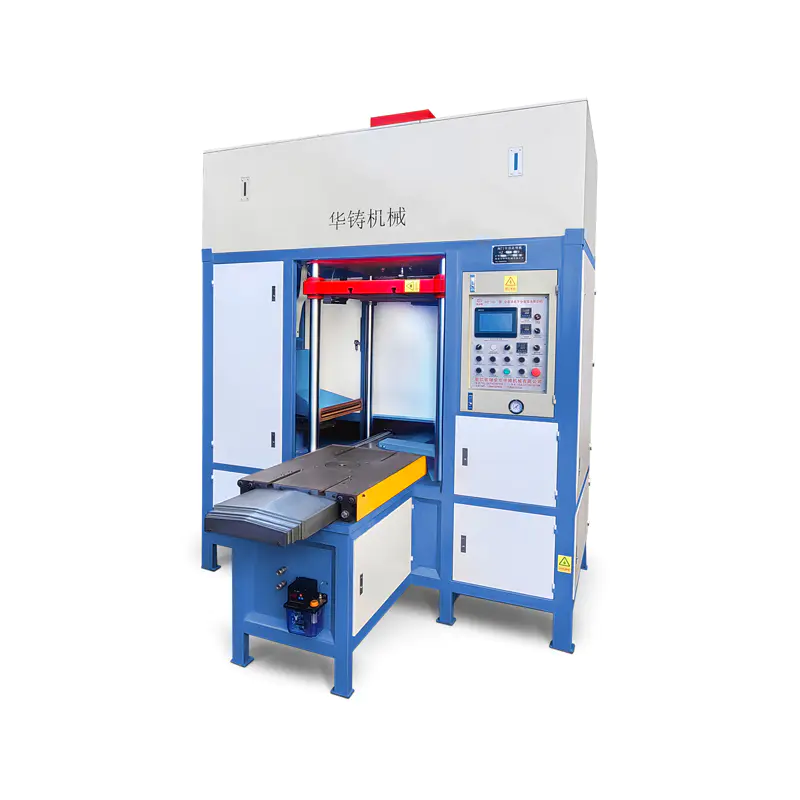
A Dependable Shell Core Machine supports this process by giving foundries a consistent way to produce cores day after day. Stable operation makes daily production easier to organize and cuts down on manual adjustments that eat into a shift.
Dependability isn't just about a machine staying switched on. It also comes down to maintenance, material preparation, how operators interact with the equipment, core quality, and whether the machine fits into the wider foundry workflow.
Why Equipment Stability Matters in Foundry Production
Foundry work involves several activities happening in sequence, one feeding into the next. Materials get prepared, cores get formed, molds get set up, and finished cores need to reach the right area at the right time.
If core production stops without warning, the effects spread past the core-making section fairly quickly. Workers wait on replacement cores, schedules get shuffled, and material movement starts feeling less organized.
A stable Sand Core Making Machine cuts down on this kind of disruption by supporting a routine people can rely on. The equipment repeats planned operations while operators keep watch and step in when something needs attention.
| Production Area | Value of Stable Operation |
|---|---|
| Core production | Supports a regular workflow |
| Material preparation | Makes material planning easier |
| Mold preparation | Helps coordinate core availability |
| Core handling | Cuts down on unexpected interruptions |
| Production scheduling | Makes daily planning more manageable |
| Quality inspection | Provides a consistent production basis |
Stable operation also makes it easier to spot when something's off, since a change in sound, movement, output, or handling behavior tends to stand out against a familiar pattern. None of this removes every production problem — materials, tooling, working conditions, and human judgment all still shape the outcome. The payoff is that the machine becomes a predictable part of the process rather than a question mark in the middle of the workflow.
How a Shell Core Machine Supports Production Continuity
Production continuity ties closely to preparation and equipment condition working together. A machine that performs consistently lets workers build upstream and downstream activities around a schedule that actually holds up.
A Shell Core Machine contributes by supporting repeated core-forming work, so operators follow an established routine instead of falling back on manual forming every time something shifts. The surrounding workflow matters just as much: finished cores need to get removed, inspected, moved, and stored in some order, or the machine keeps producing cores while the next stage struggles to keep up.
A practical production flow tends to hang together around a few connected steps:
- Material preparation — Material should be ready before the core-making operation starts.
- Core box preparation — The forming area needs to be clean and properly arranged.
- Machine operation — Equipment follows the planned production sequence.
- Core removal — Finished cores get handled carefully once forming is complete.
- Quality checking — The core gets checked before moving to the next stage.
- Storage or transfer — Accepted cores go where they can be reached when needed.
A Dependable Shell Core Machine fits into this arrangement when its operation stays stable and daily controls are straightforward for production staff. Continuity also depends on maintenance planning — a machine that gets regular attention is easier to manage than one only looked at once a problem becomes obvious.
What Makes a Dependable Shell Core Machine Practical for Daily Use
Daily foundry work is repetitive, but it's rarely simple. Operators manage materials, watch equipment, check finished cores, clean the work area, and adjust to shifting production needs.
| Daily Requirement | Practical Consideration |
|---|---|
| Machine setup | Clear and organized preparation |
| Material handling | Suitable and consistent supply |
| Operation | Predictable working sequence |
| Core removal | Convenient access to finished cores |
| Cleaning | Straightforward routine care |
| Inspection | Easy access to important areas |
| Adjustment | Controlled changes when required |
Simple operation helps cut down on avoidable mistakes. When workers have to make frequent manual corrections just to keep things running, the process gets harder to maintain over a shift, while a clearly organized machine keeps routine tasks easier to follow, even for someone newer to the line.
The operator still plays a real role. Automation doesn't remove the need for observation and judgment, especially where materials and conditions can shift without much warning, so a dependable machine should support the operator rather than force them to work around its quirks.
How Maintenance Keeps Core-Making Equipment Stable
Maintenance belongs to normal machine operation, not just the aftermath of a breakdown. A Sand Core Making Machine works through repeated movement, material handling, forming, and release, and over time these activities affect surfaces, moving parts, connection points, and the working spaces around it.
Regular cleaning removes material residue from spots where buildup can interfere with normal operation, while visual inspection helps operators notice loose components, unusual wear, or shifts in machine behavior.
| Maintenance Activity | Purpose |
|---|---|
| Routine cleaning | Keeps working areas orderly |
| Visual inspection | Helps identify unusual conditions |
| Part checking | Supports normal machine operation |
| Lubrication where required | Helps maintain moving components |
| Connection inspection | Helps identify loose or damaged areas |
| Scheduled servicing | Supports long-term equipment care |
Maintenance should follow whatever the equipment manufacturer recommends, since machines differ in structure and needs. The working environment shapes this too — foundries deal with dust, sand, and heat that add demand on equipment beyond normal wear, so an organized surrounding area makes cleaning and inspection easier to keep up with over time.
How Stable Equipment Supports Core Quality Control
Core quality plays a real part in casting preparation. A core that shifts noticeably in shape, condition, or handling behavior can create problems further along in production.
A stable Shell Core Machine gives core production a consistent foundation, freeing operators to focus on material condition, setup, and inspection instead of manually reproducing every movement by hand.
| Quality Area | What Operators May Check |
|---|---|
| Shape | Whether the core matches the intended form |
| Surface | Whether the surface looks suitable |
| Structure | Whether the core stays intact during handling |
| Dimensions | Whether the core matches the required design |
| Cleanliness | Whether unwanted material is still present |
| Handling condition | Whether the core can move safely to the next stage |
Automation doesn't guarantee every core turns out acceptable — material condition, core box condition, machine setup, and environmental factors all still shape the outcome. What automation provides is a repeatable basis: quality teams get a clearer reference point when checking finished cores, and can trace problems back through recent material prep, machine operation, and maintenance activity instead of guessing.
Why Material Preparation Matters for a Sand Core Making Machine
The machine is only one part of core production. The material entering the process shapes the finished core just as much, sometimes more.
A Sand Core Making Machine needs suitable material to carry out its forming process as designed. If material condition shifts, the finished core can behave differently even when the machine runs as it always does.
| Material Management Area | Production Consideration |
|---|---|
| Storage | Keep materials in suitable conditions |
| Preparation | Follow the required production routine |
| Mixing | Maintain a consistent process |
| Transfer | Avoid unnecessary contamination |
| Feeding | Provide material in an organized manner |
| Inspection | Check material condition when required |
Good material management supports continuity directly: if the machine is ready but material preparation runs late, the core-making process stalls anyway. Operators can also watch for changes in how material behaves during production, since unexpected shifts can signal that preparation needs a second look before they get mistaken for a machine problem.
How Foundries Reduce Unplanned Interruptions and Select Equipment
Unexpected interruptions come from more places than the equipment itself. Material shortages, incorrect setup, cleaning delays, tooling issues, and disorganized workflow can all create pauses just as easily as a mechanical fault.
| Potential Issue | Preventive Focus |
|---|---|
| Material shortage | Coordinate material preparation |
| Residue buildup | Maintain routine cleaning |
| Setup changes | Use clear production procedures |
| Part wear | Perform regular inspection |
| Core handling problems | Organize transfer methods |
| Operator uncertainty | Provide clear operating guidance |
Simple checklists help operators confirm preparation tasks are done before production starts, and maintenance records offer a reference point — when a machine keeps running into problems in the same area, teams can look at the pattern and decide whether the underlying cause needs attention. The goal isn't eliminating every interruption a foundry might face; it's cutting down on avoidable ones and keeping responses organized when something does come up.
Equipment selection should start with the production process rather than a product name on a spec sheet. A foundry needs to weigh the type of cores being produced, available workspace, material preparation method, operator workflow, maintenance requirements, and how finished cores move toward the next stage. Useful questions include whether the machine suits the intended process, whether it supports repeated daily operation without constant babysitting, whether routine cleaning and inspection happen conveniently, and whether production staff can manage routine operation on their own.
A Sand Core Making Machine also needs to be weighed against the factory layout itself. Equipment placed in an inconvenient spot can create unnecessary back-and-forth movement even if the machine performs its intended task well, and the distance between material preparation, core production, inspection, and storage shapes daily efficiency more than people sometimes assume.
The right equipment, in the end, isn't simply a machine that produces cores. It's equipment that becomes a stable part of the whole foundry operation, working alongside materials, operators, maintenance routines, quality checks, and downstream processes so that core production stays a predictable part of everyday work rather than a recurring source of uncertainty.
Related products
-

The HZ700-C Fully Automatic Core Shooter With Core Pulling is an advanced molding solution designed ...
See Details -

The Fully Automatic Environmentally Friendly Core Shooting Machine is a highly advanced, eco-conscio...
See Details -

The HZ700-X Fully Automatic Core Shooting Machine With Lower Mold Removal is designed to make core p...
See Details -

The HZ700-X Fully Automatic Core Shooting Machine With Lower Mold Removal is designed for molding ap...
See Details -

The HZ800-X Hydraulic Fully Automatic Core Shooting Machine is designed for efficient and accurate c...
See Details -

The environmentally friendly core shooting machine with lower mold removable is a high-performance s...
See Details -

The Lower Mold Removable Type Environmentally Friendly Core Shooting Machine with Door is an advance...
See Details -

The HZ800-X Hydraulic Environmentally Friendly Core Shooting Machine is an advanced automatic core p...
See Details

Welcome to our company to design according to your design and sample proofing.
Contact Infor
-
 Haixi Town, Pingyang County, Wenzhou City, Zhejiang Province, China
-
 +86-13868387823
-
 +86-577-65197155
-
 +86-577-65197166
-
 13868387823@139.com
huazhultd@outlook.com
Quick Links
Products
Copyright © Ruian Huazhu Machinery Co., Ltd. All Rights Reserved.

