 En
En
 русский
 Español
 عربى
عربى Deutsch
What Are Valve Fittings Castings?
Industry News-Valve fittings castings refer to components produced through casting processes and used in various types of valves and piping connections. These castings form essential parts of systems that regulate the flow of liquids, gases, or other media across industrial, commercial, and residential applications.
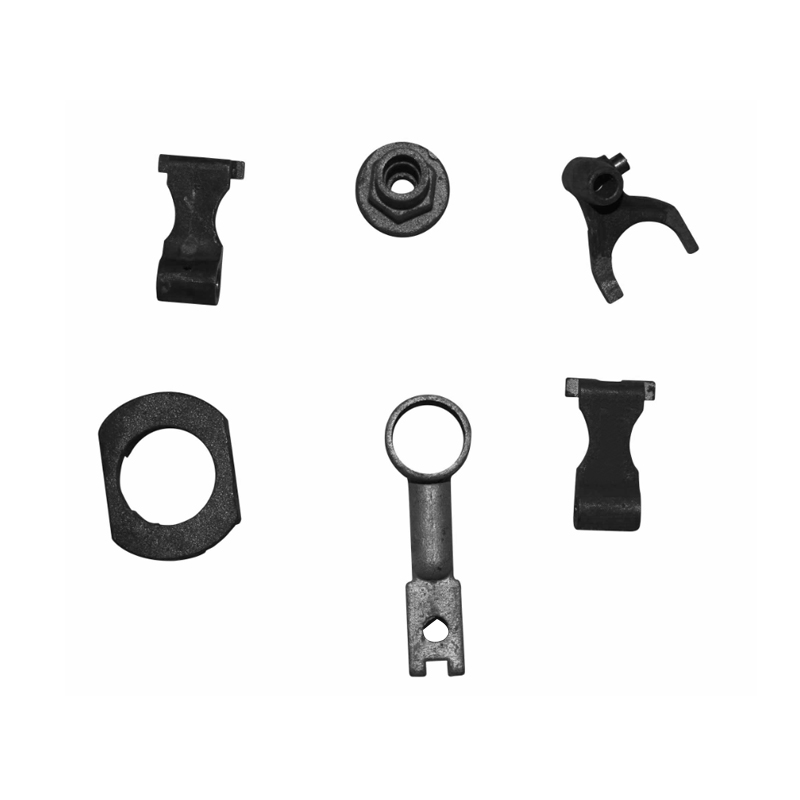
Casting involves pouring molten metal into a mold shaped according to the desired part, allowing it to solidify, and then finishing it as needed. This method is widely used because it supports the production of complex shapes and sizes that might be difficult or costly to achieve through machining alone.
Common materials used for valve fittings castings include stainless steel, carbon steel, ductile iron, brass, and bronze. The material selection depends on the intended working conditions, such as pressure, temperature, and compatibility with the transported fluid.
Valve fittings produced through casting may include:
Valve bodies
Valve covers or bonnets
Flanges and connectors
Elbows, tees, and couplings
Custom-shaped parts for specialized systems
These castings are designed to provide structural strength, resistance to corrosion, and reliable sealing performance to ensure proper flow control in pipelines or equipment.
What Casting Methods Are Commonly Used for Valve Fittings?
Several casting methods are used to manufacture valve fittings, each offering specific benefits based on the component’s complexity, required precision, production volume, and cost considerations. Common methods include:
- Sand Casting:
Sand molding is one of the widely used techniques because it is adaptable and suitable for both small batches and large components. It supports a wide range of metals and allows for flexibility in part design.
Investment Casting:
Also known as lost-wax casting, this method provides high accuracy and good surface finish. It is often used for smaller parts requiring more precision or finer details, such as valve stems or intricate fitting shapes.
- Die Casting:
Die casting uses high-pressure injection of molten metal into a steel mold. It is suited for non-ferrous metals like aluminum or zinc alloys. This method is efficient for high-volume production of smaller fittings.
Centrifugal Casting:
This process uses rotational force to distribute molten metal against the mold walls. It is commonly used for cylindrical components such as valve housings or flanged pipes.
Shell Molding:
Combines sand casting and resin coating to create a smoother mold surface. This method offers improved accuracy and a cleaner finish compared to standard sand casting.
Each method has its own advantages and limitations. Manufacturers typically choose based on the desired part dimensions, mechanical requirements, budget constraints, and expected production quantity.
How Do You Ensure the Quality of Valve Fittings Castings?
Quality assurance is critical because valve fittings are used in systems where failure may leakage, pressure loss, or equipment downtime. To maintain dependable performance, various quality control steps are typically implemented:
Material Testing:
Chemical composition analyses ensure that the metal used meets industry standards and matches the requirements of the intended application.
Dimensional Inspection:
Measuring tools, gauges, or 3D scanning systems verify that the casted part meets design specifications.
Non-Destructive Testing (NDT):
Techniques such as radiographic testing, ultrasonic testing, magnetic particle inspection, or dye penetrant inspection help detect internal or surface defects without damaging the part.
Pressure and Leak Testing:
Valve bodies and fittings may undergo pressure testing to confirm structural integrity under operational conditions.
Heat Treatment:
Heat treatment processes like annealing, normalizing, or quenching improve mechanical properties such as hardness, strength, and ductility.
Finishing and Machining Checks:
After casting, machining operations ensure accurate sealing surfaces, threaded areas, and smooth inner passages.
Manufacturers follow recognized standards from organizations such as ASTM, ASME, ISO, or API depending on the industry, ensuring that castings meet acceptable safety and performance benchmarks.
What Factors Should Be Considered When Choosing Valve Fittings Castings?
Selecting the right valve fittings castings involves evaluating technical, environmental, and operational factors. Key considerations include:
Material Compatibility:
Choose a material suited for the fluid type—whether corrosive, abrasive, or chemically reactive—and consider temperature and pressure conditions.
Casting Method:
The chosen production method should match the part’s complexity, required precision, and budget.
Size and Pressure Rating:
Fittings must align with pipeline size standards and withstand expected operating pressures.
Environmental Conditions:
Outdoor, marine, or high-humidity environments may require corrosion-resistant alloys or protective coatings.
Certification and Standards Compliance:
Components for specialized industries like oil and gas, chemical processing, or water treatment often need specific certifications.
Maintenance and Durability:
Consider ease of inspection, repair, or replacement, especially for systems requiring frequent monitoring.
Cost Balance:
Compare not only upfront cost but also expected service life, maintenance frequency, and potential downtime impacts.
Careful evaluation of these factors ensures that the selected castings support long-term system performance and operational reliability.
Related products
-

The HZ700-C Fully Automatic Core Shooter With Core Pulling is an advanced molding solution designed ...
See Details -

The Fully Automatic Environmentally Friendly Core Shooting Machine is a highly advanced, eco-conscio...
See Details -

The HZ700-X Fully Automatic Core Shooting Machine With Lower Mold Removal is designed to make core p...
See Details -

The HZ700-X Fully Automatic Core Shooting Machine With Lower Mold Removal is designed for molding ap...
See Details -

The HZ800-X Hydraulic Fully Automatic Core Shooting Machine is designed for efficient and accurate c...
See Details -

The environmentally friendly core shooting machine with lower mold removable is a high-performance s...
See Details -

The Lower Mold Removable Type Environmentally Friendly Core Shooting Machine with Door is an advance...
See Details -

The HZ800-X Hydraulic Environmentally Friendly Core Shooting Machine is an advanced automatic core p...
See Details

Welcome to our company to design according to your design and sample proofing.
Contact Infor
-
 Haixi Town, Pingyang County, Wenzhou City, Zhejiang Province, China
-
 +86-13868387823
-
 +86-577-65197155
-
 +86-577-65197166
-
 13868387823@139.com
huazhultd@outlook.com
Quick Links
Products
Copyright © Ruian Huazhu Machinery Co., Ltd. All Rights Reserved.

