 En
En
 русский
 Español
 عربى
عربى Deutsch
How to Choose Engineering Machinery Castings
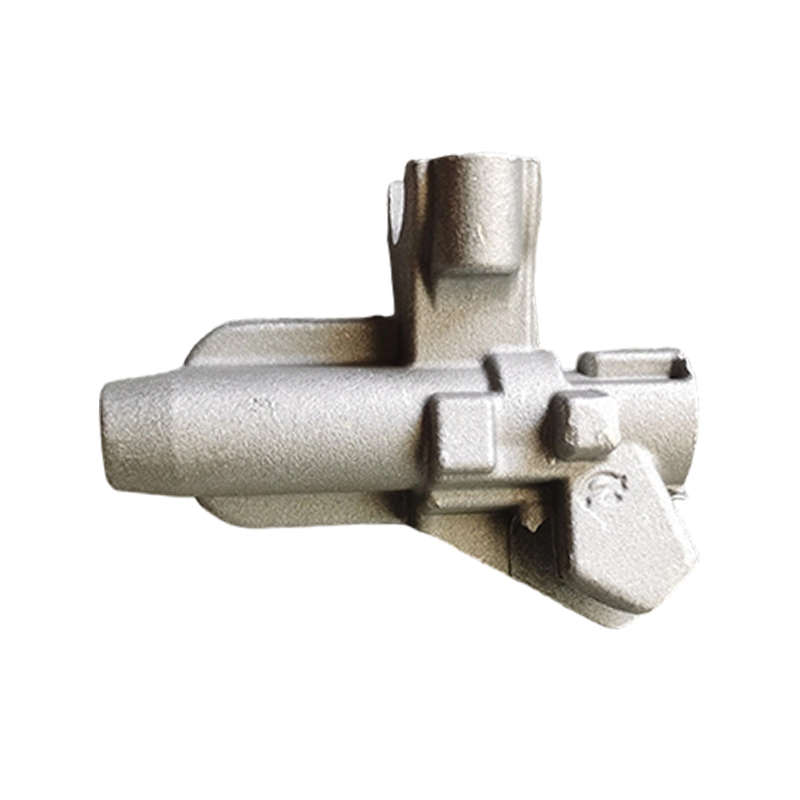
Industry News-Engineering machinery castings are widely used in construction equipment, mining machinery, agricultural machines, and industrial installations. Components such as engine blocks, gear housings, frames, and structural supports depend on castings for load-bearing and functional reliability. Choosing suitable castings is not only a technical decision but also a practical one that affects equipment performance, service life, maintenance cost, and production efficiency. This essay discusses how to choose engineering machinery castings from several key aspects, supported by a summary table for clearer comparison.
Understanding Application Requirements
The step in selecting engineering machinery castings is to clearly define the application requirements. Different machines operate under different conditions, such as vibration, impact, temperature changes, and exposure to moisture or chemicals. These working conditions directly influence the type of casting material and structural design required.
For example, components used in earth-moving equipment are often subjected to repeated mechanical loads and shock forces, so the casting should have adequate strength and fatigue resistance. In contrast, castings used in stationary industrial machines may prioritize dimensional stability and wear resistance over impact strength. Load type, operating speed, contact stress, and surrounding environment should all be identified before material selection begins.
Selection of Casting Material
Material choice is a central factor in casting selection. Common materials for engineering machinery castings include gray cast iron, ductile iron, carbon steel, and alloy steel. Each material provides different combinations of strength, toughness, wear resistance, and machinability.
Gray cast iron offers good vibration damping and machinability, making it suitable for bases, housings, and machine beds. Ductile iron provides higher tensile strength and better impact resistance, which is useful for load-bearing parts such as brackets and suspension components. Cast steel and alloy steel are often selected for parts exposed to high stress, wear, or thermal loads, such as gears, track links, and structural joints.
Material selection should consider not only mechanical properties but also the balance between performance needs and production cost.
Structural Design and Dimensional Accuracy
The structural design of a casting affects both its mechanical behavior and manufacturing feasibility. Wall thickness uniformity, rib placement, fillet radii, and transitions between sections should be carefully designed to reduce stress concentration and avoid internal defects such as shrinkage cavities or cracking.
Dimensional accuracy is another important factor. Some components require close tolerances to ensure proper assembly and mechanical performance. In such cases, the casting should allow sufficient machining allowance without causing excessive material waste. Designers must also consider whether the casting shape supports efficient mold filling and solidification.
Manufacturing Process and Foundry Capability
Different casting processes influence surface quality, dimensional tolerance, and internal structure. Common methods include sand casting, shell mold casting, investment casting, and permanent mold casting. Sand casting is widely used for large and complex engineering machinery parts due to its flexibility and relatively low tooling cost. Investment casting may be selected for smaller parts requiring higher detail and smoother surfaces.
Equally important is the capability of the foundry. Factors such as melting control, mold preparation, defect detection, heat treatment capacity, and quality inspection systems affect the consistency and reliability of castings. A foundry with stable process control and experience in similar components helps reduce the risk of defects and rework.
Mechanical Properties and Performance Testing
Engineering machinery castings often operate under demanding conditions, making mechanical property verification essential. Common tests include tensile strength, yield strength, elongation, hardness, and impact testing. These test results help confirm that the selected material and process meet design requirements.
For critical components, non-destructive testing such as ultrasonic testing, magnetic particle inspection, or X-ray examination may be required to detect internal flaws. Performance data obtained from testing supports quality control and reduces uncertainty during actual equipment operation.
Cost, Supply Stability, and Maintenance Considerations
Cost evaluation should include not only the initial price of the casting but also long-term usage factors such as maintenance frequency, downtime risk, and replacement availability. A lower initial cost may higher long-term expenses if the component requires frequent repairs or early replacement.
Supply stability is another practical concern. Choosing castings that rely on materials or limited suppliers may introduce risks to production schedules. In addition, when spare parts are likely to be required during the equipment’s service life, selecting standardized or commonly used casting materials can simplify inventory management.
The following table summarizes the major aspects involved in selecting engineering machinery castings:
|
Selection Aspect |
Key Considerations |
Practical Purpose |
|
Application requirements |
Load type, vibration, temperature, environment |
Defines basic performance needs |
|
Material selection |
Gray iron, ductile iron, cast steel, alloy steel |
Balances strength, toughness, and machinability |
|
Structural design |
Wall thickness, ribs, fillets, tolerances |
Reduces defects and stress concentration |
|
Manufacturing process |
Sand casting, investment casting, molding capability |
Affects surface quality and internal structure |
|
Mechanical properties |
Strength, hardness, impact resistance |
Confirms suitability under working conditions |
|
Cost and supply stability |
Unit cost, maintenance, spare part availability |
Controls long-term operating expense |
Related products
-

The HZ700-C Fully Automatic Core Shooter With Core Pulling is an advanced molding solution designed ...
See Details -

The Fully Automatic Environmentally Friendly Core Shooting Machine is a highly advanced, eco-conscio...
See Details -

The HZ700-X Fully Automatic Core Shooting Machine With Lower Mold Removal is designed to make core p...
See Details -

The HZ700-X Fully Automatic Core Shooting Machine With Lower Mold Removal is designed for molding ap...
See Details -

The HZ800-X Hydraulic Fully Automatic Core Shooting Machine is designed for efficient and accurate c...
See Details -

The environmentally friendly core shooting machine with lower mold removable is a high-performance s...
See Details -

The Lower Mold Removable Type Environmentally Friendly Core Shooting Machine with Door is an advance...
See Details -

The HZ800-X Hydraulic Environmentally Friendly Core Shooting Machine is an advanced automatic core p...
See Details

Welcome to our company to design according to your design and sample proofing.
Contact Infor
-
 Haixi Town, Pingyang County, Wenzhou City, Zhejiang Province, China
-
 +86-13868387823
-
 +86-577-65197155
-
 +86-577-65197166
-
 13868387823@139.com
huazhultd@outlook.com
Quick Links
Products
Copyright © Ruian Huazhu Machinery Co., Ltd. All Rights Reserved.

