 En
En
 русский
 Español
 عربى
عربى Deutsch
Home / News / Industry News / What Are the Types and Production Processes of Engineering Machinery Castings?
What Are the Types and Production Processes of Engineering Machinery Castings?
Industry News-Engineering machinery castings are essential components in heavy machinery, construction equipment, agricultural machines, and industrial systems. These castings provide structural support, load-bearing capacity, and precise geometries necessary for machinery operation. The design, material selection, and production processes all influence the performance and durability of these components.
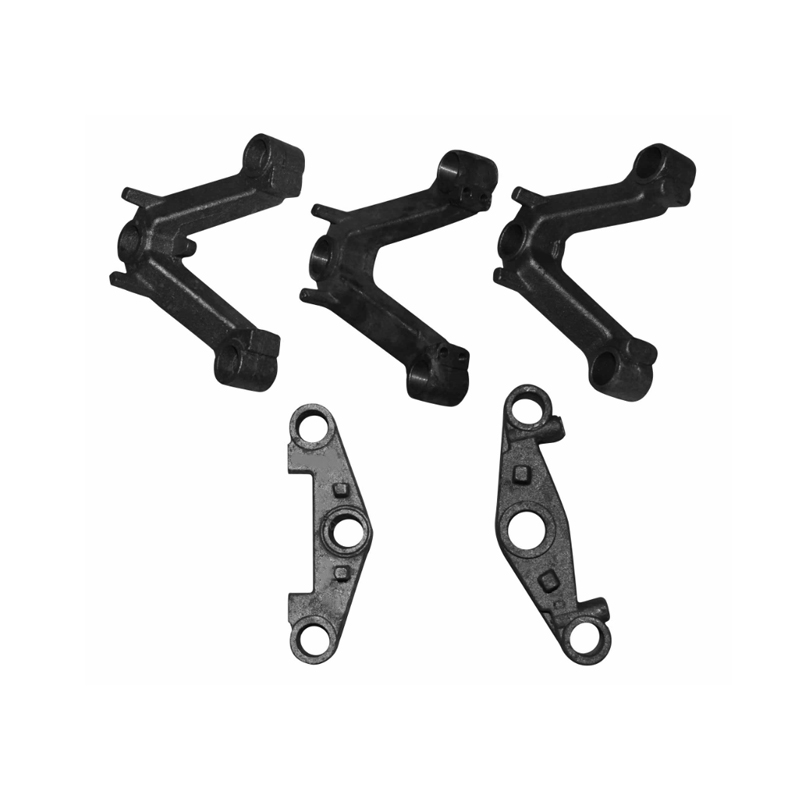
What Are the Different Types of Engineering Machinery Castings and Their Applications?
Grey Iron Castings
Grey iron castings are widely used for engine blocks, gear housings, and pump bodies due to their good machinability and vibration-damping properties.
Ductile Iron Castings
Ductile iron castings provide higher tensile strength and impact resistance compared with grey iron. They are suitable for gears, crankshafts, and structural frames.
Steel Castings
Steel castings offer higher strength and toughness and are used in heavy-duty applications such as excavator arms, crusher frames, and pressure vessels.
Aluminum Castings
Aluminum castings are lightweight with moderate strength, commonly used for components where weight reduction is critical, such as hydraulic housings or engine components.
Special Alloy Castings
Nickel, chromium, or manganese alloys are used in components exposed to high temperature, corrosion, or wear, including turbine parts, high-speed gears, and hydraulic pump rotors.
What Are the Material Properties Required for High-Performance Engineering Machinery Castings?
Material properties determine the mechanical performance, durability, and operational life of castings. Key properties include:
|
Property |
Requirement |
Application Relevance |
|
Tensile Strength |
High enough to withstand load |
Gears, shafts, structural frames |
|
Impact Toughness |
Resistance to sudden shocks |
Excavator arms, crushers |
|
Hardness |
Sufficient to resist wear |
Gear teeth, bearing surfaces |
|
Fatigue Strength |
High endurance under cyclic loads |
Rotating shafts, crankcases |
|
Thermal Stability |
Maintain properties at high temperatures |
Engine blocks, turbine housings |
|
Corrosion Resistance |
Minimize oxidation or chemical attack |
Hydraulic components, marine machinery |
Material selection often balances strength, wear resistance, and machinability to achieve optimal performance for specific machinery applications.
What Are the Challenges in Designing and Manufacturing Large Engineering Machinery Castings?
Dimensional Accuracy
Large castings are prone to distortion and shrinkage during cooling, requiring precise mold design and control.
Material Homogeneity
Ensuring uniform chemical composition and microstructure throughout thick sections is difficult.
Weight and Handling
Heavy castings require specialized equipment for mold filling, transportation, and machining.
Complex Geometry
Components with internal cavities, ribs, or thin walls demand accurate mold design and advanced core-making techniques.
Thermal Stresses
Uneven cooling can lead to cracks or residual stress, affecting mechanical performance.
Cost Considerations
Large molds, long casting cycles, and machining processes increase production costs significantly.
How Are Engineering Machinery Castings Made and What Processes Are Involved?
The production of engineering machinery castings involves several steps:
Pattern and Mold Preparation
Patterns are made from wood, metal, or plastics to form the mold cavity. Sand or metal molds are prepared depending on the casting process.
Core Making
Cores are inserted to create internal cavities or complex geometries, typically using sand or ceramic materials.
Melting and Pouring
Metals are melted in furnaces, maintaining correct alloy composition, and poured into the mold at controlled temperatures.
Cooling and Solidification
The metal cools and solidifies in the mold. Proper control of cooling rates reduces defects such as shrinkage or porosity.
Shakeout and Cleaning
Once cooled, the mold material is removed, and the casting is cleaned to remove sand, scale, or coatings.
Heat Treatment and Machining
Heat treatment may improve mechanical properties. Machining ensures precise dimensions and surface finish.
Inspection and Quality Control
Non-destructive testing, dimensional checks, and metallurgical analysis confirm that castings meet design specifications.
Related products
-

The HZ700-C Fully Automatic Core Shooter With Core Pulling is an advanced molding solution designed ...
See Details -

The Fully Automatic Environmentally Friendly Core Shooting Machine is a highly advanced, eco-conscio...
See Details -

The HZ700-X Fully Automatic Core Shooting Machine With Lower Mold Removal is designed to make core p...
See Details -

The HZ700-X Fully Automatic Core Shooting Machine With Lower Mold Removal is designed for molding ap...
See Details -

The HZ800-X Hydraulic Fully Automatic Core Shooting Machine is designed for efficient and accurate c...
See Details -

The environmentally friendly core shooting machine with lower mold removable is a high-performance s...
See Details -

The Lower Mold Removable Type Environmentally Friendly Core Shooting Machine with Door is an advance...
See Details -

The HZ800-X Hydraulic Environmentally Friendly Core Shooting Machine is an advanced automatic core p...
See Details

Welcome to our company to design according to your design and sample proofing.
Contact Infor
-
 Haixi Town, Pingyang County, Wenzhou City, Zhejiang Province, China
-
 +86-13868387823
-
 +86-577-65197155
-
 +86-577-65197166
-
 13868387823@139.com
huazhultd@outlook.com
Quick Links
Products
Copyright © Ruian Huazhu Machinery Co., Ltd. All Rights Reserved.

