 En
En
 русский
 Español
 عربى
عربى Deutsch
The Evolution of Gravity: An Overview of Gravity Casting Machines
Industry News-Different Types of Gravity Casting Machines
Gravity casting machines are primarily categorized by their configuration and the method by which the mold is handled and tilted. The choice of machine depends on the complexity of the part, the required production rate, and the specific alloy being cast.
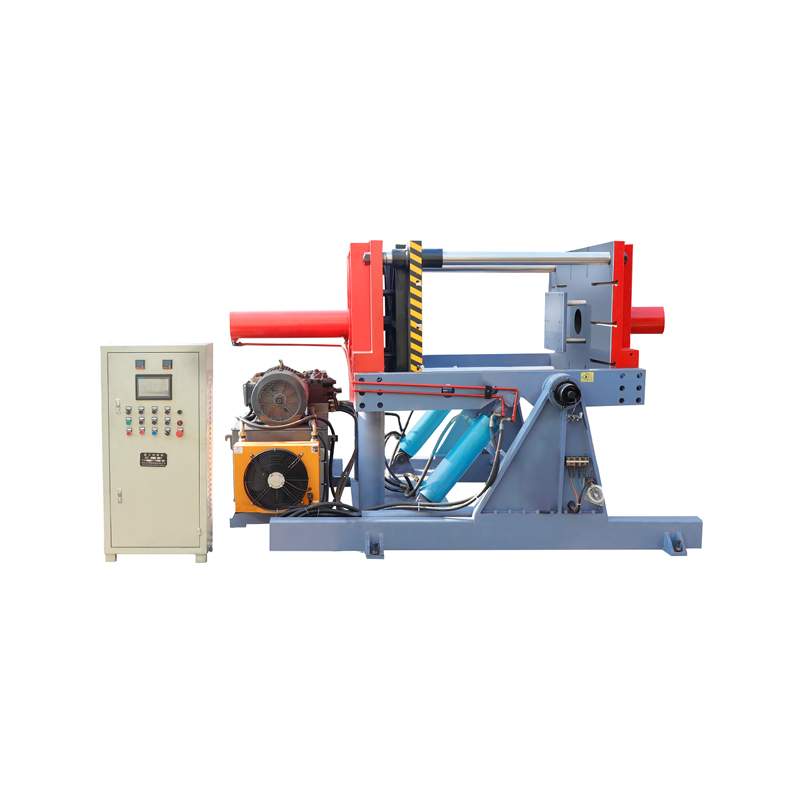
Tilt-Pour Gravity Casting Machines
In tilt-pour machines, the mold is initially positioned at an angle, often with the sprue (the opening where metal enters) near the top. As molten metal is poured into the sprue, the entire machine and mold rotate to a vertical position. This controlled tilting action allows the metal to flow gently into the mold cavity with reduced turbulence and splashing. The primary advantage of this design is the minimization of air entrapment and oxide formation, which is particularly important for casting reactive metals like aluminum alloys. Tilt-pour machines are commonly used for producing high-integrity components such as automotive wheels and suspension parts.
Stationary or Static Gravity Casting Machines
These are the most straightforward type of gravity casting machines. The mold is fixed in a stationary position, typically upright, and molten metal is ladled directly into the sprue from above. Static machines are simpler in design and lower in initial cost than tilt-pour units. They are well-suited for simpler part geometries and for alloys that are less sensitive to turbulence, such as some brass and iron alloys. However, the potential for metal splash and air entrapment is higher than in tilt-pour configurations. These machines are often used in foundries for medium-volume production runs.
Carousel or Rotary Gravity Casting Machines
For higher volume production, carousel machines employ a rotating table that holds multiple molds. As the table indexes from station to station, different operations are performed: one station for mold closing, one for pouring, one for cooling, and one for part ejection. This setup allows for parallel processing, where multiple molds are at different stages of the casting cycle simultaneously. The pouring station on a carousel machine may be either static or tilt-pour. This type of machine maximizes productivity and is common in large-scale manufacturing environments where cycle time reduction is a primary goal.
Vertical and Horizontal Parting Machines
Gravity casting machines can also be distinguished by the orientation of the mold parting line. In vertical parting machines, the mold opens and closes along a vertical axis. This orientation can simplify the gating and risering system for certain parts. Horizontal parting machines, where the mold splits along a horizontal plane, are more common and often easier to automate for core setting and part removal. The choice between them is dictated by the geometry of the casting and the preferences of the tooling designer.
Maintenance and Troubleshooting a Gravity Casting Machine
Maintaining a gravity casting machine in consistent operating condition requires a systematic approach to inspection and repair. Due to the thermal cycles and mechanical stresses involved, certain components require regular attention.
Daily Inspection Tasks:
- Inspect hydraulic hoses and fittings for signs of leaks or abrasion. Hydraulic fluid leaks are a common issue that can lead to pressure loss and contamination.
- Check the mold clamping mechanism for proper operation and full closure. Ensure that no debris is interfering with the mold faces.
- Verify that safety interlocks and light curtains are functioning correctly. These are critical for operator protection.
- Lubricate all moving parts, including guide pins, bushings, and tilt mechanisms, according to the manufacturer's lubrication chart.
Cooling System Maintenance:
- Many gravity casting machines use water-cooled molds or machine platens. Check cooling lines for blockages or leaks. Inadequate cooling can lead to longer cycle times and inconsistent part quality.
- Ensure water flow rates and temperatures are within specified ranges. Scale buildup in water lines should be periodically removed through chemical flushing.
Mold and Tooling Care:
- Inspect molds regularly for thermal fatigue cracks, erosion, or wear. These defects will transfer to the cast parts.
- Clean mold cavities of any residual metal or release agent buildup. Proper mold coating application is essential for good part release and mold life.
- Check ejector pins for free movement and signs of wear. Stuck ejector pins can damage parts or the mold itself.
Troubleshooting Common Issues:
- If parts exhibit cold shuts or incomplete fill, check pouring temperature, mold temperature, and tilt speed (on tilt machines). Insufficient metal temperature or slow pouring are common causes.
- If parts are sticking in the mold, inspect the mold coating for wear, check for undercuts or damage in the cavity, and verify that ejector pins are functioning and not broken.
- If machine movement is erratic or slow, check hydraulic fluid levels, pump pressure, and the condition of hydraulic valves. Air in the hydraulic system can also cause spongy or inconsistent motion.
- For inconsistent cycle times, verify that the programmable logic controller (PLC) is maintaining correct timing sequences and that all sensors are providing accurate position feedback.
How Automation and Technology Have Influenced Evolution
The evolution of gravity casting machines over recent decades has been significantly shaped by advances in automation, control systems, and data analysis. These technological influences have transformed what was once a highly manual, skill-dependent process into a more precise and repeatable manufacturing operation.
Process Control and Monitoring
Modern gravity casting machines are equipped with programmable logic controllers (PLCs) and sophisticated sensors that monitor critical parameters in real time. Pouring temperature, mold temperature, tilt angle and speed (on tilt machines), and cooling rates are all controlled within tight windows. This level of control reduces variability between castings, leading to more consistent metallurgical and dimensional quality. Data acquisition systems can log these parameters for every cycle, providing traceability and enabling statistical process control.
Automated Pouring and Ladling
One of the most significant technological advancements has been the automation of metal delivery. Robotic ladling arms or automatic pouring furnaces now deliver precise amounts of molten metal into the sprue with consistent timing and pour profiles. This eliminates the variability and safety risks associated with manual ladling by human operators. Automated systems can also be programmed to modify the pour rate based on the specific mold being filled, optimizing fill characteristics for different parts.
Robotic Integration
Industrial robots are now commonly integrated with gravity casting cells. Robots are used for extracting finished castings from the mold, placing them on cooling conveyors, and even for setting sand cores into the mold before closing. This automation reduces cycle time, improves consistency, and removes operators from the immediate vicinity of hot metal and moving machinery. Vision-guided robots can also perform basic trimming or inspection tasks.
Simulation and Digital Twin Technology
Before a mold is even built, casting simulation software allows engineers to model the filling and solidification of the part. This digital tool predicts potential defects like porosity, cold shuts, or shrinkage, enabling the gating and riser system to be optimized virtually. This reduces the need for costly and time-consuming physical trial-and-error on the foundry floor. The concept of a "digital twin"—a virtual replica of the physical casting process—is increasingly used to monitor and optimize production in real time.
Related products
-

The HZ700-C Fully Automatic Core Shooter With Core Pulling is an advanced molding solution designed ...
See Details -

The Fully Automatic Environmentally Friendly Core Shooting Machine is a highly advanced, eco-conscio...
See Details -

The HZ700-X Fully Automatic Core Shooting Machine With Lower Mold Removal is designed to make core p...
See Details -

The HZ700-X Fully Automatic Core Shooting Machine With Lower Mold Removal is designed for molding ap...
See Details -

The HZ800-X Hydraulic Fully Automatic Core Shooting Machine is designed for efficient and accurate c...
See Details -

The environmentally friendly core shooting machine with lower mold removable is a high-performance s...
See Details -

The Lower Mold Removable Type Environmentally Friendly Core Shooting Machine with Door is an advance...
See Details -

The HZ800-X Hydraulic Environmentally Friendly Core Shooting Machine is an advanced automatic core p...
See Details

Welcome to our company to design according to your design and sample proofing.
Contact Infor
-
 Haixi Town, Pingyang County, Wenzhou City, Zhejiang Province, China
-
 +86-13868387823
-
 +86-577-65197155
-
 +86-577-65197166
-
 13868387823@139.com
huazhultd@outlook.com
Quick Links
Products
Copyright © Ruian Huazhu Machinery Co., Ltd. All Rights Reserved.

