 En
En
 русский
 Español
 عربى
عربى Deutsch
Home / News / Industry News / How Does a Coated Sand Casting Mold Function and What Are Its Key Components?
How Does a Coated Sand Casting Mold Function and What Are Its Key Components?
Industry News-Coated sand casting molds are widely used in foundry operations to produce metal castings with precise shapes and smooth surface finishes. These molds combine traditional sand molding techniques with a specialized coating that enhances mold strength, surface quality, and dimensional accuracy.
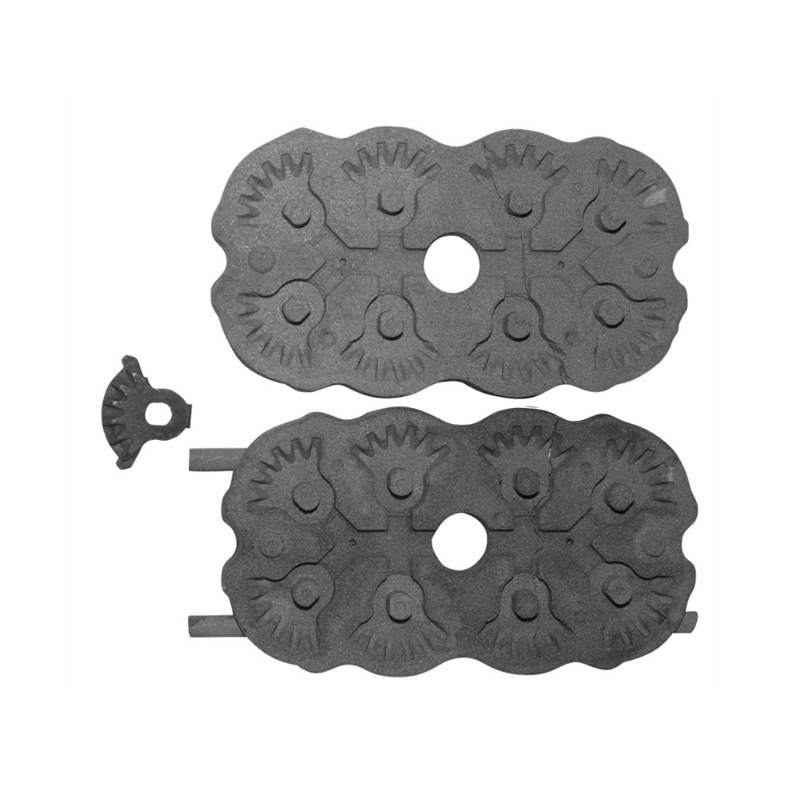
What Is the Core of a Coated Sand Casting Mold?
The core of a coated sand casting mold refers to the inner structure that defines the cavity where molten metal will be poured. It determines the shape, internal features, and surface characteristics of the final casting. Most coated sand molds consist of a sand mixture bound by a resin or clay binder and coated with a refractory material to enhance surface finish and thermal stability.
|
Core Component |
Function Description |
Notes |
|
Sand Mixture |
Forms the main structural body of the mold |
Typically silica sand or olivine sand with a binder |
|
Binder |
Provides mechanical strength to hold sand particles together |
Can be clay-based, resin-based, or chemically bonded |
|
Mold Cavity |
Defines the shape of the casting |
Created by pattern or core box |
|
Coating Layer |
Protects sand from thermal shock and improves surface finish |
Usually refractory paint or ceramic slurry |
|
Venting Channels |
Allows gases and air to escape during pouring |
Prevents gas porosity in the casting |
|
Core Inserts (Optional) |
Shapes internal features or hollow sections |
Can be removable or integrated |
The coated layer improves heat resistance, reduces metal penetration into sand grains, and provides a smoother surface finish. This makes coated sand molds particularly useful for castings requiring higher precision or aesthetic quality, such as engine components, pump housings, or industrial fittings. The core’s integrity directly influences the mechanical properties, dimensional accuracy, and appearance of the final casting.
What Are the Special Components of Coated Sand Casting Mold?
Mold Coating and Surface Treatment
Protective Coating Layer
Coated sand molds feature a refractory coating applied to the cavity surface. This layer prevents the molten metal from directly contacting loose sand grains, reducing the risk of sand erosion and metal penetration.
Surface Finish Control
The coating smooths the mold cavity, improving the finish of the casting surface. Adjustments in coating thickness, composition, or application method can modify the surface texture to meet specific requirements.
Thermal Resistance
The refractory coating enhances the mold’s ability to withstand high temperatures, limiting distortion or cracking during metal pouring and solidification.
Binder Reinforcement
In addition to the coating, chemically or heat-cured binders strengthen the mold structure, especially in areas with thin walls or complex geometry.
Specialized Core Features
Core Inserts and Internal Cavities
Some molds include removable inserts or pre-formed sand cores to produce hollow sections, internal channels, or complex internal geometry. These inserts must be positioned precisely and coated to maintain structural integrity during pouring.
Venting Channels
Properly designed venting channels or risers are essential for gas escape, preventing porosity and other defects. These channels are often coated to reduce erosion from molten metal and maintain mold strength.
Reinforcement Supports
In larger or more complex molds, sand cores may be reinforced with metal rods, wire, or high-strength sand mixtures to prevent collapse under metal weight. These supports also interact with the coating layer to maintain cavity shape.
Assembly Features
Many coated sand molds are modular, consisting of multiple sections that must align precisely. Components like locating pins, interlocking flanges, and support frames are coated or treated to prevent metal leakage and ensure repeatable assembly.
These specialized components allow coated sand casting molds to produce more complex and higher-quality castings than standard uncoated sand molds. The combination of a strong sand core, protective coatings, venting, and reinforced internal structures ensures dimensional accuracy, surface quality, and structural reliability of the final product.
Related products
-

The HZ700-C Fully Automatic Core Shooter With Core Pulling is an advanced molding solution designed ...
See Details -

The Fully Automatic Environmentally Friendly Core Shooting Machine is a highly advanced, eco-conscio...
See Details -

The HZ700-X Fully Automatic Core Shooting Machine With Lower Mold Removal is designed to make core p...
See Details -

The HZ700-X Fully Automatic Core Shooting Machine With Lower Mold Removal is designed for molding ap...
See Details -

The HZ800-X Hydraulic Fully Automatic Core Shooting Machine is designed for efficient and accurate c...
See Details -

The environmentally friendly core shooting machine with lower mold removable is a high-performance s...
See Details -

The Lower Mold Removable Type Environmentally Friendly Core Shooting Machine with Door is an advance...
See Details -

The HZ800-X Hydraulic Environmentally Friendly Core Shooting Machine is an advanced automatic core p...
See Details

Welcome to our company to design according to your design and sample proofing.
Contact Infor
-
 Haixi Town, Pingyang County, Wenzhou City, Zhejiang Province, China
-
 +86-13868387823
-
 +86-577-65197155
-
 +86-577-65197166
-
 13868387823@139.com
huazhultd@outlook.com
Quick Links
Products
Copyright © Ruian Huazhu Machinery Co., Ltd. All Rights Reserved.

