 En
En
 русский
 Español
 عربى
عربى Deutsch
What Are Brass Casting Parts and Where Are They Used?
Industry News-Walk through pretty much any factory floor, office building, workshop, or house, and there's a decent chance brass castings are doing quiet, unglamorous work somewhere nearby. Nobody stops to admire a valve fitting or a cabinet hinge, but that's kind of the point — these parts show up in things people use every day without ever asking for attention. The reason they've stuck around isn't just looks. Designers and manufacturers keep reaching for them because they hit a sweet spot between manufacturing flexibility, durability, and visual appeal. Different industries lean on them for different reasons, which is part of why brass castings end up in such a wide, almost random-seeming range of products. To understand where they show up, it helps to first understand what they actually are.
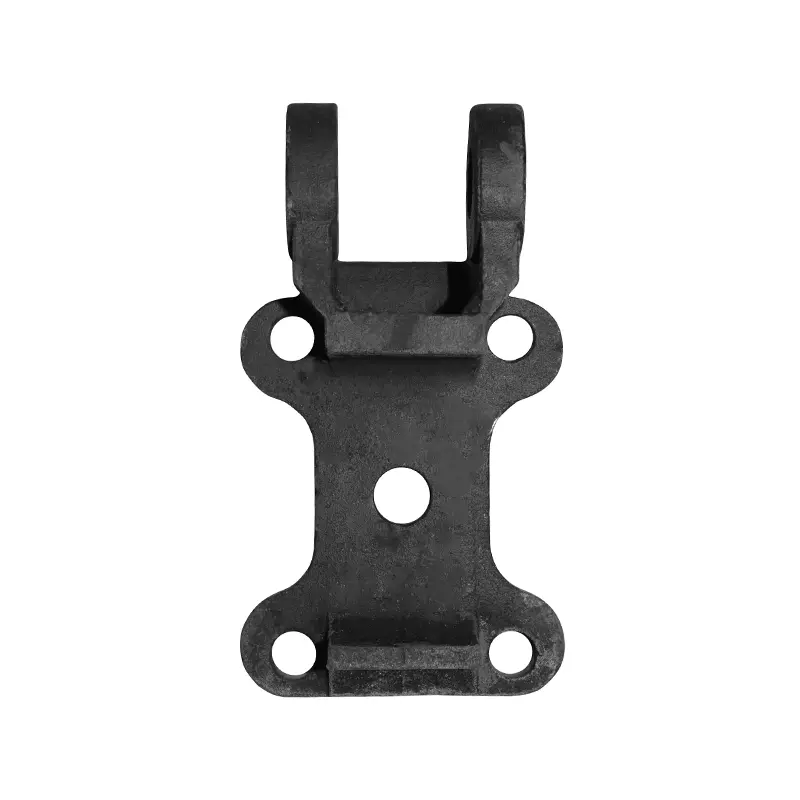
So What Exactly Is a Brass Casting Part?
The basic idea is simple: molten brass gets poured into a prepared mold, cools, hardens, and comes out shaped like whatever the mold was designed for. Once it's cleaned up, it's ready to go into whatever product it was made for.
Simple process, but the results can go either way — some parts are plain and compact, others carry detailed shapes that would be genuinely hard to pull off with other manufacturing methods.
Part of why this stays popular is that a single cast piece can do more than one job at once. It might connect two systems together. It might support something that moves. It might just need to look good on the outside while nobody ever sees what's happening on the inside. Because one part can wear several hats, manufacturers don't box these components into a single industry — they show up everywhere.
Why Manufacturers Keep Reaching for This Method
Every manufacturing choice comes down to trade-offs. The material has to actually suit the job. Production needs to stay efficient. And the finished product still has to look and function the way it's supposed to for years.
Casting fits comfortably into all three because it gives designers real freedom in shaping a part. Instead of bolting together five small pieces, you can often cast the whole thing as one — which cuts down on assembly steps, keeps the exterior look consistent, and makes it easier to adapt the same basic approach across different product lines.
That combination — fewer steps, more design freedom, consistent look, broad compatibility — is a big part of why you'll spot brass castings in everything from heavy industrial gear to decorative door hardware.
Where Do These Parts Actually Turn Up?
Rather than belonging to one industry, Brass Casting Parts tend to follow the need, not the sector. Here's a rough sense of where they show up regularly:
| Industry | Common Uses |
|---|---|
| Building products | Door hardware, decorative fittings, structural accessories |
| Plumbing | Valves, connectors, water control parts |
| Electrical equipment | Housings, connectors, supporting components |
| Mechanical equipment | Structural parts, machine assemblies, fittings |
| Furniture | Decorative hardware and functional connectors |
| Marine equipment | Hardware built for tough, exposed environments |
| Agricultural equipment | Mechanical assemblies and accessories |
| Consumer goods | Household hardware and specialty parts |
These industries don't have much in common on the surface, but they all need something that's practical to manufacture and consistent from batch to batch. That's really the common thread tying them together.
How This Fits Into Actual Product Design
Product development almost never starts with the manufacturing method — it starts with a problem someone's trying to solve. How does a user actually interact with this thing? How do the individual pieces fit together? Can it be produced efficiently at scale?
Casting earns its place in that conversation because it lets a single part handle both looks and function at once. A decorative handle might also need to carry real structural load. A housing might need mounting points while still looking clean on the outside. A connector might need a smooth transition between two very differently shaped sections. Rather than solving each of those separately, a cast piece can often fold all of it into one component — which tends to open up more creative options than building something piece by piece.
Industrial or Decorative? Usually Both
Some materials get typecast — either strictly industrial, or strictly for show. Brass casting doesn't really fall into either camp exclusively.
Industrial gear needs parts that just keep working, day after day, without drama. Architectural hardware leans more on appearance but still needs to hold up to everyday wear. Furniture hardware often wants both — decorative finish and real mechanical function. The interesting part is that a lot of this comes from the same underlying manufacturing approach. Swap the finish and the intended use, and the part hidden inside a piece of machinery isn't manufactured all that differently from the handle on your front door.
What Actually Matters When Picking the Right Part
Choosing a casting for your project is rarely just about matching a shape in a catalog. It's worth stepping back and asking a few practical questions first:
- Where exactly is this going to be installed?
- Does appearance matter to whoever's using the final product?
- Does the surrounding assembly demand a complicated shape?
- Will this part actually be visible once everything's put together?
- Are you producing a handful of units, or a large run?
- Is there a decent chance the design gets revised down the road?
Thinking through the whole product — not just the one part in isolation — usually makes the decision a lot clearer.
What Happens Before the Part Ever Gets Made
Good results start well before anything gets poured. Design teams work out what the part actually needs to do. Manufacturing specialists figure out how to produce it efficiently. Quality teams check it before it ever becomes part of a bigger assembly.
None of these stages happen in isolation for the companies that do this well — a small tweak during design can save a lot of hassle in production, and a smart manufacturing decision can speed up assembly without touching the part's actual function. Treating design, production, and inspection as one continuous process — rather than separate handoffs — tends to produce more consistent results and leaves room to improve things later without starting from scratch.
How Casting Stacks Up Against Other Manufacturing Methods
Casting is one option among several, and it's not automatically the "best" one — it just fits certain jobs better than others.
| What Matters | Casting | Other Methods |
|---|---|---|
| Shape flexibility | Handles varied, complex designs well | Depends heavily on the method |
| Appearance | Works for both decorative and functional needs | Varies by process |
| Assembly design | Can combine several features into one piece | Often needs more assembly steps |
| Range of applications | Used across many industries | Tied more closely to the specific method |
| Adaptability | Flexes well with evolving designs | Varies |
No single method solves every design problem. Engineers weigh the specific product, production goals, and what the customer actually expects before picking one.
Where This Is All Heading
Manufacturing doesn't sit still. Customer expectations shift, designs get more refined, and production planning keeps getting more integrated across the board. That's changing how components get chosen in the first place — it's no longer just "does this part do its job," but also whether it simplifies assembly, complements the product's look, and leaves room for future updates. Casting keeps earning a spot in that conversation because it flexes well against all of those questions at once. Its role has grown beyond any single product — it's become part of a broader manufacturing mindset that values efficient production, adaptable design, and parts that hold up over the long haul. Whether it's sitting inside a piece of industrial equipment, holding a cabinet door shut, or quietly doing its job inside a larger assembly, this kind of casting keeps finding new places to be useful — mostly by staying unremarkable in exactly the right way.
Related products
-

The HZ700-C Fully Automatic Core Shooter With Core Pulling is an advanced molding solution designed ...
See Details -

The Fully Automatic Environmentally Friendly Core Shooting Machine is a highly advanced, eco-conscio...
See Details -

The HZ700-X Fully Automatic Core Shooting Machine With Lower Mold Removal is designed to make core p...
See Details -

The HZ700-X Fully Automatic Core Shooting Machine With Lower Mold Removal is designed for molding ap...
See Details -

The HZ800-X Hydraulic Fully Automatic Core Shooting Machine is designed for efficient and accurate c...
See Details -

The environmentally friendly core shooting machine with lower mold removable is a high-performance s...
See Details -

The Lower Mold Removable Type Environmentally Friendly Core Shooting Machine with Door is an advance...
See Details -

The HZ800-X Hydraulic Environmentally Friendly Core Shooting Machine is an advanced automatic core p...
See Details

Welcome to our company to design according to your design and sample proofing.
Contact Infor
-
 Haixi Town, Pingyang County, Wenzhou City, Zhejiang Province, China
-
 +86-13868387823
-
 +86-577-65197155
-
 +86-577-65197166
-
 13868387823@139.com
huazhultd@outlook.com
Quick Links
Products
Copyright © Ruian Huazhu Machinery Co., Ltd. All Rights Reserved.

