 En
En
 русский
 Español
 عربى
عربى Deutsch
Aluminum Casting Parts: Where They Show Up and Why They Matter
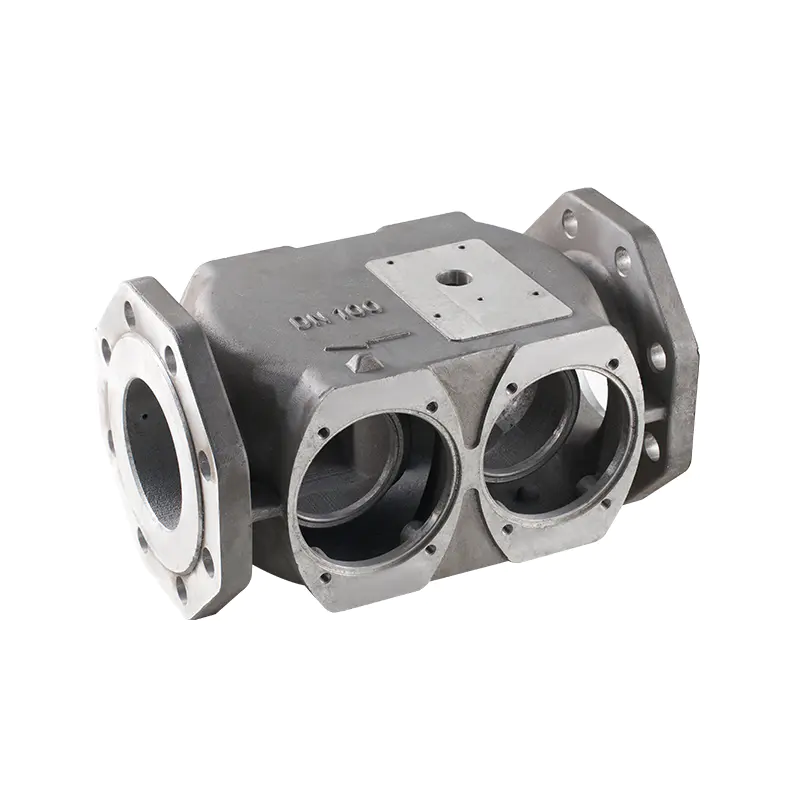
Industry News-Walk through a manufacturing plant, a warehouse, a construction site, or even a regular home, and you'll find metal components doing their job in the background. Most people never notice them, because they're tucked inside machines, tools, appliances, or larger assemblies. Aluminum Casting Parts fall into this category. Because they can be shaped in so many different ways, manufacturers use them across a wide range of industries — some visible on the outside of equipment, others buried inside and never seen again once the product ships. Looking at where these parts actually get used helps explain why casting has stuck around as a go-to manufacturing method for so long.
Why So Many Industries Rely on Cast Aluminum
No two industries build products the same way, but manufacturers tend to run into similar problems: parts need to fit into tight spaces, work alongside other components, and be reasonable to produce at scale.
Casting helps here because it lets designers create shapes that would be hard — or expensive — to put together from several separate pieces. Sometimes a single casting can replace what would otherwise be three or four smaller parts. Other times it just makes the internal layout simpler.
Instead of sticking to one fixed approach, manufacturers can adjust the shape to fit whatever equipment they're building.
| Consideration | Practical Value |
|---|---|
| Flexible shapes | Adapts to different product designs |
| Lightweight material | Reduces overall assembly weight |
| Repeatable production | Works well for volume manufacturing |
| Design freedom | Allows more complex external forms |
The exact reason a manufacturer picks casting changes from project to project — but flexibility keeps coming up as a common thread.
How Cast Components Fit Into Vehicle Manufacturing
A vehicle contains hundreds of individual parts working together. Some stay visible for the life of the car; others sit hidden beneath panels or buried inside mechanical systems.
Casting tends to get chosen for parts that need a fairly specific shape while still fitting into a tight installation space. Common examples:
- Protective housings
- Mounting brackets
- Structural supports
- Mechanical covers
- Connection pieces
Drivers rarely think about any of this during a normal commute. Even so, these parts help keep different systems organized and properly supported. Vehicle design keeps evolving, but the basic need for practical, well-fitted components hasn't really changed.
Where These Parts Show Up in Industrial Machinery
Factories run equipment built for all kinds of tasks — one machine moves material from point A to point B, another processes product continuously through the day. Each one is built around its own layout, so the components inside it get designed to match.
Cast metal parts often show up where equipment needs a protective housing or a structural frame.
| Machine Area | Typical Purpose |
|---|---|
| Equipment housing | Protects internal assemblies |
| Mounting section | Holds connected components |
| Protective cover | Shields moving mechanisms |
| Support frame | Maintains structural stability |
Maintenance teams also like that individual components can usually be swapped out without replacing the whole machine — a real advantage when equipment stays in service for years at a stretch.
Why Electrical Equipment Uses Cast Housings So Often
Electrical equipment has to do its job while also protecting whatever's inside it. The outer housing usually does more than one thing at once — it supports internal parts, gives the product a clean look, and helps it hold up to regular handling.
Casting gives designers room to build different enclosure shapes without piling on extra assembly steps later. Products that often include cast structures:
- Electrical enclosures
- Control boxes
- Equipment covers
- Supporting frames
- Connection housings
Most users focus on what the equipment does, not what holds it together. But the surrounding structure is doing quiet work the whole time the product is in use. As devices keep getting more compact, getting that structure right matters more, not less.
How Construction Benefits From Cast Components
Construction is more than concrete and steel. A lot of smaller parts affect how buildings look and function, whether they're residential, commercial, or public.
Casting shows up regularly in products like:
- Door hardware
- Window fittings
- Decorative fixtures
- Lighting components
- Equipment supports
Some of these stay visible after installation; others end up behind walls or inside building systems, never seen again. Architects and manufacturers are usually looking for something that handles both function and appearance reasonably well, and casting lets both get considered during development instead of one at the expense of the other.
What Role Cast Parts Play in Agricultural Equipment
Agricultural machinery works outdoors, through changing weather, across very different environments depending on the region. Machines built for planting, transport, processing, or irrigation often use cast components to support the larger assembly.
| Equipment Type | Possible Application |
|---|---|
| Farm machinery | Structural support |
| Irrigation systems | Protective housing |
| Material handling equipment | Mounting brackets |
| Processing equipment | Mechanical covers |
Conditions vary a lot from one farm to the next, so manufacturers tend to design components around specific equipment layouts rather than betting on one standard part fitting everything. Maintenance matters here too — replacing one part is usually easier than replacing a whole assembly.
Why Consumer Products Use Cast Components Too
Heavy machinery isn't the only place casting shows up. Plenty of everyday products quietly include cast metal pieces most people never think about — household equipment, garden tools, furniture fittings, recreational products, storage systems.
Some of these parts are decorative. Others reinforce the product or connect different pieces together. Consumers generally judge a product by how it looks and feels, not by how it was manufactured. Behind that surface, though, thoughtful part design helps make products that feel solid to use while still being reasonable to manufacture at scale — which is part of why casting has spread well beyond industrial settings.
What to Think About Before Choosing a Cast Component
Picking a component isn't just about how it looks. The environment it will operate in usually matters just as much as the design itself. Worth asking:
- Where will it be installed?
- Indoors or outdoors?
- Does the surrounding equipment have specific design requirements?
- Will it need regular maintenance?
- Is replacement likely down the road?
Looking at the full application tends to lead to a better choice than focusing on one feature in isolation. Designers, engineers, and purchasing teams usually go back and forth on this throughout development, since priorities shift from one project to the next. A part that works well in one setting might not be the right fit somewhere else — it usually comes down to the purpose of the finished product, not the component by itself.
Industries keep developing new products, new equipment, and new manufacturing methods. Through all of that, Aluminum Casting Parts have stayed a practical option for building components that fit a wide range of applications — supporting transportation, industrial machinery, construction, agriculture, electrical equipment, and consumer goods, and adapting to whatever design requirements each project brings.
Related products
-

The HZ700-C Fully Automatic Core Shooter With Core Pulling is an advanced molding solution designed ...
See Details -

The Fully Automatic Environmentally Friendly Core Shooting Machine is a highly advanced, eco-conscio...
See Details -

The HZ700-X Fully Automatic Core Shooting Machine With Lower Mold Removal is designed to make core p...
See Details -

The HZ700-X Fully Automatic Core Shooting Machine With Lower Mold Removal is designed for molding ap...
See Details -

The HZ800-X Hydraulic Fully Automatic Core Shooting Machine is designed for efficient and accurate c...
See Details -

The environmentally friendly core shooting machine with lower mold removable is a high-performance s...
See Details -

The Lower Mold Removable Type Environmentally Friendly Core Shooting Machine with Door is an advance...
See Details -

The HZ800-X Hydraulic Environmentally Friendly Core Shooting Machine is an advanced automatic core p...
See Details

Welcome to our company to design according to your design and sample proofing.
Contact Infor
-
 Haixi Town, Pingyang County, Wenzhou City, Zhejiang Province, China
-
 +86-13868387823
-
 +86-577-65197155
-
 +86-577-65197166
-
 13868387823@139.com
huazhultd@outlook.com
Quick Links
Products
Copyright © Ruian Huazhu Machinery Co., Ltd. All Rights Reserved.

