 En
En
 русский
 Español
 عربى
عربى Deutsch
The Foundation of Machinery: Understanding Mechanical Parts Castings
Industry News-What are the most common types of casting processes used for mechanical parts?
The term "casting" encompasses a variety of processes, each with distinct characteristics suited to different part geometries, production volumes, and material requirements. The choice of process significantly impacts the part's cost, lead time, and mechanical properties.
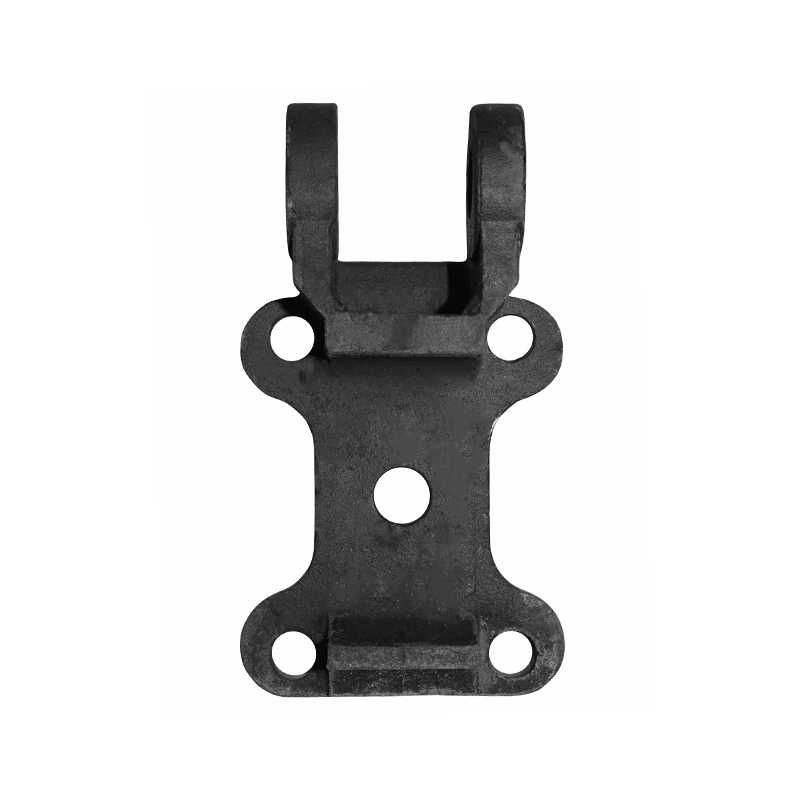
- Sand Casting: This is the most versatile and widely used casting process. It involves creating a mold from a mixture of sand and a bonding agent. A pattern, typically made of wood, plastic, or metal, is used to form the cavity in the sand. Sand casting is suitable for a vast range of part sizes, from small components to massive machine bases weighing several tons. It can accommodate almost any metal alloy, including iron, steel, aluminum, and bronze. The tooling (patterns) is relatively inexpensive, making it ideal for low to medium production volumes and prototype work. However, the surface finish is rougher and dimensional tolerances are looser compared to other methods.
- Investment Casting (Lost-Wax Casting): This process begins with a wax pattern that is coated with a ceramic slurry to form a shell. The wax is then melted out, leaving a precise ceramic mold. Molten metal is poured into this mold, and the ceramic shell is broken away after solidification. Investment casting produces parts with excellent surface finish, tight tolerances, and intricate detail, including complex internal geometries. It is commonly used for components in aerospace, medical, and automotive applications, such as turbine blades and surgical instruments. The tooling for wax patterns is more expensive, and the process is generally suited for smaller parts and higher volumes where precision is required.
- Die Casting: In this high-pressure process, molten metal is injected into a steel mold, called a die, at high speed and pressure. Die casting produces parts with very tight tolerances, smooth surfaces, and rapid cycle times, making it ideal for high-volume production. It is most commonly used with non-ferrous metals like aluminum, zinc, and magnesium alloys. Applications include housings for electronics, automotive transmission cases, and various small components. The initial cost of the steel dies is high, making die casting economical only for large production runs.
- Permanent Mold Casting (Gravity Die Casting): This process uses reusable metal molds, typically made of iron or steel. Molten metal is poured into the mold by gravity (as opposed to high pressure in die casting). It offers better dimensional accuracy and surface finish than sand casting, and the metal mold promotes faster solidification, which can improve mechanical properties. It is commonly used for medium to high volumes of simpler shapes in aluminum, magnesium, and copper-based alloys. Automotive wheels and pistons are typical examples.
What are the typical defects found in mechanical parts castings, and what causes them?
Casting defects are imperfections that can compromise the strength, appearance, or function of a part. Understanding their causes is essential for quality control and process improvement.
- Porosity: This refers to voids or holes within the casting. It can be caused by several factors. Gas porosity occurs when dissolved gases in the molten metal come out of solution during solidification and become trapped. Shrinkage porosity happens when the molten metal contracts as it solidifies and there is insufficient liquid metal to fill the voids. Proper gating and riser design, along with control of melt chemistry and temperature, are used to minimize porosity.
- Shrinkage: Beyond porosity, larger shrinkage defects can appear as open cavities or surface depressions. This occurs in areas of the casting that solidify last, where the contraction of the metal is not compensated for by additional molten metal from a riser. Proper riser placement and size are critical to preventing this.
- Cold Shuts and Misruns: A cold shut is a discontinuity that appears as a crack or seam where two streams of molten metal met but did not fuse properly. A misrun occurs when the metal solidifies before filling the mold cavity, resulting in an incomplete part. Both are typically caused by low pouring temperature, slow pouring speed, or insufficient mold temperature, which causes the metal to lose fluidity too quickly.
- Inclusions: These are solid particles of foreign material trapped within the casting. They can be non-metallic materials like sand (from the mold in sand casting), slag (oxidized material from the melting process), or refractory particles from the furnace lining. Proper mold cleaning, melt handling, and the use of filters in the gating system help reduce inclusions.
- Hot Tears: These are cracks that form in the casting during solidification while the metal is still at a high temperature and weak. They occur when the contracting casting is restrained from shrinking freely by the mold geometry or cores. Design modifications to the part or mold, such as adding fillets, can alleviate the stresses that cause hot tears.
How do I select the right material for a mechanical part casting?
Material selection for a casting is a critical decision that balances the mechanical requirements of the part with the processing characteristics of the alloy. The choice determines the part's strength, durability, corrosion resistance, and cost.
Ferrous Alloys (Cast Irons and Steels): Cast irons, including gray iron, ductile iron, and malleable iron, are among the most common casting materials. Gray iron offers good compressive strength, wear resistance, and damping capacity (ability to absorb vibration), making it suitable for machine bases and brake components. Ductile iron has higher strength and ductility due to the graphite form, and is used for gears, crankshafts, and heavy-duty housings. Cast steels offer even higher strength and toughness and are weldable, but they have higher melting points and can be more difficult to cast than irons. They are used for critical structural components in heavy machinery and railway equipment.
Non-Ferrous Alloys (Aluminum, Copper, Zinc, Magnesium): Aluminum castings are lightweight, have good corrosion resistance, and offer a good strength-to-weight ratio. They are widely used in automotive, aerospace, and consumer goods. Common alloys include A356 for its good casting characteristics and strength. Copper-based alloys, including brass and bronze, offer excellent corrosion resistance, thermal and electrical conductivity, and wear resistance. Bronze is often used for bearings, valves, and marine hardware. Zinc alloys are used in die casting for small, intricate parts due to their low melting point and excellent fluidity. Magnesium alloys are the lightest structural metals and are used where weight savings are critical, such as in aerospace and high-performance automotive components.
Selection Factors: Beyond the basic alloy family, specific grades are chosen based on required tensile strength, yield strength, hardness, and ductility. The service environment, including temperature and exposure to corrosive media, must also be considered. Finally, the casting process itself may impose constraints; some alloys are better suited to sand casting, while others are ideal for die casting.
What are the advantages of using castings compared to other manufacturing methods like forging or fabrication?
The choice between casting, forging, and fabrication (welding) depends on the part's design, required properties, and production volume. Each method has distinct advantages.
Advantages of Casting:
Design Freedom: Casting allows for the creation of complex geometries, including internal cavities and intricate shapes, that would be difficult or impossible to achieve with forging or machining from solid stock. This allows for parts designed for function, not just manufacturability.
Part Consolidation: A single casting can replace an assembly of multiple fabricated pieces welded or bolted together. This reduces part count, eliminates potential leak paths or weak points at joints, and can simplify assembly.
Wide Material Choice: Casting is applicable to virtually all metals and alloys, including those that are difficult to forge or weld.
Cost-Effective for Complex Shapes: For parts with significant complexity, casting is often the most economical route, especially in medium to high volumes, as it minimizes material waste and machining time.
Isotropic Properties: Properly designed and solidified castings can exhibit relatively uniform (isotropic) mechanical properties in all directions, unlike wrought products (like forgings), which often have directional grain flow and property variations.
Comparison with Forging: Forging involves shaping metal using compressive forces, which refines the grain structure and aligns it with the part shape. This typically results in higher strength and toughness than a casting of the same alloy. For critical safety components like connecting rods or crane hooks, forging may be specified for its superior mechanical properties. However, forging is generally limited to simpler shapes and has higher tooling costs.
Comparison with Fabrication (Welding): Fabrication involves cutting, bending, and welding together plates and sections. It is highly flexible for large, one-off structures and does not require expensive tooling. However, it is labor-intensive for complex shapes, and the heat-affected zones of welds can be areas of potential weakness. A casting can often provide a more structurally sound and visually clean component for a complex geometry at a competitive cost for repetitive production.
Related products
-

The HZ700-C Fully Automatic Core Shooter With Core Pulling is an advanced molding solution designed ...
See Details -

The Fully Automatic Environmentally Friendly Core Shooting Machine is a highly advanced, eco-conscio...
See Details -

The HZ700-X Fully Automatic Core Shooting Machine With Lower Mold Removal is designed to make core p...
See Details -

The HZ700-X Fully Automatic Core Shooting Machine With Lower Mold Removal is designed for molding ap...
See Details -

The HZ800-X Hydraulic Fully Automatic Core Shooting Machine is designed for efficient and accurate c...
See Details -

The environmentally friendly core shooting machine with lower mold removable is a high-performance s...
See Details -

The Lower Mold Removable Type Environmentally Friendly Core Shooting Machine with Door is an advance...
See Details -

The HZ800-X Hydraulic Environmentally Friendly Core Shooting Machine is an advanced automatic core p...
See Details

Welcome to our company to design according to your design and sample proofing.
Contact Infor
-
 Haixi Town, Pingyang County, Wenzhou City, Zhejiang Province, China
-
 +86-13868387823
-
 +86-577-65197155
-
 +86-577-65197166
-
 13868387823@139.com
huazhultd@outlook.com
Quick Links
Products
Copyright © Ruian Huazhu Machinery Co., Ltd. All Rights Reserved.

