 En
En
 русский
 Español
 عربى
عربى Deutsch
Overview of Aluminum Alloy Castings
Industry News-Aluminum alloy castings generally fall into several categories based on the casting process used and the alloy composition applied. These categories influence factors such as surface finish, dimensional accuracy, mechanical performance, and cost. Although each method offers different advantages, selecting the appropriate type depends on the intended application, production volume, and performance requirements.
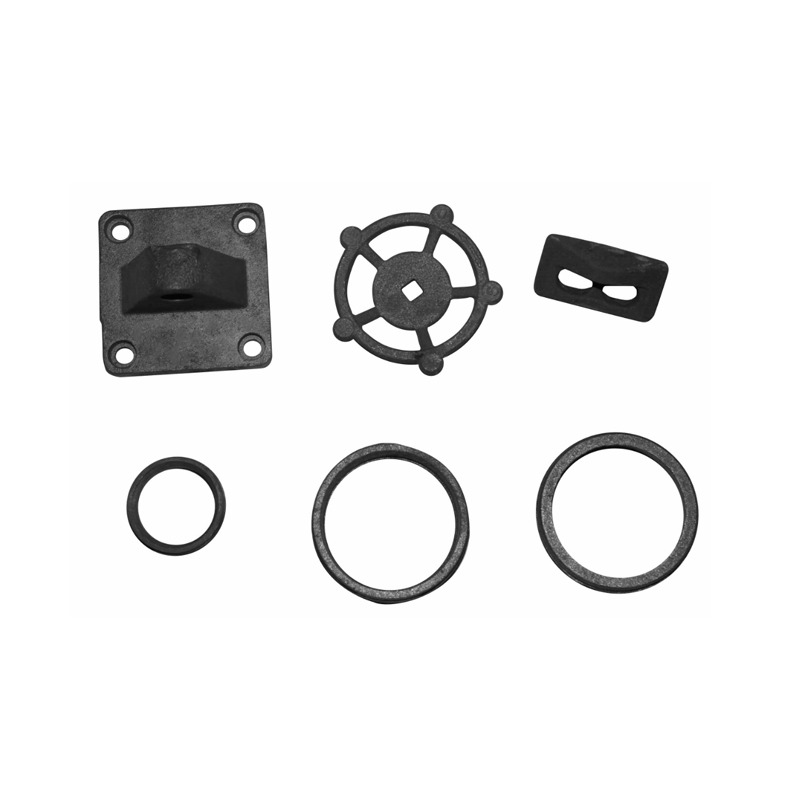
Below are common casting types used in modern manufacturing.
Sand Cast Aluminum Alloys
Sand casting is a long-established method known for its flexible mold design and suitability for small to medium production runs. It works well for complex shapes that do not require high dimensional precision.
Key features include:
- Versatility: Suitable for thick or irregular sections.
- Cost-effective molds: Sand molds are relatively economical to produce and modify.
- Wide alloy choices: Many aluminum alloys can be poured into sand molds.
Common applications involve engine brackets, pump housings, and ornamental components where moderate strength and reasonable surface quality are acceptable. Although machining is often required to achieve tighter tolerances, sand casting continues to support industries that prioritize design freedom.
Die Cast Aluminum Alloys
Die casting uses steel molds and high-pressure injection to form components with more consistent accuracy than sand casting. The process is suited to medium-to-large production volumes.
Typical characteristics include:
Good dimensional stability: Reduced variability between units.
Smoother surfaces: Often requires less finishing.
Efficient production: High-pressure injection enables quick cycles.
Die-cast aluminum alloys are common in automotive parts, electronic housings, and appliance components where repeatability and appearance are important. Alloy compositions used in die casting often contain silicon to support fluidity and to help achieve refined surface characteristics.
Investment Cast Aluminum Alloys
Investment casting, sometimes called lost-wax casting, is known for its ability to produce intricate shapes with finer detail than sand casting. It is valued in industries requiring precision but may involve a higher cost per unit.
Notable advantages include:
High detail reproduction: Suitable for thin-wall or complex geometries.
Fine surface finish: Reduces the need for secondary operations.
Design flexibility: Allows features that are not feasible with other methods.
Investment-cast aluminum parts appear in aerospace components, medical devices, and specialty industrial equipment. This method supports tight tolerance requirements and can handle challenging shapes with internal passages or elaborate contours.
Comparison of Common Aluminum Alloy Casting Types
|
Casting Type |
Precision Level |
Surface Finish |
Production Volume Suitability |
Typical Applications |
|
Sand Casting |
Moderate |
Moderate |
Small to Medium |
Engine parts, housings, prototypes |
|
Die Casting |
Relatively High |
Smooth |
Medium to Large |
Electronics, automotive parts |
|
Investment Casting |
High |
Refined |
Small to Medium |
Aerospace, medical devices |
Choosing the Suitable Casting Type
Selecting the appropriate aluminum alloy casting method involves evaluating performance needs and manufacturing constraints. Factors to consider include:
- Geometry: Complex or thin-wall structures may require investment casting.
- Surface quality: Die casting may be selected when a smooth finish is needed.
- Budget and volume: Sand casting often works for limited production runs or early prototypes.
- Mechanical performance: Alloy composition varies by process, influencing structural strength and ductility.
Manufacturers often balance these considerations with project timelines, tooling budgets, and long-term production plans. In many cases, companies use multiple casting methods within the same product line to meet different functional goals.
Aluminum alloy castings continue to support diverse industries due to their adaptable nature and compatibility with established casting processes. By understanding the characteristics of sand casting, die casting, and investment casting, manufacturers can make informed decisions that match design requirements with practical production capabilities. Each method carries specific benefits, and the final selection often depends on achieving a balance between geometry, cost, surface quality, and precision.
Related products
-

The HZ700-C Fully Automatic Core Shooter With Core Pulling is an advanced molding solution designed ...
See Details -

The Fully Automatic Environmentally Friendly Core Shooting Machine is a highly advanced, eco-conscio...
See Details -

The HZ700-X Fully Automatic Core Shooting Machine With Lower Mold Removal is designed to make core p...
See Details -

The HZ700-X Fully Automatic Core Shooting Machine With Lower Mold Removal is designed for molding ap...
See Details -

The HZ800-X Hydraulic Fully Automatic Core Shooting Machine is designed for efficient and accurate c...
See Details -

The environmentally friendly core shooting machine with lower mold removable is a high-performance s...
See Details -

The Lower Mold Removable Type Environmentally Friendly Core Shooting Machine with Door is an advance...
See Details -

The HZ800-X Hydraulic Environmentally Friendly Core Shooting Machine is an advanced automatic core p...
See Details

Welcome to our company to design according to your design and sample proofing.
Contact Infor
-
 Haixi Town, Pingyang County, Wenzhou City, Zhejiang Province, China
-
 +86-13868387823
-
 +86-577-65197155
-
 +86-577-65197166
-
 13868387823@139.com
huazhultd@outlook.com
Quick Links
Products
Copyright © Ruian Huazhu Machinery Co., Ltd. All Rights Reserved.

