 En
En
 русский
 Español
 عربى
عربى Deutsch
How to Choose a Sand Core Shooting Machine for Foundry Production
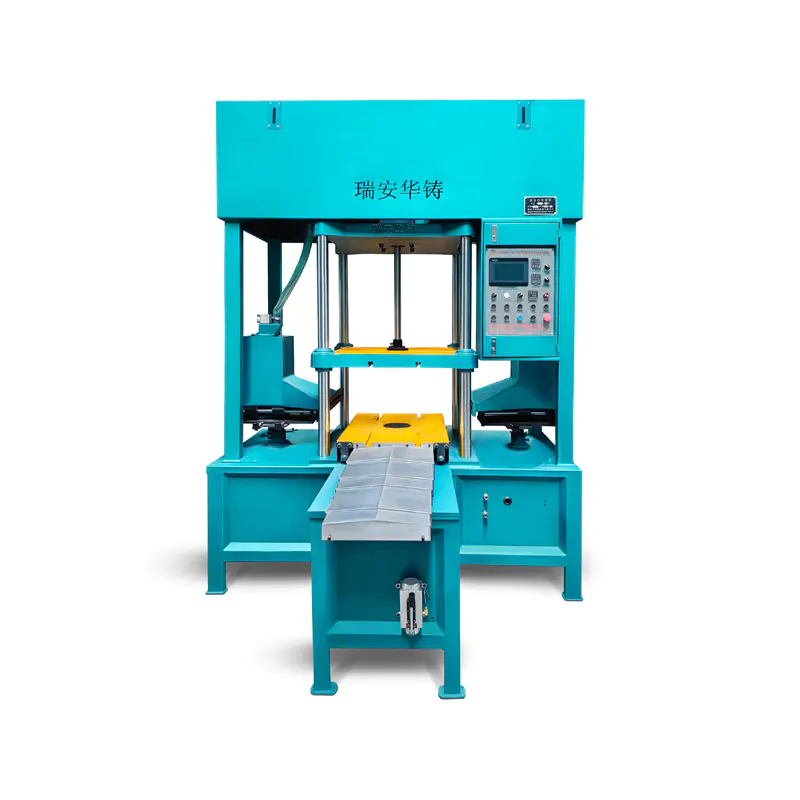
Industry News-A foundry manager once picked a Sand Core Shooting Machine mainly because it looked well-built on the sales floor, only to discover months later that the maintenance panel sat in a spot nobody could reach without shutting the whole line down first. The machine itself worked fine — the layout around it just made every routine check into a bigger disruption than it needed to be. That kind of mismatch is exactly what careful equipment selection is meant to prevent.
What Production Factors Actually Matter Before Buying
Every foundry runs a little differently, and a Sand Core Shooting Machine that fits one shop perfectly might feel awkward in another simply because the products, habits, and space don't line up the same way.
Core size and shape are worth starting with. A shop mostly producing simple, small cores has different needs than one regularly handling parts with detailed internal geometry. Buying based on general specs without checking against actual core designs tends to surface problems only after the machine's already installed.
Production frequency matters just as much. Equipment expected to run daily needs to handle sustained use without constant adjustment, while a machine brought in for occasional jobs might not need the same level of built-in durability. Buying more machine than the actual workload calls for just adds unnecessary cost and complexity.
Available floor space shapes the decision too. Where a machine physically sits affects how material moves through the shop, how easily an operator can reach it during a shift, and how much room maintenance staff have to work when something needs checking.
| Consideration | Why It Matters |
|---|---|
| Product requirements | Matches the machine to the actual core-making work involved |
| Production habits | Supports a working routine that feels natural rather than forced |
| Factory space | Shapes installation, daily access, and maintenance convenience |
| Maintenance needs | Affects how manageable the equipment stays over years of use |
A shop that skips this step and buys based on a brochure alone often ends up retrofitting its workflow around the machine, instead of the other way around.
How the Machine's Structure Shapes Everyday Work
The physical layout of a Sand Core Shooting Machine has a direct effect on how smoothly a shift actually runs. Operators handle material prep, setting adjustments, condition checks, and routine cleaning throughout the day, and a design that makes those tasks awkward slows everything down, one small delay at a time.
A machine with a confusing control layout or hard-to-reach adjustment points tends to increase training time and raises the odds of a mistake, especially with newer staff still learning the equipment. A clearer, more intuitive design shortens that learning curve and reduces the chance of someone skipping a step simply because it's inconvenient to reach.
Maintenance access deserves its own attention here. Equipment that's difficult to open up for inspection often ends up getting checked less often than it should, simply because doing so is more trouble than it's worth. A design that makes routine cleaning and checking straightforward keeps maintenance from turning into something workers avoid.
Buyers who only glance at a machine's exterior finish miss the details that actually matter once the equipment's been running for a year — the internal layout, how the panels open, and how much disassembly a basic check requires.
Where Automation Actually Helps and Where It Doesn't
Automation gets talked about as if more of it is always better, but that's not quite how it plays out on an actual shop floor. The real question is which specific tasks benefit from automation and which ones still need a person paying close attention.
Automated functions tend to help most with repeated, predictable steps — the kind of work that benefits from doing the exact same motion the same way every time. That consistency supports steadier production, especially during long runs where manual repetition would naturally introduce small variations.
But piling on automated features doesn't automatically make a machine better suited to a given shop. If operators aren't comfortable running the automated functions, or if the maintenance team can't service the added complexity, those extra features end up creating friction rather than removing it.
A smaller shop with a lean maintenance team might genuinely do better with a simpler, more manually operated machine than with one loaded with automated functions nobody's fully trained to manage. The goal is matching automation to what the shop can actually use well, not defaulting to whatever has the most functions listed.
Judging Whether a Machine Is Actually Reliable
Reliability isn't something that shows up clearly in a spec sheet — it shows up after months of regular use, which makes it one of the harder things to evaluate before actually buying. A few practical checks can help narrow that gap.
Looking into the design and build process gives a sense of whether the manufacturer prioritized durability or just visual polish. Asking specific questions about materials and construction tends to reveal more than a general product description.
Thinking through maintenance requirements matters early, not after installation. A machine that's simple to inspect and service tends to create fewer headaches over its working life than one that requires specialized tools or extensive disassembly for routine checks.
Understanding what support actually looks like after the sale is just as important as the machine itself. A supplier willing to walk through installation questions and offer guidance during early operation makes a noticeable difference compared to one that disappears after delivery.
Checking fit against existing methods rounds it out. A machine loaded with functions sounds appealing, but if half of them don't apply to how a shop actually produces cores, that extra complexity isn't adding real value.
Reliability, in practice, is less about the machine in isolation and more about the entire experience of running and maintaining it day after day.
What to Actually Look For in a Supplier
Picking a Sand Core Shooting Machine isn't separate from picking who you're buying it from — the two decisions are tied together more closely than buyers sometimes realize.
A supplier worth working with should answer questions clearly rather than deflecting toward general marketing language. If a buyer asks about maintenance intervals or how the machine handles a specific core shape and gets a vague answer, that's worth noticing before signing anything.
Support doesn't end at delivery either. Installation guidance, initial training for operators, and being reachable when something comes up months later all shape how smoothly the equipment actually gets used in practice.
| Supplier Factor | Buyer Consideration |
|---|---|
| Communication quality | Whether questions get clear, specific answers |
| Product understanding | Whether recommendations actually match stated production needs |
| Support ability | Whether help is available once the machine is already running |
| Industry experience | Whether the supplier genuinely understands foundry work |
A shop that's dealt with a supplier who vanished after the sale tends to weight this factor heavily on the next purchase, since chasing down support after the fact is far more frustrating than confirming it exists upfront.
Comparing Machines Without Getting Distracted by One Feature
It's tempting to compare Sand Core Shooting Machines based on whichever single feature stands out most in a demo — a fast cycle time, a sleek control panel, an impressive automated function. But narrow comparisons like that tend to miss the bigger picture of whether a machine actually fits a shop's daily reality.
Building out a straightforward comparison — covering operation convenience, maintenance demands, how well it matches current production, and the level of supplier support — gives a much clearer picture than judging machines side by side on looks alone.
Bringing in people who'll actually use and maintain the equipment adds another layer that's easy to skip but genuinely valuable. Operators notice things about daily usability that a purchasing manager might not think to ask about, and maintenance staff often spot potential headaches around inspection access before a machine's even been installed. A machine that looks ideal on paper from a purchasing standpoint can turn out to be a daily frustration for the people actually running it.
Planning for What the Shop Might Need Later, Not Just Now
Production needs rarely stay fixed for long. A shop might shift toward different product lines, adjust its working methods, or take on more volume than it currently handles, and equipment bought without any of that in mind can end up feeling outdated faster than expected.
Thinking ahead a bit during selection helps avoid needing a full equipment swap just a few years down the road. Worth considering: can this machine reasonably handle a shift in core types, and does it leave room for adjustments as the shop's methods evolve?
Workforce development plays into this too. Equipment that makes sense today should still be manageable for whoever joins the team later, without requiring a completely separate training process just because the current staff happens to already know the machine's quirks.
A selection process that accounts for this kind of flexibility creates a stronger connection between what gets purchased now and where the shop is actually headed. The right Sand Core Shooting Machine isn't just one that solves today's problem — it's one that still makes sense a few years into daily use, as the shop's own production needs continue to shift around it.
Related products
-

The HZ700-C Fully Automatic Core Shooter With Core Pulling is an advanced molding solution designed ...
See Details -

The Fully Automatic Environmentally Friendly Core Shooting Machine is a highly advanced, eco-conscio...
See Details -

The HZ700-X Fully Automatic Core Shooting Machine With Lower Mold Removal is designed to make core p...
See Details -

The HZ700-X Fully Automatic Core Shooting Machine With Lower Mold Removal is designed for molding ap...
See Details -

The HZ800-X Hydraulic Fully Automatic Core Shooting Machine is designed for efficient and accurate c...
See Details -

The environmentally friendly core shooting machine with lower mold removable is a high-performance s...
See Details -

The Lower Mold Removable Type Environmentally Friendly Core Shooting Machine with Door is an advance...
See Details -

The HZ800-X Hydraulic Environmentally Friendly Core Shooting Machine is an advanced automatic core p...
See Details

Welcome to our company to design according to your design and sample proofing.
Contact Infor
-
 Haixi Town, Pingyang County, Wenzhou City, Zhejiang Province, China
-
 +86-13868387823
-
 +86-577-65197155
-
 +86-577-65197166
-
 13868387823@139.com
huazhultd@outlook.com
Quick Links
Products
Copyright © Ruian Huazhu Machinery Co., Ltd. All Rights Reserved.

