 En
En
 русский
 Español
 عربى
عربى Deutsch
How Do Shell Core Machine Systems Fit Automated Foundries
Industry News-Foundry production is changing as manufacturers look for ways to connect more stages of the manufacturing process. Core making is part of this shift because the quality and consistency of a sand core can influence what happens later during casting.
A modern foundry may involve material preparation, core production, mold preparation, casting, cleaning, inspection, and handling. When these activities operate separately, workers often need to move materials between different areas and coordinate each stage manually.
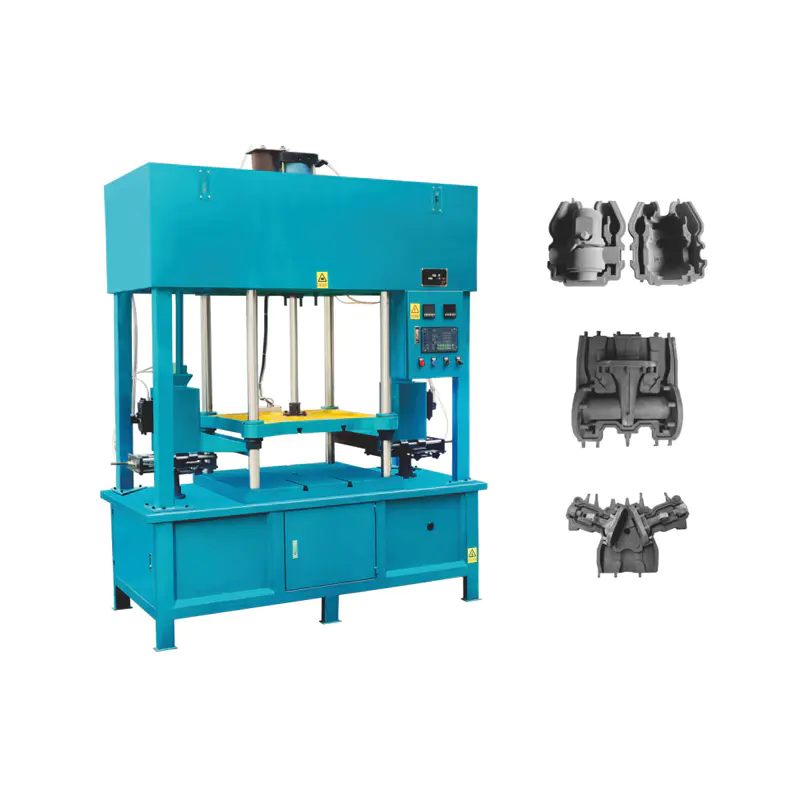
Automation creates another approach. A Shell Core Machine can become part of a connected production process where core making is arranged around a defined workflow. The equipment can support repeatable operations while reducing unnecessary manual handling.
This change is not only about replacing people with machines. It is also about making each production stage easier to coordinate. Equipment control, material movement, process timing, and quality checks can be considered as parts of one manufacturing system.
As foundries explore smart manufacturing, core-making equipment is being evaluated according to how well it fits into the wider production environment.
Why Is Core Making Becoming More Connected to Foundry Automation?
A sand core is produced before it enters the casting process, but its role is closely linked to the final casting shape. The core creates internal spaces or passages within a casting, so its condition needs to match the intended mold and part design.
Manual core production can involve repeated handling and adjustments. These activities may be manageable for small production tasks, but they can become harder to coordinate when production involves many similar parts or several connected manufacturing stages.
| Foundry Activity | Automation Opportunity |
|---|---|
| Material preparation | Controlled material delivery |
| Core making | Repeatable machine operation |
| Core handling | Organized transfer |
| Mold preparation | Coordinated production timing |
| Casting preparation | Better process connection |
| Inspection | Consistent checking routines |
A Sand Core Making Machine can support this transition by turning core production into a more structured production stage. Instead of treating core making as an isolated task, manufacturers can connect it with upstream material preparation and downstream mold operations.
This approach can also help reduce unnecessary movement around the factory.
When cores are produced according to the needs of the next stage, handling becomes easier to organize. Workers can spend less time searching for the correct core or moving finished pieces between unrelated areas.
Automation also creates opportunities for clearer production records. Operators can monitor whether a process has been completed and identify where a delay may have occurred.
The goal is a more connected workflow rather than automation for its own sake.
How Does a Shell Core Machine Fit Into an Automated Production Process?
A Shell Core Machine can be positioned as one stage within a larger foundry system. Its role is to form sand cores consistently so that the next production stage can receive cores in an organized manner.
The machine may work alongside material preparation equipment, core handling systems, and other foundry machinery. The exact arrangement depends on the type of casting, factory layout, and production requirements.
A connected process may follow a structure such as:
Material preparation → core making → core handling → mold preparation → casting
The sequence does not have to be completely automated to provide useful benefits. Even partial automation can reduce repetitive manual activities and make production flow easier to manage.
A Dependable Shell Core Machine can be useful in this environment because production teams need equipment that can operate as part of a regular workflow. Dependability is not limited to machine operation. It also includes predictable handling, straightforward adjustment, and compatibility with surrounding production activities.
The physical location of the machine matters as well.
If core-making equipment is placed far from the mold preparation area, finished cores may need to travel through several sections of the factory. A better layout can reduce unnecessary movement and make material flow easier to understand.
Automation therefore involves both equipment and factory planning.
What Role Does a Sand Core Shooting Machine Play in Automated Foundries?
A Sand Core Shooting Machine is designed around the controlled placement of core material into a prepared core-making area. In an automated foundry, this process can become part of a repeatable production sequence.
The equipment can help standardize how core material is introduced during production. Consistent machine movement and controlled operation can reduce differences caused by repeated manual handling.
| Production Concern | Machine-Based Approach |
|---|---|
| Repeated core production | Programmed operating sequence |
| Material placement | Controlled shooting process |
| Operator workload | Reduced repetitive handling |
| Core shape consistency | Repeatable production routine |
| Production coordination | Easier integration with nearby stages |
The machine itself is only one part of the process.
Material condition, tooling, core box preparation, cleaning, and maintenance can all influence the final result. Automation can make the main operation more consistent, but it cannot remove the need for suitable materials and proper process management.
This is why foundries often look at the entire core-making process rather than focusing on one machine function.
The connection between the shooting process and the next handling stage can also matter. If finished cores are removed manually and placed randomly, some of the organizational benefits of automation may be lost.
A well-planned system considers what happens immediately before and after the machine operates.
How Can Automated Core Making Support Quality Consistency?
Casting production depends on repeatable mold and core conditions. If cores vary noticeably from one production cycle to another, the difference can influence later casting operations.
Automation can reduce some forms of variation by following the same basic operating sequence. The machine can repeat planned movements without relying on an operator to reproduce every action manually.
Several areas can contribute to consistency.
| Area | Consistency Consideration |
|---|---|
| Material preparation | Maintain suitable material condition |
| Core box setup | Keep the forming arrangement stable |
| Machine operation | Repeat the planned sequence |
| Core removal | Handle finished cores carefully |
| Inspection | Use a consistent checking routine |
A Dependable Shell Core Machine can support this approach when its operation remains stable during regular production.
Quality consistency does not mean every core must be treated as an identical object regardless of its design. Different core shapes can require different production settings and handling methods.
The useful role of automation is to make each selected process easier to repeat.
This can be especially helpful when a foundry produces related parts with similar core-making requirements. Operators can work from established production routines instead of developing a new manual process for every batch.
Consistency also makes problems easier to identify. If the production method remains stable, an unexpected change can be investigated more directly.
Can Automated Core Making Reduce Manual Handling?
Manual handling remains part of many foundry operations, but repeated lifting, moving, positioning, and checking can consume considerable attention.
Core-making automation can reduce some of these repetitive activities. The machine performs the main forming process while workers focus on preparation, inspection, maintenance, and other tasks that require judgment.
This can change the role of the operator rather than simply removing the operator.
A production area may shift from continuous manual operation toward equipment supervision and process management.
For example, an operator may be responsible for:
- Preparing materials.
- Checking the core-making setup.
- Monitoring machine operation.
- Inspecting finished cores.
- Moving completed products into the next process.
- Responding to unusual conditions.
This arrangement can make the production area easier to organize.
However, automation does not mean that every handling activity disappears. Cores still need suitable storage and transportation, and workers may need to inspect products before they enter the casting process.
The benefit comes from reducing unnecessary repetition while keeping human attention available for tasks where it adds value.
For factories planning automation, this distinction is important. A machine should be introduced because it improves the overall workflow, not simply because automation is becoming more common.
How Are Shell Core Machines Connecting With Smart Manufacturing?
Smart manufacturing is often associated with connected equipment and clearer production information. In a foundry, this can mean that individual machines are no longer viewed as isolated units.
A Shell Core Machine can become part of a broader production network where operating status, production scheduling, material movement, and maintenance activities are considered together.
The purpose is to make production easier to monitor and manage.
| Smart Manufacturing Area | Core-Making Connection |
|---|---|
| Production planning | Coordinates core requirements |
| Equipment monitoring | Shows machine operating status |
| Material management | Connects material use with production |
| Quality control | Supports consistent inspection |
| Maintenance planning | Helps organize equipment care |
| Workflow management | Connects core making with later processes |
The level of connection can vary between factories.
Some foundries may automate only the core-making process. Others may connect core production with material handling, mold preparation, and casting operations.
The important point is that automation should match the factory's actual needs.
A highly connected system may require more planning than a smaller production area. Equipment must be compatible with the surrounding workflow, and workers need to understand how the system operates.
A Sand Core Making Machine can therefore be considered not just as production equipment but as part of a wider manufacturing strategy.
What Should Foundries Consider When Integrating Core-Making Equipment?
Equipment integration begins with understanding the existing production process.
A foundry needs to know where materials enter, where cores are produced, where finished cores are stored, and how they reach the next stage. These physical movements can reveal where automation may provide practical value.
The production team can examine several areas.
Production Flow
Core making should fit naturally into the movement of materials and finished components. Unnecessary crossings and backtracking can make an automated system harder to manage.
Equipment Compatibility
A new machine needs to work with the surrounding production environment. This includes material preparation, core boxes, handling methods, and operator routines.
Maintenance Access
Automated equipment still requires cleaning, inspection, and maintenance. These activities should be possible without creating unnecessary disruption to nearby processes.
Operator Interaction
Workers need clear access to the equipment and a straightforward understanding of normal operation. Automation should make daily work more organized rather than creating avoidable complexity.
Quality Inspection
Finished cores should have a clear inspection process before entering later stages. Automated production can support consistency, but inspection remains an important part of quality management.
These considerations can help manufacturers decide whether a Dependable Shell Core Machine is suitable for their production environment.
The decision should be based on workflow rather than on machine features alone.
How Could Automated Core Production Develop With Foundry Needs?
Foundries are dealing with changing product designs, different production volumes, and growing interest in connected manufacturing. Core-making equipment needs to remain adaptable enough to support these changing conditions.
A Sand Core Shooting Machine can contribute by making a repetitive production stage more structured. A Shell Core Machine can then become part of a larger process that connects core formation, handling, inspection, and mold preparation.
The direction of development is likely to involve closer coordination between equipment and production planning.
Machines may be expected to communicate more clearly with surrounding systems. Material movement may become more organized. Production teams may also place greater attention on how equipment status and quality information can support daily decisions.
For manufacturers, flexibility will remain important.
Different casting projects can require different core shapes and production arrangements. Equipment that can be adjusted to suit changing production needs may fit more naturally into a factory where product requirements are not always identical.
A Dependable Shell Core Machine can therefore be evaluated through its place in the complete production process. The question is not only whether it can make a core, but whether it can support material flow, operator work, quality routines, maintenance, and connections with the rest of an automated foundry.
As automated manufacturing develops, core making is becoming more closely connected with the activities around it. This shift places greater attention on equipment integration, production coordination, repeatable operation, and the practical movement of cores through the foundry.
Related products
-

The HZ700-C Fully Automatic Core Shooter With Core Pulling is an advanced molding solution designed ...
See Details -

The Fully Automatic Environmentally Friendly Core Shooting Machine is a highly advanced, eco-conscio...
See Details -

The HZ700-X Fully Automatic Core Shooting Machine With Lower Mold Removal is designed to make core p...
See Details -

The HZ700-X Fully Automatic Core Shooting Machine With Lower Mold Removal is designed for molding ap...
See Details -

The HZ800-X Hydraulic Fully Automatic Core Shooting Machine is designed for efficient and accurate c...
See Details -

The environmentally friendly core shooting machine with lower mold removable is a high-performance s...
See Details -

The Lower Mold Removable Type Environmentally Friendly Core Shooting Machine with Door is an advance...
See Details -

The HZ800-X Hydraulic Environmentally Friendly Core Shooting Machine is an advanced automatic core p...
See Details

Welcome to our company to design according to your design and sample proofing.
Contact Infor
-
 Haixi Town, Pingyang County, Wenzhou City, Zhejiang Province, China
-
 +86-13868387823
-
 +86-577-65197155
-
 +86-577-65197166
-
 13868387823@139.com
huazhultd@outlook.com
Quick Links
Products
Copyright © Ruian Huazhu Machinery Co., Ltd. All Rights Reserved.

