 En
En
 русский
 Español
 عربى
عربى Deutsch

A sand core may look like a simple part of the casting process, but its job is important. Many metal components contain internal spaces that cannot be created by the outside mold alone. These areas may include holes, passages, chambers, or other internal features required by the finished design.
Core production provides a practical way to create these shapes before molten metal enters the mold. For foundries handling repeated production, the method used to form those cores can influence workflow consistency, handling requirements, and the condition of the finished casting.
Why Are Sand Cores So Important in Metal Casting?
A casting mold normally defines the outside shape of a component. However, many industrial parts are not solid blocks of metal. They may contain internal holes, curved passages, chambers, cooling paths, or spaces through which fluids need to move.
This is where a sand core becomes useful. The core is placed inside the mold before molten metal is introduced. During pouring, the sand occupies the area that should remain open in the finished casting. After the metal cools and the casting is removed, the core material can be broken down and removed.
This approach makes it possible to create internal features that would otherwise require additional machining or a more complicated molding arrangement.
| Core Function | Role in Casting |
| Create internal cavities | Keeps selected areas of the casting open |
| Form internal passages | Creates channels within the finished component |
| Maintain internal geometry | Helps the casting follow its intended internal shape |
| Support complex designs | Makes internal structures possible during molding |
Because the core sits inside the mold, its shape, stability, and position all matter. A problem that starts during core production can sometimes appear later as a casting issue. This is why foundries pay attention to the core-making stage rather than treating it as a separate task with little influence on the rest of production.
What Does a Core Shooting Machine Actually Do?
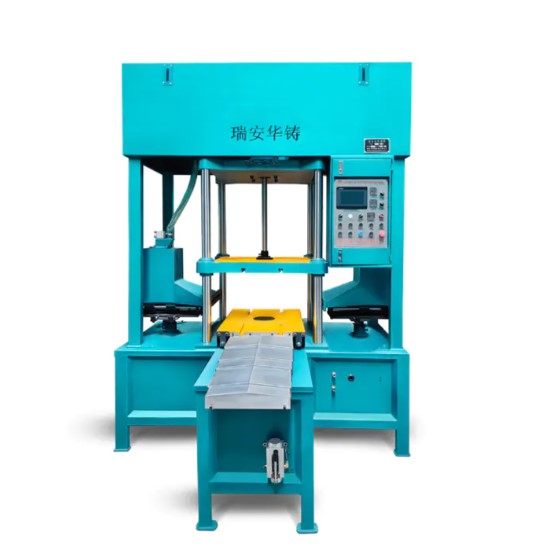
The basic purpose of this equipment is straightforward. It forms prepared core sand inside a core box so that the material takes the required shape.
Instead of relying entirely on manual filling and packing, the machine controls the movement of sand into the mold cavity. The core material is delivered into the core box, distributed through the available space, and compacted into a structure that can be removed and handled once it reaches the required condition.
The exact operating sequence depends on the machine design and the core-making process being used. Even so, the general workflow can be understood through several connected stages.
Preparing the Core Material
The process starts before the sand enters the machine. Core material needs to be prepared according to the casting process, core design, and binder system being used.
Material condition can influence how easily the sand fills the core box and how well the finished core retains its intended shape. For this reason, material preparation remains an important part of the complete process even when the forming equipment itself is automated.
Filling the Core Box
The prepared material enters the core box through the shooting system. Controlled air movement helps distribute the sand throughout the available cavity.
Good filling matters because an unevenly filled cavity can create weak areas or differences in the core structure. The objective is not simply to move sand into the box, but to create a usable core with the required geometry.
Forming and Hardening
Once the core box has been filled, the sand needs to develop enough strength to retain its shape. Depending on the production method, this can involve curing, heating, or chemical hardening.
The core box remains an important part of this stage because it defines the external geometry of the core. The relationship between the box, sand mixture, and forming method therefore has a direct connection with the finished result.
Removing the Finished Core
After the core reaches the required condition, it can be released from the box. The finished piece can then move to inspection, temporary storage, or mold assembly.
When these steps are repeated throughout a production cycle, stable machine operation becomes useful for keeping the overall workflow organized.
Why Does This Equipment Matter as Foundries Modernize?
Modernization is not simply about adding more machines to a production floor. It is also about making individual processes easier to coordinate.
Core production sits between material preparation and mold assembly. If this stage becomes unpredictable, other parts of the foundry can experience interruptions as well.
A machine-based approach can help create a more repeatable process by reducing some of the manual work involved in forming each core.
- Core production can follow a more organized cycle.
- Repeated core shapes can be produced with less variation caused by manual handling.
- Operators can spend more time on inspection and process supervision.
- Core preparation can be coordinated more easily with molding and casting schedules.
- Different production requirements can be handled through tooling and machine adjustments.
These benefits are connected. A foundry does not operate as a collection of completely independent machines. Each process affects the next one, so changes in core making can influence the workflow around it.
Why Is Consistency Important During Core Production?
When people discuss core-making equipment, quality is often the first topic. Consistency also has a practical production meaning.
Imagine a foundry producing a batch of cast housings. If the internal core shape changes from one cycle to another, the resulting castings may require additional inspection or correction. Even small differences can create extra work when they appear repeatedly.
A controlled forming process helps reduce variation that may otherwise come from differences in manual filling, packing, handling, or operator technique.
| Production Concern | How Stable Core Making Can Help |
| Core shape variation | Provides a more controlled forming process |
| Manual repetition | Reduces repetitive physical tasks |
| Production planning | Makes core preparation easier to coordinate with later stages |
| Inspection workload | Creates more consistent conditions for routine checking |
| Process changes | Allows tooling and setup to be adjusted for different core designs |
Which Foundry Applications Can Use Machine-Based Core Making?
Sand cores are used across many types of metal casting because internal structures appear in a wide range of components.
Automotive Castings
Many automotive castings contain internal passages and cavities. Engine-related components, housings, and other cast parts may require cores to form these areas during molding.
Pump and Fluid Handling Components
Pump bodies and similar components often need internal spaces through which fluids can move. Core geometry therefore becomes part of the functional design of the finished casting.
Industrial Machinery
Industrial equipment can contain cast housings, structural components, and other parts with internal features. Machine-based core production can support repeatable manufacturing when similar designs are produced repeatedly.
General Engineering Castings
Foundries producing different types of engineering components may also use core-forming equipment when the casting design contains internal features that cannot be created by the outer mold alone.
What Makes Core Production Challenging?
It can be tempting to think of core making as simply filling a box with sand. In practice, several factors need to work together.
- Core geometry: Narrow sections and complicated shapes can make filling more difficult.
- Material condition: Sand preparation affects filling, compaction, and core stability.
- Core box design: Tooling needs to match the required shape and release conditions.
- Machine setup: The forming process needs to suit the material and tooling.
- Core handling: A newly formed core may require careful movement before reaching the casting stage.
- Maintenance: Regular inspection of the machine and tooling supports stable operation.
This is why buying a machine should not be treated as an isolated equipment decision. The machine, core box, sand system, operating method, and production requirements all need to work together.
How Can Foundries Choose Core Shooting Equipment More Carefully?
There is no single machine configuration that fits every foundry. The appropriate setup depends on the type of cores being produced, the production workflow, tooling requirements, and the level of automation needed.
Before making a purchasing decision, it can help to review several practical questions.
Core Design
What shapes are being produced? Are the cores simple, or do they contain narrow passages, deep areas, or several internal features?
Production Pattern
Will the same core design be produced repeatedly, or will the foundry switch between several designs? A production environment with frequent changes may require a different setup from a process focused on repeated core shapes.
Tooling Compatibility
The core box is just as important as the machine. Buyers should consider how easily the equipment works with the tooling used for current and future projects.
Operator Workflow
A machine should make daily operation practical rather than introduce unnecessary complexity. Controls, access for maintenance, material handling, and core removal all deserve attention during equipment evaluation.
Maintenance and Service
Foundry equipment operates in a demanding environment. Sand, dust, repeated movement, and continuous production can place stress on mechanical components. Easy access for inspection and maintenance can therefore make routine operation easier to manage.
Does Automation Remove the Need for Skilled Foundry Workers?
No. Automation changes the type of work involved rather than removing the need for people.
With machine-based core production, operators still need to monitor material conditions, inspect finished cores, manage tooling, identify unusual machine behavior, and respond when production conditions change.
Instead of spending as much time on repetitive manual packing, workers can focus more on process control and quality checks. This can make the production environment easier to organize while retaining the practical knowledge of experienced foundry personnel.
Why Should Core Making Be Viewed as Part of the Whole Casting Process?
A core does not exist independently from the casting. It becomes part of the mold assembly and contributes directly to the internal geometry of the final component.
That means a foundry should look beyond the machine's individual operating cycle. A more useful question is how well the core-making stage fits into the complete production sequence.
A typical workflow may include several connected steps:
- Prepare the required core material.
- Set up the core box and production equipment.
- Form the core through the shooting process.
- Allow the core to reach the required condition.
- Remove and inspect the finished core.
- Move the core into the mold assembly process.
- Continue with pouring, cooling, shakeout, cleaning, and inspection.
When one stage operates in a stable manner, it becomes easier to plan the stages around it. This is one reason core-making equipment has a role that extends beyond producing individual cores.
What Should Foundries Look for Beyond Machine Output?
Production capacity is useful to consider, but it should not be the only factor. A machine that fits the actual production process can be easier to operate, maintain, and integrate into the foundry environment.
Useful evaluation areas include:
- Compatibility with existing core boxes and tooling.
- Suitability for the types of sand cores being produced.
- Ease of changing between different core designs.
- Accessibility for routine maintenance.
- Operator safety and practical working conditions.
- Control of the core-forming cycle.
- Integration with other foundry equipment.
- Availability of technical support and replacement components.
Looking at these factors together provides a clearer picture of whether a piece of equipment fits a particular production environment.
How Can Foundries Reduce Core-Making Problems?
Reducing production problems starts with understanding the interaction between material, machine, and mold as one connected chain. Core equipment should be reviewed alongside sand preparation, filling conditions, venting, core box condition, and the handling of finished cores.
Routine inspection can also reveal patterns worth paying attention to. If a defect repeatedly appears in the same area, it may provide useful information about material movement or the condition of a particular core box.
Production teams can keep attention on several practical areas throughout a shift:
- Checking whether sand preparation remains consistent.
- Observing filling behavior during the forming cycle.
- Keeping shooting and venting paths clear.
- Inspecting core boxes for wear or damage.
- Monitoring changes in finished core surfaces.
- Reviewing machine conditions when repeated defects appear.
- Adjusting process settings only after related conditions have been checked.
This approach can make the production process more structured than reacting to each individual defect as it appears.
Where Does a Sand Core Shooting Machine Fit in Modern Foundry Production?
A Sand Core Shooting Machine is one part of a larger production system connecting sand preparation, core forming, mold assembly, casting, and inspection.
Its role becomes particularly relevant when a foundry needs to produce internal cavities and passages repeatedly. By providing a controlled way to introduce and form core sand, the equipment can support a more organized approach to core production.
The machine itself is only one part of the equation. Core box design, material preparation, venting, operating conditions, maintenance, and handling all influence the result. When these elements are considered together, the core-making stage becomes easier to manage as part of the wider casting process.
Modern foundries depend on many connected processes, and core making is one of the stages that can quietly influence everything that follows. Sand cores create internal spaces that cannot always be formed by the outer mold, while machine-based production provides a structured way to prepare those cores for molding.
The value of this equipment is therefore not limited to forming individual sand cores. It can support production planning, reduce repetitive manual work, improve process consistency, and help foundries manage casting designs with internal features.
For manufacturers considering new foundry equipment, the key is to look at the complete production situation rather than focusing on one feature alone. Core design, tooling, material preparation, operating workflow, maintenance, automation, and future production needs should all be considered together.
When these elements are properly matched, core production can become a more organized part of the casting workflow and provide a practical foundation for the molding stages that follow.



