 En
En
 русский
 Español
 عربى
عربى Deutsch

The Difficult Parts Are Not Always Visible From the Outside
Consider a valve housing with several internal channels. Its external shape may be relatively simple, yet those passages create additional work during mold design. Sand cores may be needed to form the hollow sections, and each core must remain correctly positioned while the mold is assembled and filled with metal.
If a core shifts, the wall thickness can change. A passage may become narrower than intended, or the finished casting may not match the drawing. These problems can create extra inspection and machining work, particularly when the affected feature is difficult to reach.
Thin sections bring a different concern. Molten metal needs to fill the cavity before it loses the heat required to flow properly. Sudden changes in wall thickness can also affect solidification, so the part design and gating arrangement need to be considered together.
That is why a mold should never be assessed by its external shape alone. The details hidden inside the finished component may have a greater influence on tooling decisions than the surfaces everyone can see.
Core Positioning Deserves Attention Early
Core placement is easier to review on a drawing than to correct after a casting has been produced. Engineers need to consider how the core will be supported, how it fits within the mold, and how gases can escape during pouring.
Removal matters, too. A complicated internal shape may require more attention during cleaning after solidification. If the design makes core removal difficult, the issue can affect the manufacturing route even when the casting itself has the intended geometry.
For custom parts, these details should be discussed before the tooling design is finalized.
What Happens During Shell Molding?
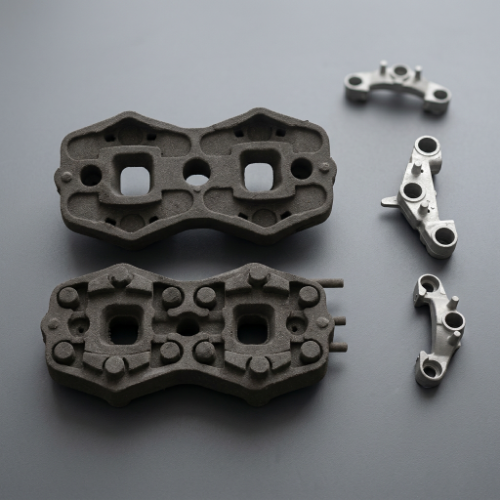
The process begins with a prepared pattern that represents the shape of the intended casting. Resin-coated sand comes into contact with the heated pattern, allowing the resin to cure and bind the sand particles into a firm shell.
Once the shell has formed, it is removed from the pattern. The required shell sections are then assembled to create the mold cavity. If internal features need to be formed, the relevant cores are placed inside before the mold is closed.
Molten metal is poured into the cavity and allowed to solidify. After cooling, the shell is broken away and the casting is cleaned for inspection or further processing.
The sequence sounds straightforward, but each stage has its own requirements. A pattern that is difficult to release can complicate shell production. Poor alignment during assembly can affect the casting dimensions. Problems with metal flow or cooling may cause defects even when the shell itself appears sound.
In other words, making the mold is only one part of making a usable casting.
Why Use a Coated Sand Casting Mold for Detailed Components?
Shell molding can be worth considering when a component has defined contours, several related features, or geometry that needs to be reproduced across repeated production runs.
The resin-coated sand forms a rigid shell against the pattern, helping establish the shape of the mold cavity. This can be useful for selected valve components, mechanical housings, connectors, and other industrial parts where surface detail and dimensional relationships matter.
Still, a detailed mold does not guarantee a defect-free casting. The alloy, pouring conditions, core arrangement, and cooling behavior all influence the outcome. Some surfaces will also need machining to meet the final drawing requirements.
Surface Finish Is Only Part of the Decision
Buyers sometimes focus on the surface appearance of a casting when comparing molding methods. It is worth looking further.
A component may have a satisfactory external finish but still require extensive machining because its connection surfaces or mounting features do not meet the required dimensions. Another part may have less demanding surface requirements but contain internal passages that make mold design more challenging.
The right evaluation starts with the component's function. Which dimensions affect assembly? Which surfaces need machining? Are there internal features that must remain clear? Answering these questions helps the manufacturer understand what the mold actually needs to accomplish.
Where Is This Molding Method Used?
Coated sand shell molding is used for selected industrial castings, including components found in fluid control equipment, pump systems, piping assemblies, and general machinery.
Valve bodies are a useful example because their internal passages and connection areas can create several tooling considerations within one component. Flange-related parts may require attention to mating surfaces and machining allowances. Mechanical housings can involve mounting features that must align with other parts during assembly.
The requirements vary from one project to another. A simple fitting and a component with intersecting internal channels should not be approached in exactly the same way.
Before recommending a molding method, a manufacturer needs to review the actual geometry, intended metal, production needs, and inspection criteria. The product category alone does not provide enough information to make that decision.
Coated Sand Casting or Green Sand Casting?
Both methods use sand to create a mold, but they form it differently. Shell molding uses resin-coated sand that cures against a heated pattern. Green sand molding uses prepared molding sand, commonly containing sand, clay, water, and other suitable materials.
That difference affects the tooling arrangement and production process. Shell molding may be considered for components where a defined cavity surface and repeatable geometry are important. Green sand casting can suit a different range of component sizes, shapes, and production arrangements.
Neither method is automatically suitable for every part.
Cost needs similar consideration. A quotation for shell molding may include pattern preparation, shell-forming arrangements, coated sand, and related handling. Green sand casting involves its own molding, sand preparation, and handling requirements. Machining, inspection, and production volume can change the overall cost of either route.
For a buyer, the useful comparison is the complete manufacturing plan, not just the price of the mold.
What Should You Send a Manufacturer Before Requesting a Quote?
A drawing gives the tooling team something concrete to work with. Without one, the discussion may stay at the level of general descriptions, leaving important questions unanswered.
Send the available part drawing or three-dimensional model, together with the intended metal or alloy. Mark the dimensions that affect assembly, identify surfaces that require machining, and include any relevant inspection requirements.
If the component contains internal channels, sectional views can help explain the geometry. A photograph of an existing part may provide useful context, but it should not replace dimensional information when the project requires defined tolerances.
Production expectations matter as well. A prototype project may involve different decisions from a recurring order. The manufacturer needs to understand the intended use of the tooling before assessing the proposed arrangement.
When the information is incomplete, it is better to identify the missing details early than to assume they can be resolved after production starts.
Questions Worth Discussing Before Tooling Begins
A useful technical conversation should cover more than whether the supplier can make the mold.
Ask how the internal features will be formed and whether any areas may require additional machining. Discuss core positioning, mold assembly, and the dimensions that will need inspection. If the drawing changes after tooling work has started, clarify how those revisions will be reviewed.
It is also reasonable to ask what the quotation includes. Pattern work, mold development, sample production, and other services may be treated differently from one project to another.
These discussions help both sides understand the scope of the order. They also make quotations easier to compare because the buyer can see what each proposed arrangement involves.
A Casting Defect Does Not Always Mean the Mold Is Wrong
Suppose a batch of castings contains gas porosity. The mold may be part of the investigation, but it is not necessarily the only cause. Gas generation, venting, moisture, and metal handling may also need attention.
Incomplete filling can have a different set of causes, including cavity geometry, metal flow, pouring conditions, and the characteristics of the alloy. Shrinkage-related defects require a review of solidification and feeding. Dimensional variation may point toward pattern condition, core movement, mold assembly, or changes during production.
The location of the defect often provides a useful starting point. If the same problem repeatedly appears in one area, the foundry can examine the local geometry and the conditions affecting that section. Production records and inspection results can help establish whether the issue is recurring or isolated.
Changing the mold without understanding the cause can add work without solving the problem. A review involving the foundry and tooling manufacturer is often more useful when it considers the entire casting process.
Frequently Asked Questions
Can coated sand casting be used for complex metal parts?
Yes, it can be considered for suitable components with detailed contours or internal features. The final decision depends on the part geometry, alloy, production requirements, and inspection criteria.
Will a coated sand casting mold eliminate machining?
No. Machining may still be needed for connection surfaces, mounting features, bores, or other dimensions specified in the drawing.
What affects the cost of a custom casting mold?
The component's geometry, core requirements, pattern design, tooling scope, and expected production volume can all influence the quotation. The manufacturer needs to review the project before providing a meaningful assessment.
How can a buyer evaluate a mold supplier?
Start with the supplier's understanding of the drawing and the proposed tooling arrangement. Discuss how critical features will be formed, what inspection is required, and how design changes will be handled.
Choosing the Mold Starts With Understanding the Part
A complex casting rarely presents just one manufacturing challenge. Internal passages may require careful core placement, changes in wall thickness can affect metal flow and solidification, and finished surfaces may need machining before the component can be assembled.
A coated sand casting mold is worth evaluating when the shell molding process fits those requirements. The decision should come from the drawing, the intended application, and the practical needs of production rather than from the molding method's name alone.
For manufacturers developing custom valve components, flange-related parts, and other industrial castings, an early discussion about geometry, material, and inspection can help clarify the tooling requirements. Sharing those details with a mold manufacturer gives both sides a clearer starting point for reviewing the project.



