 En
En
 русский
 Español
 عربى
عربى Deutsch
Understanding the Core Shooting Machine
Industry News-Working Principle of a Core Shooting Machine
The main function of a core shooting machine is to form sand cores by shooting prepared core sand into a mold cavity under pressure. The process begins when sand, usually mixed with resin or another binder, is loaded into the shooting chamber. Once the machine starts operating, compressed air forces the sand mixture into the core box at high speed.
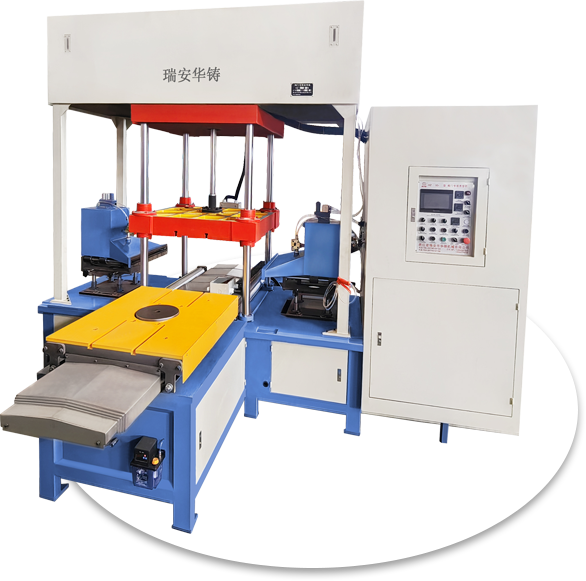
After the sand fills the cavity, heat or catalytic gas is applied depending on the binder system being used. This step hardens the sand core so it retains the required shape after removal from the mold. The hardened core is then ejected and prepared for assembly into the casting mold.
This automated process allows foundries to produce cores with repeatable dimensions and stable quality. It also reduces the variability associated with manual core making, especially when manufacturing components with intricate internal passages.
The shooting pressure, curing time, and mold temperature must be controlled carefully during operation. These factors directly affect the density, strength, and dimensional accuracy of the finished sand core.
Main Components of a Core Shooting Machine
A core shooting machine consists of several mechanical and pneumatic systems that work together to produce the sand core. Each part has a specific role in the operation process.
|
Component |
Function |
|
Shooting Head |
Holds the sand mixture and directs it into the core box under pressure |
|
Core Box |
Shapes the sand into the required core geometry |
|
Heating System |
Heats the core box to cure the binder and harden the core |
|
Pneumatic System |
Supplies compressed air for sand injection and machine movement |
|
Control Panel |
Allows operators to set parameters such as pressure and curing time |
|
Ejection Device |
Removes the finished core from the core box after curing |
The coordination of these components ensures efficient production of cores with uniform properties. For example, the heating system must maintain the proper temperature to ensure the binder cures correctly, while the pneumatic system must deliver stable pressure to prevent uneven sand filling.
Modern core shooting machines often include automated controls to improve process consistency. These systems help operators monitor performance and adjust settings for different core sizes and materials.
Industrial Applications of Core Shooting Machines
Core shooting machines are widely used in foundries that manufacture castings with internal cavities or complex geometries. Their ability to produce uniform sand cores makes them suitable for many industrial sectors.
In the automotive industry, they are used to produce cores for engine blocks, cylinder heads, intake manifolds, and transmission housings. These components often contain complex internal channels that require accurate and durable sand cores during casting.
In pump and valve manufacturing, core shooting machines help create internal flow passages. These passages must meet dimensional requirements to ensure proper fluid movement within the finished product.
The machinery industry also relies on these machines for casting housings, gear cases, and hydraulic parts. By producing precise internal cavities, the machine supports the manufacture of components that require both structural integrity and functional internal spaces.
In addition, core shooting machines are used in the production of cast iron, aluminum, and copper alloy components. This flexibility allows foundries to serve various industries while maintaining consistent production quality.
Because the machine automates the core-making process, it supports higher output rates compared to manual methods. This helps foundries improve production efficiency while reducing labor dependency.
Maintenance and Operational Considerations
Proper maintenance of a core shooting machine is necessary for reliable performance and consistent core quality. Since the machine operates with compressed air, heated molds, and abrasive sand materials, regular inspection is essential.
The pneumatic system should be checked frequently to ensure stable air pressure. Air leaks or pressure fluctuations can result in incomplete filling of the core box, which may affect the quality of the sand core.
The heating elements should also be monitored to maintain consistent curing temperatures. If the core box temperature varies, the binder may not cure evenly, leading to weak or defective cores.
Cleaning is another important aspect of maintenance. Sand residue can accumulate in the shooting head, vents, and core box, reducing efficiency and affecting dimensional precision. Routine cleaning helps prevent blockages and prolongs equipment life.
Operators should also inspect seals, valves, and moving components for wear. Replacing worn parts in a timely manner reduces the chance of unexpected downtime and maintains stable operation.
In addition to maintenance, correct machine parameter settings are important. Factors such as shooting pressure, curing time, and sand composition should be adjusted based on the product design and binder type. Proper setup helps ensure the produced cores meet the required strength and dimensional specifications.
With consistent maintenance and careful operation, the core shooting machine can support stable foundry production and reliable core quality over time.
Related products
-

The HZ700-C Fully Automatic Core Shooter With Core Pulling is an advanced molding solution designed ...
See Details -

The Fully Automatic Environmentally Friendly Core Shooting Machine is a highly advanced, eco-conscio...
See Details -

The HZ700-X Fully Automatic Core Shooting Machine With Lower Mold Removal is designed to make core p...
See Details -

The HZ700-X Fully Automatic Core Shooting Machine With Lower Mold Removal is designed for molding ap...
See Details -

The HZ800-X Hydraulic Fully Automatic Core Shooting Machine is designed for efficient and accurate c...
See Details -

The environmentally friendly core shooting machine with lower mold removable is a high-performance s...
See Details -

The Lower Mold Removable Type Environmentally Friendly Core Shooting Machine with Door is an advance...
See Details -

The HZ800-X Hydraulic Environmentally Friendly Core Shooting Machine is an advanced automatic core p...
See Details

Welcome to our company to design according to your design and sample proofing.
Contact Infor
-
 Haixi Town, Pingyang County, Wenzhou City, Zhejiang Province, China
-
 +86-13868387823
-
 +86-577-65197155
-
 +86-577-65197166
-
 13868387823@139.com
huazhultd@outlook.com
Quick Links
Products
Copyright © Ruian Huazhu Machinery Co., Ltd. All Rights Reserved.

