 En
En
 русский
 Español
 عربى
عربى Deutsch
Aluminum Alloy Castings: Types and Precautions
Industry News-Aluminum alloy castings are widely used in modern manufacturing because they combine relatively low weight with good mechanical strength, corrosion resistance, and casting versatility. By adding alloying elements such as silicon, copper, magnesium, and zinc, manufacturers can improve the casting performance and physical properties of aluminum. These castings are produced through methods such as sand casting, die casting, investment casting, and permanent mold casting, making them suitable for industries ranging from automotive production to electronics.
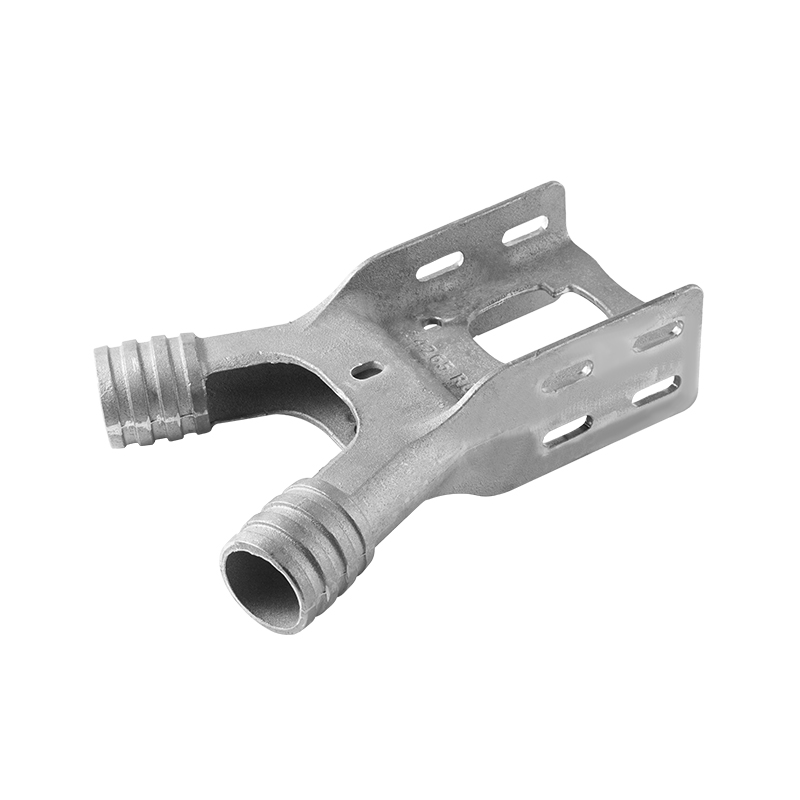
What are the common types of Aluminum Alloy Castings?
Aluminum alloy castings are generally classified according to the primary alloying elements and the intended performance characteristics. Common types include:
· Aluminum-Silicon Alloy Castings
These castings contain silicon as the main alloying element. Silicon improves fluidity during casting and reduces shrinkage, making these alloys suitable for producing complex shapes. They are often used in engine parts, pump housings, and machine components.
· Aluminum-Copper Alloy Castings
Copper improves the strength and hardness of aluminum castings, especially after heat treatment. These alloys are often selected for applications requiring higher mechanical performance, such as aerospace fittings and heavy-duty machine parts.
· Aluminum-Magnesium Alloy Castings
Magnesium increases corrosion resistance and improves weldability. These castings are commonly used in marine equipment, transportation structures, and decorative parts where resistance to atmospheric exposure is required.
· Aluminum-Zinc Alloy Castings
Zinc contributes to strength and machinability. These alloys are useful in components requiring moderate structural performance and precision finishing.
· Aluminum-Silicon-Magnesium Alloy Castings
This type combines good casting behavior with suitable mechanical properties after heat treatment. It is frequently used for structural parts, automotive wheels, and housings.
· Heat-Resistant Aluminum Alloy Castings
These alloys are designed with elements such as nickel or copper to maintain dimensional stability at elevated temperatures. They are often used in engine blocks, pistons, and thermal equipment.
Each alloy type offers different advantages depending on environmental exposure, load requirements, and production methods. Selecting the correct alloy composition is essential for balancing strength, durability, and manufacturing cost.
Where are Aluminum Alloy Castings commonly applied?
Aluminum alloy castings are used in many industries due to their adaptability and favorable material properties. Their applications commonly include:
1. Automotive Industry
Aluminum alloy castings are used in engine blocks, cylinder heads, transmission housings, wheels, and suspension components. Their lower density helps reduce vehicle weight, which contributes to fuel efficiency and handling performance.
2. Aerospace Components
Aircraft structural parts, housings, brackets, and auxiliary systems often use aluminum alloy castings because they provide a balance between weight and mechanical reliability.
3. Industrial Machinery
Equipment frames, pump bodies, valve housings, and compressor parts are frequently manufactured from aluminum alloys because these castings can be produced in complex forms with suitable strength.
4. Electrical and Electronic Equipment
Aluminum castings are used for motor housings, heat sinks, enclosures, and connector bodies. Their thermal conductivity helps dissipate heat in electrical systems.
5. Construction Hardware
Aluminum alloy castings are found in door hardware, architectural fittings, support brackets, and decorative structural elements where corrosion resistance is useful.
6. Marine Equipment
Due to their corrosion resistance, aluminum-magnesium castings are often used in marine housings, deck equipment, and boat fittings.
7. Consumer Products
Household appliances, power tools, cookware components, and recreational equipment often contain aluminum castings because they allow economical production and manageable product weight.
These applications demonstrate the versatility of aluminum alloy castings across industries that require durable, lightweight, and corrosion-resistant components.
What are the precautions for using Aluminum Alloy Castings?
To ensure safe operation and maintain service life, aluminum alloy castings should be used with proper consideration of environmental and mechanical conditions:
◆ Avoid Overloading
Excessive mechanical stress may cause deformation or cracking, especially in thin-wall castings. Components should operate within the load limits specified during design.
◆ Prevent Corrosive Exposure
Although aluminum alloys resist atmospheric corrosion, certain chemicals, salt environments, or galvanic contact with dissimilar metals may accelerate degradation. Protective coatings or insulation measures may be necessary.
◆ Control Operating Temperature
Some aluminum alloys lose strength when exposed to high temperatures for long periods. Castings used near engines or heat sources should be selected for thermal resistance.
◆ Inspect for Surface Defects
Porosity, cracks, and inclusions can reduce the structural reliability of cast parts. Routine inspections help identify defects before they affect performance.
◆ Use Proper Fastening Methods
Overtightening bolts or using incompatible fastening systems may damage the casting. Appropriate torque settings and load distribution methods should be followed.
◆ Maintain Surface Protection
Anodizing, painting, or coating helps improve corrosion resistance. Damaged coatings should be repaired to maintain protection.
◆ Avoid Impact Loading
Repeated shocks or sudden impacts may create fatigue damage. Aluminum alloy castings should not be subjected to conditions beyond their intended service environment.
◆ Ensure Correct Machining Practices
Improper machining may introduce stress concentrations or dimensional errors. Machining should follow the material’s recommended tolerances and tooling conditions.
Related products
-

The HZ700-C Fully Automatic Core Shooter With Core Pulling is an advanced molding solution designed ...
See Details -

The Fully Automatic Environmentally Friendly Core Shooting Machine is a highly advanced, eco-conscio...
See Details -

The HZ700-X Fully Automatic Core Shooting Machine With Lower Mold Removal is designed to make core p...
See Details -

The HZ700-X Fully Automatic Core Shooting Machine With Lower Mold Removal is designed for molding ap...
See Details -

The HZ800-X Hydraulic Fully Automatic Core Shooting Machine is designed for efficient and accurate c...
See Details -

The environmentally friendly core shooting machine with lower mold removable is a high-performance s...
See Details -

The Lower Mold Removable Type Environmentally Friendly Core Shooting Machine with Door is an advance...
See Details -

The HZ800-X Hydraulic Environmentally Friendly Core Shooting Machine is an advanced automatic core p...
See Details

Welcome to our company to design according to your design and sample proofing.
Contact Infor
-
 Haixi Town, Pingyang County, Wenzhou City, Zhejiang Province, China
-
 +86-13868387823
-
 +86-577-65197155
-
 +86-577-65197166
-
 13868387823@139.com
huazhultd@outlook.com
Quick Links
Products
Copyright © Ruian Huazhu Machinery Co., Ltd. All Rights Reserved.

