 En
En
 русский
 Español
 عربى
عربى Deutsch
OEM Casting Parts for Hydraulic Systems: Material and Process Guide
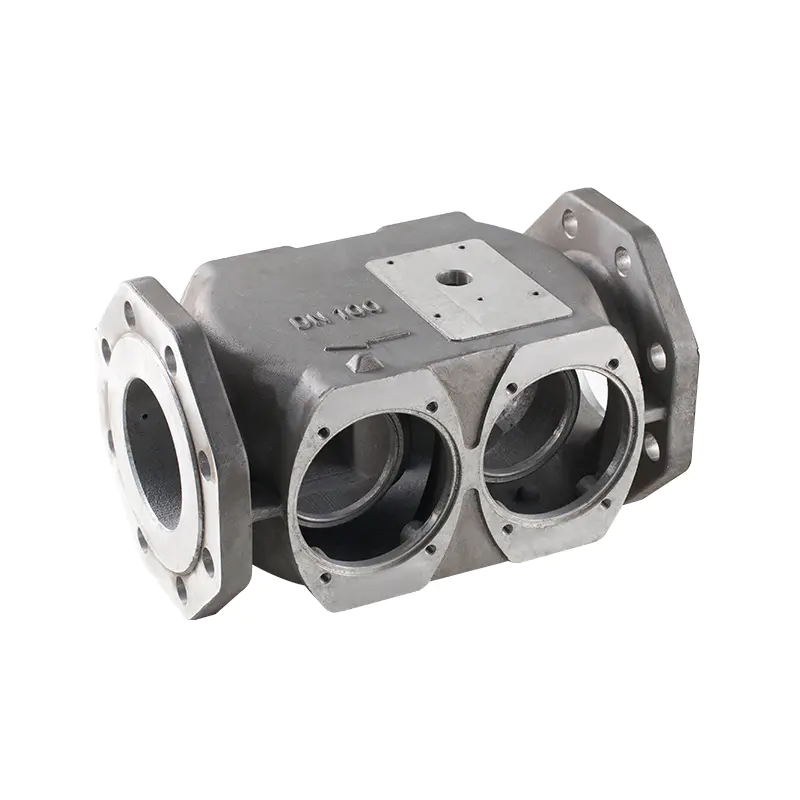
Industry News-Picking OEM Casting Parts for a hydraulic system is rarely as simple as matching a drawing to a catalog page. Anyone who has watched a pump housing fail early, or dealt with a valve body that seeped fluid within weeks of installation, understands that the wrong casting choice doesn't just cost money — it stalls production lines and damages trust between engineering teams and whoever signed off on the part. That kind of pressure sits behind almost every hydraulic component sourcing decision, whether the part in question is a pump body, a manifold block, or a small connector fitting buried deep inside an assembly.
Why Hydraulic Systems Are Unforgiving About Casting Quality
Hydraulic systems run under sustained pressure, and any weakness inside a cast part tends to reveal itself eventually — sometimes gradually through seepage, sometimes suddenly through cracking. Porosity hidden inside a casting, invisible from the outside, can turn into a failure point once pressure cycles repeatedly through that section.
This is part of why casting decisions for hydraulic components get treated differently than casting decisions for less demanding applications. A decorative bracket tolerates a little internal porosity without consequence. A valve body under continuous hydraulic load does not.
Does Material Choice Matter More Than Process Choice?
Both matter, honestly, though they solve different problems. Material determines how the part behaves under pressure, temperature swings, and exposure to hydraulic fluid chemistry over time. Process determines how consistently that material actually performs once it's shaped into a working part.
Picking a strong material and pairing it with a poorly controlled casting process still produces unreliable parts. The two decisions work together, not separately, and buyers who focus only on material specs while ignoring process quality often end up disappointed once parts reach field conditions.
Common Materials Used in Hydraulic Casting Work
Different metals bring different strengths to hydraulic applications, and picking between them usually comes down to pressure rating, weight considerations, and fluid compatibility.
- Aluminium Casting Parts work well where weight reduction matters without sacrificing corrosion resistance, common in mobile hydraulic equipment
- Brass Casting Parts suit fittings and connectors where machinability and corrosion resistance against certain fluids take priority over raw strength
- Ductile iron remains common for housings needing higher pressure tolerance in stationary equipment
- Steel alloys get used where impact resistance alongside pressure tolerance becomes necessary
None of these materials works universally across every hydraulic application. A pump housing built for mobile equipment has different priorities than a stationary industrial manifold, and matching material to actual operating conditions avoids overspending on strength that a lighter application doesn't need.
How Does Fluid Type Influence Material Selection?
Hydraulic fluid chemistry varies more than people expect, and some fluids react poorly with certain metals over extended exposure. Fluids containing particular additives can accelerate corrosion in materials that would otherwise hold up fine under plain water-based systems.
Checking fluid compatibility against material choice before finalizing a casting order avoids a slow-developing problem that might not show symptoms until months into service, by which point replacing housings across an entire equipment line becomes a bigger headache than checking compatibility upfront would have been.
Casting Processes: What Actually Changes Between Them
Different casting methods produce different internal structures, surface finishes, and dimensional consistency, which matters considerably once a part needs to hold pressure reliably.
| Process | Typical Strength | Best Suited For |
|---|---|---|
| Precision Casting Process | Consistent internal structure with fewer voids | Complex geometries needing tight dimensional control |
| Die Casting | Good repeatability across high volume runs | Standardized parts produced in large batches |
| Sand Casting | Adequate for simpler shapes, more variable finish | Larger parts where surface finish matters less |
| Investment Casting | Fine surface detail, suited to intricate shapes | Small components with detailed internal features |
Is Precision Casting Always Worth the Extra Step?
Not for every part, though for hydraulic components carrying continuous pressure, it often earns its place. A Precision Casting Process reduces internal porosity and improves dimensional consistency, both of which matter directly for parts that need to seal reliably against fluid pressure over extended use.
Simpler components with lower pressure exposure — brackets, covers, non-pressurized housings — don't always need that level of process control. Applying precision casting universally across every part in an assembly tends to inflate costs without adding meaningful benefit where pressure tolerance isn't actually a concern.
Casting Small Metal Parts: A Different Set of Challenges
Small components inside hydraulic assemblies — fittings, connectors, small valve bodies — face different casting challenges than larger housings. Thin wall sections cool faster during casting, which can introduce stress points if the process isn't controlled carefully.
Casting Small Metal Parts reliably requires attention to gate placement and cooling rate that differs meaningfully from casting a large pump housing. Manufacturers experienced with smaller components tend to catch these issues earlier, since the tolerances involved leave less room for correction after the fact.
Why Do Small Parts Sometimes Fail Before Larger Ones?
Smaller cross-sections concentrate stress differently than bulkier parts. A thin-walled fitting under repeated pressure cycling can develop fatigue cracks faster than a thicker housing simply because there's less material absorbing that stress across its structure.
This is why buyers sourcing small hydraulic components should ask about wall thickness consistency and gate placement during the casting process, rather than assuming a small part is automatically less demanding to produce correctly just because of its size.
Matching Casting Choices to Pressure and Sealing Needs
Sealing surfaces on hydraulic components need dimensional accuracy that goes beyond general shape conformance. A slightly warped mating surface, invisible without careful inspection, can create a leak path that only becomes obvious once the system runs under load.
Working through casting selection with sealing requirements in mind means asking about post-casting machining tolerances, not just the raw casting process itself. Most hydraulic components need some machining after casting to hit the flatness and surface finish needed for reliable sealing.
Steps for Evaluating a Casting Supplier's Fit for Hydraulic Work
- Ask about internal inspection methods used to catch porosity before parts ship
- Confirm material certifications match what the pressure rating actually requires
- Review sample parts for wall thickness consistency across the geometry
- Check post-casting machining capability for sealing surface tolerances
- Discuss fluid compatibility testing if the application involves less common hydraulic fluids
Casting Parts in Automobile Applications as a Reference Point
Automotive hydraulic systems — braking assist components, steering assemblies, transmission housings — face similarly demanding pressure and reliability requirements, and lessons from Casting Parts in Automobile production often transfer usefully to industrial hydraulic sourcing.
Automotive supply chains tend to demand tight consistency across large production volumes, since a casting defect affecting one vehicle batch can multiply into a widespread recall situation. That pressure has pushed automotive casting suppliers toward rigorous inspection routines that industrial hydraulic buyers can reasonably expect from a capable OEM Casting Parts supplier as well.
Does Automotive-Grade Casting Experience Transfer to Industrial Hydraulic Work?
Largely, yes, though not without some adaptation. The pressure tolerances and duty cycles differ between automotive and industrial hydraulic applications, so a supplier's automotive experience signals process discipline more than it guarantees a perfect match for every industrial specification.
Asking a potential supplier about their quality control routines across different industries, rather than assuming automotive experience translates directly, gives a clearer picture of whether their inspection standards actually fit the specific hydraulic application under consideration.
Balancing Cost Against Long-Term Reliability
Cheaper casting processes sometimes look attractive on a quote sheet until field failures start generating warranty claims and downtime costs that outweigh whatever was saved upfront. Weighing casting choices purely on initial price, without factoring failure risk over the component's working life, tends to produce decisions that look good briefly and cost more later.
- Expected service life under the application's actual pressure cycling
- Cost of downtime if a component fails prematurely in the field
- Availability of replacement parts if a supplier relationship doesn't continue long term
- Total cost across the component's working life, not just the initial purchase price
Choosing OEM Casting Parts for hydraulic systems ultimately comes down to matching material, process, and supplier capability to the actual pressure and sealing demands a component will face, rather than defaulting to whatever configuration seems cheapest or most familiar on a spec sheet. Getting that balance right takes a supplier who understands hydraulic-specific requirements well enough to flag mismatches before production starts, not after parts have already failed in the field. Ruian Huazhu Machinery Co., Ltd. works with hydraulic equipment manufacturers and component buyers through exactly this kind of material and process evaluation, helping match casting specifications to actual operating conditions rather than generic assumptions. Reach out with part drawings or pressure requirements, and the conversation about which casting approach fits best can start from there.
Related products
-

The HZ700-C Fully Automatic Core Shooter With Core Pulling is an advanced molding solution designed ...
See Details -

The Fully Automatic Environmentally Friendly Core Shooting Machine is a highly advanced, eco-conscio...
See Details -

The HZ700-X Fully Automatic Core Shooting Machine With Lower Mold Removal is designed to make core p...
See Details -

The HZ700-X Fully Automatic Core Shooting Machine With Lower Mold Removal is designed for molding ap...
See Details -

The HZ800-X Hydraulic Fully Automatic Core Shooting Machine is designed for efficient and accurate c...
See Details -

The environmentally friendly core shooting machine with lower mold removable is a high-performance s...
See Details -

The Lower Mold Removable Type Environmentally Friendly Core Shooting Machine with Door is an advance...
See Details -

The HZ800-X Hydraulic Environmentally Friendly Core Shooting Machine is an advanced automatic core p...
See Details

Welcome to our company to design according to your design and sample proofing.
Contact Infor
-
 Haixi Town, Pingyang County, Wenzhou City, Zhejiang Province, China
-
 +86-13868387823
-
 +86-577-65197155
-
 +86-577-65197166
-
 13868387823@139.com
huazhultd@outlook.com
Quick Links
Products
Copyright © Ruian Huazhu Machinery Co., Ltd. All Rights Reserved.

