 En
En
 русский
 Español
 عربى
عربى Deutsch

A vehicle is really a system of parts working together, and a surprising number of those parts start out as castings. From the engine bay to the underbody, cast metal components form much of the skeleton that keeps other systems aligned while the vehicle is in motion. Their role in safety isn't always obvious from the outside, since these parts rarely get noticed until something goes wrong.
This is exactly why automotive casting components deserve consideration as part of a complete safety system rather than as background hardware. Material behavior, internal structure, process consistency, and design all interact with each other continuously. When one part of that chain is out of balance, the effects can show up in places that have nothing to do with the original cause.
Why Do Automotive Casting Components Matter More Than Most Drivers Realize?
Most people think about safety in terms of airbags, seatbelts, and crumple zones. Casting components rarely make that list, yet they influence how those very systems actually behave during real world driving.
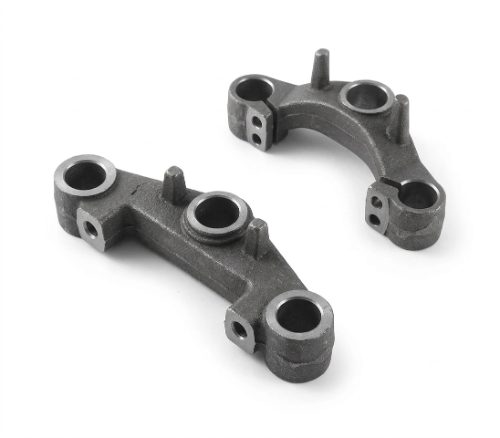
Steering knuckles, control arms, subframe brackets, and housings around the engine and transmission all rely on cast metal to hold their shape under repeated stress. These parts don't fail often under normal conditions, but the way they're produced can determine how much margin exists before something starts to go wrong.
| Casting Component | General Role in the Vehicle |
| Steering knuckle | Connects steering and suspension movement |
| Control arm | Manages wheel motion and road impact |
| Engine block or cylinder head | Supports combustion and heat management |
| Transmission housing | Protects internal gear components |
| Brake caliper bracket | Supports braking hardware under repeated load |
What Happens Inside a Casting Before It Ever Becomes a Safety Part?
A casting starts as molten metal poured into a mold, and what happens during that process shapes everything that follows. As the metal cools, it forms an internal grain structure that isn't visible from the outside once the part is finished.
If cooling happens unevenly, or if gas gets trapped during the pour, small pockets or inconsistencies can form inside the part. None of this shows up on a visual inspection, which is why internal quality checks matter as much as how a component looks once it's machined and cleaned.
A part with hidden porosity or uneven density can still function normally for a while. Problems tend to build up gradually through vibration, heat cycles, and repeated stress rather than showing up right away.
How Do Automotive Casting Components Respond During a Crash?
Crash safety often gets discussed in terms of body panels and restraint systems, but casting components also play a role in how force moves through the vehicle structure during an impact.
Load Paths and Passenger Protection
Certain cast parts are designed to manage force during sudden impacts, guiding energy away from the passenger area rather than letting it travel unpredictably. If these parts carry inconsistent density or hidden weak spots, they may deform differently than engineers intended.
This unpredictability can change how crash energy moves through the surrounding structure, which is part of why casting quality gets treated as a genuine safety topic rather than a purely mechanical concern.
Why Consistency Across a Batch Matters
Consistency between individual parts matters just as much as the properties of any single component. A process that produces uneven results from one batch to the next introduces variability that automakers generally try to avoid, since every vehicle on the road is expected to behave in a similar way under similar conditions.
- Parts from the same production run should behave consistently under similar stress.
- Variation between batches can make crash performance harder to predict.
- Repeated inspection helps catch differences before parts reach an assembly line.
- Traceability allows a specific batch to be reviewed if an issue appears later.
Can Small Defects in Casting Components Lead to Bigger Safety Concerns?
Not every imperfection in a casting turns into a real problem, and it's worth being careful about assuming the worst from a small flaw. Many casting components include areas that carry less structural load, where minor inconsistencies have limited practical effect.
The concern grows when a defect sits in a load bearing section, particularly one that experiences repeated stress over the life of the vehicle. A small weakness in the wrong location can grow slowly through fatigue, eventually affecting how the part performs when it matters most.
| Defect Type | General Concern Level |
| Surface blemish in a low stress area | Often limited practical impact |
| Hidden porosity in a load bearing section | Can affect long term durability |
| Uneven wall thickness near a stress point | May influence how force distributes |
| Inclusions within critical structural areas | Can reduce fatigue resistance over time |
This is a general overview rather than a diagnostic guide, since the actual risk depends heavily on the specific part, its location in the vehicle, and how it's expected to perform over its service life.
How Does the Manufacturing Process Affect Long Term Reliability?
The path from raw metal to a finished casting component involves several stages, and each one influences how the part performs years down the road. Material composition, mold preparation, cooling behavior, and finishing all leave their mark on the final result.
A foundry with well documented process controls tends to produce parts with fewer surprises over time. This is part of why long term supplier relationships are common in this industry, since consistency is easier to verify through experience than through a single inspection report.
Reliable production typically includes a combination of checkpoints along the way.
- Checking raw material composition before melting begins.
- Monitoring mold and core preparation for consistency.
- Using internal inspection methods to look for hidden porosity or inclusions.
- Confirming dimensions match the intended design tolerances.
- Reviewing surface condition before parts move further down the line.
None of these steps guarantee a flawless outcome by themselves, but together they reduce the likelihood of a defect quietly making its way into a finished vehicle.
Why Do Automakers and Suppliers Evaluate Casting Partners So Carefully?
Choosing a casting supplier involves more than comparing price and delivery time. Buyers are also trying to understand whether a supplier can produce similar results across large volumes, month after month, without drifting away from what was originally agreed.
Several factors tend to come up repeatedly during these evaluations.
- A track record of producing similar components for automotive use.
- The ability to show internal inspection and traceability practices.
- Consistency of material properties across different production batches.
- Clear communication when adjustments or corrections are needed.
- Willingness to share process documentation during supplier reviews.
These considerations reflect a relationship based approach to sourcing, since casting components often stay in service for many years after a vehicle leaves the factory floor.
How Are Automotive Casting Components Changing as Vehicles Evolve?
As vehicles shift toward electrification, the role of casting components is changing shape rather than fading into the background. Battery housings, motor casings, and structural components for electric platforms are placing new demands on casting processes, particularly around weight and heat management.
At the same time, environmental considerations are encouraging foundries to reconsider material sourcing and energy use during production. These shifts suggest that casting components will keep playing a central role in vehicle safety, even as the vehicles built around them continue to change.
How Does All of This Connect Back to Everyday Driving?
Shooting pressure, internal structure, batch consistency, and supplier reliability might sound like concerns that belong entirely on the factory floor, but they eventually show up in how a vehicle behaves on the road. A steering knuckle that holds its shape under stress, a control arm that absorbs impact as intended, or a housing that protects internal components over years of use all trace back to decisions made long before the vehicle was assembled.
Understanding the connection between automotive casting components and vehicle safety helps explain why quality control, process consistency, and supplier reliability remain ongoing concerns across the automotive supply chain, rather than a box to check once and forget.



