 En
En
 русский
 Español
 عربى
عربى Deutsch
How Casting Parts Processes Match Industry Demands
Industry News-Your component specification looks straightforward on paper — dimensions, tolerances, material, annual volume. But when the quote comes back from a casting parts manufacturer, the process they're proposing doesn't match what you assumed, and the cost difference between options is significant enough to shift the unit economics of the whole product. Casting process selection isn't arbitrary, and it isn't simply about what equipment a supplier happens to own. It follows a logic tied directly to the industry context and the performance requirements your parts need to meet. Understanding how those factors translate into process decisions helps buyers and engineers ask the right questions — and avoid committing to a process that creates problems after tooling is already built.
Why the Same Part Could Be Made Multiple Ways
A bracket, a housing, a valve body — any of these could, in theory, be produced by several different casting methods. What changes between them isn't just unit cost or lead time. It's dimensional accuracy, surface finish, mechanical properties, tooling investment, and minimum viable production volume.
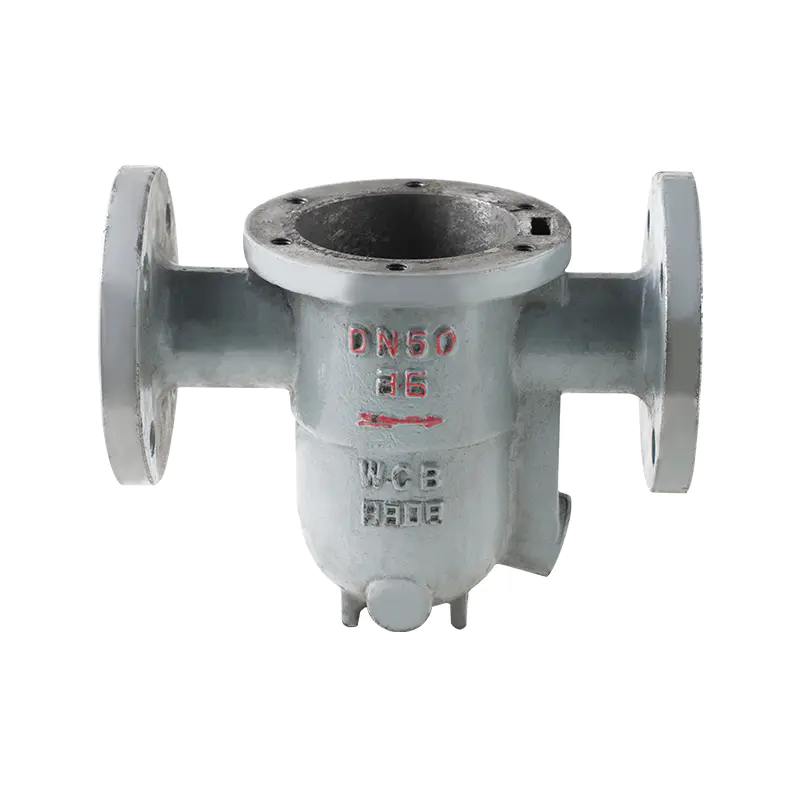
The casting process that suits a component is determined by where the product is going and what it needs to do once it gets there. A housing for consumer electronics has different requirements from a housing for industrial pump equipment — even if the outer geometry looks similar on a drawing. Volume changes the process. Material changes it. Tolerance requirements change it. So does the end-use environment.
The industries that purchase cast components at volume have developed preferences based on exactly this logic. Those preferences aren't arbitrary tradition. They reflect the accumulated experience of matching process capabilities to production realities, often across decades of manufacturing development.
The Main Casting Processes and What They Actually Offer
Each method has a defined set of strengths — and real limits. Worth being clear on these before mapping them to industry requirements.
Die casting forces molten metal into hardened steel dies under pressure. High injection pressure fills thin sections and complex geometries quickly, producing parts with tight dimensional consistency. Cycle times are short, making it suited to high-volume production. Tooling cost is significant, so the economics require enough volume to spread it. Aluminium Casting Parts and zinc parts are the most common die casting outputs. Steel and brass are less commonly die cast because of the temperatures involved.
Precision casting — investment casting, lost-wax casting — builds a wax pattern, coats it in ceramic, burns out the wax, then pours metal into the ceramic shell. The Precision Casting Process produces accurate dimensions and good surface finish across a wide range of metals, including alloys that die casting can't handle. Tooling cost is lower than die casting; per-unit cost is higher. It suits geometric complexity and tight tolerances at moderate volumes.
Sand casting packs sand around a pattern to form the mold. Flexible in terms of size, metal, and geometry — but surface finish and dimensional accuracy are coarser than other methods. Tooling is inexpensive. It suits large components and low-volume production where permanent tooling investment doesn't make economic sense.
Gravity casting pours molten metal into permanent metal molds without die casting's injection pressure. It produces better dimensional consistency than sand casting and better mechanical properties in some alloys, because slower fill reduces porosity. Suited to medium-volume production where surface finish and structural integrity both matter.
How Automotive Requirements Drive Die Casting Adoption
The automotive sector is the clearest illustration of how industry requirements converge on a specific process. Casting parts in automobile production runs at volumes where per-unit cost governs almost every other manufacturing decision.
The requirements align with die casting in a direct, predictable way:
- Volume: Automotive runs production cycles that make high tooling investment acceptable. The cost per part drops steeply with volume, and automotive volumes typically clear that threshold comfortably.
- Lightweight alloys: Reducing vehicle weight is a persistent engineering priority. Aluminum and magnesium die casting parts deliver both the weight and the production rate the industry needs.
- Dimensional repeatability: Assembly lines can't tolerate part-to-part variation that requires per-piece adjustment. Die casting's dimensional consistency supports line assembly without rework.
- Thin walls: Modern automotive components are designed to minimize material while maintaining structural function. Die casting fills thin sections reliably.
Aluminium Casting Parts appear throughout automotive applications — engine blocks in some configurations, transmission housings, oil sumps, heat management components, structural brackets. The process became the automotive standard because it fits the industry's requirements, not the other way around.
Where Precision Casting Earns Its Place
The Precision Casting Process occupies a different position — suited to applications where die casting's constraints become relevant, and where volume doesn't justify die casting's tooling investment.
Industries where it fits naturally:
Industrial pumps and valves: Complex internal geometries for fluid control, tight tolerances at sealing surfaces, and a range of corrosion-resistant alloys that can't be die cast. Investment casting handles all three simultaneously.
Power generation: Turbine components, impellers, nozzle rings — these require precise geometry in high-temperature alloys and performance consistency across critical surfaces. Precision casting is the established process for this category.
Marine hardware: Brass Casting Parts for marine applications — propeller hardware, through-hull fittings, valve bodies — benefit from investment casting's ability to produce complex geometry in corrosion-resistant alloys with good surface quality. Sand casting can handle these materials, but precision casting produces better dimensional accuracy in smaller hardware.
Medical and laboratory equipment: Surgical instruments and equipment housings require biocompatible alloys, smooth surface finish, and dimensional accuracy. Precision casting achieves all of these in ways other processes can't reliably match.
Precision casting doesn't compete with die casting on volume economics. It competes on geometry complexity, alloy flexibility, and surface quality — and on those dimensions, it has genuine advantages.
Sand Casting: Still the Right Answer for Heavy Components
Large pump housings, heavy machinery frames, mining equipment components, infrastructure hardware — these applications share requirements that point consistently toward sand casting.
- Size: Die casting and investment casting both have practical size limits. Sand casting has essentially none for most industrial components.
- Low to moderate volumes: When annual volumes are hundreds rather than tens of thousands, permanent tooling investment doesn't recover. Sand casting's low tooling cost matches this production profile.
- Alloy flexibility: Sand casting works with virtually any castable metal — gray iron, ductile iron, carbon steel, alloy steel, copper alloys, aluminum. For structural applications requiring specific metallurgical properties, this matters.
- Thick wall sections: Many large structural components have thick sections where die casting's thin-wall focus is irrelevant, and where sand casting's natural solidification behavior is actually an advantage.
The tradeoff — coarser surface finish and wider dimensional tolerances — is acceptable in most heavy equipment applications because the functional requirement is structural performance and load-bearing capacity, not precision fit or aesthetic finish.
How Material Selection Interacts With Process Choice
The material a part needs to be made from doesn't just affect properties in service — it often constrains which casting processes are viable in the first place.
| Material | Compatible Processes | Key Consideration |
|---|---|---|
| Aluminum alloys | Die casting, gravity casting, sand casting | Die casting for high volume; gravity casting for better mechanical properties in some applications |
| Zinc alloys | Die casting | Thin walls, complex geometry; low melting point suits high-speed die casting |
| Brass and copper alloys | Precision casting, sand casting, gravity casting | Brass Casting Parts via investment casting for complex geometry |
| Gray and ductile iron | Sand casting | Large structural applications; high melting point makes die casting impractical |
| Carbon and alloy steel | Sand casting, precision casting | Investment casting for complex steel geometry; sand casting for large structural parts |
| Stainless steel | Precision casting, sand casting | Investment casting preferred for corrosion-critical applications with complex form |
| Magnesium alloys | Die casting | Lightweight automotive and electronics parts; handled similarly to aluminum |
The combination of material and process determines achievable mechanical properties, not just shape. Aluminum gravity cast at slower fill rates develops different grain structure from the same alloy die cast at high pressure. For structural applications, these process-driven property differences affect performance as directly as the alloy selection itself.
OEM Casting Parts: When Process Selection Happens in Product Development
For OEM projects where a component is being designed for integration into a finished product, casting process selection is ideally made during the design phase — not after geometry is fixed. The process affects what geometries are achievable, what tolerances are practical, and what minimum wall thicknesses are viable.
In practice, the process selection conversation in OEM casting parts development covers:
Geometry review: Die casting achieves thin walls and undercuts with appropriate tooling. Investment casting produces internal passages and complex surfaces. Sand casting requires generous draft angles and avoids thin unsupported sections. Knowing which process is targeted shapes the design constraints applied from the start.
Volume projection: A component expected at low annual volume in a specialized market requires a different process than one projected at high volume in a competitive consumer segment. Tooling investment needs to be recoverable within the realistic production horizon — and that horizon needs to be honest.
Tolerance and inspection requirements: OEM components that interface with other parts in an assembly carry specific dimensional requirements. Process capability needs to match those requirements without relying on excessive post-cast machining to compensate for inherent process variation.
Post-process requirements: If the casting will be machined, heat treated, or surface treated after casting, the process affects what condition the part arrives in. A die casting with consistent dimensions requires less machining stock removal than a sand casting. Getting this right at the design stage avoids costly revisions after tooling commitment.
Casting Small Metal Parts: Where Process Choice Has Outsized Impact
At small part scale, dimensional errors that are negligible on a large structural casting become significant. The process choice amplifies or mitigates this.
Die casting handles small parts well when volume is sufficient and the alloy is appropriate. The process produces consistent dimensions and good surface quality on small complex shapes — which is why it's so common in consumer electronics hardware, small connector housings, and compact automotive components.
Investment casting handles small parts equally well across a wider alloy range. Small brass fittings, stainless steel instrument components, and precision hardware are produced by investment casting when the alloy or geometry isn't suited to die casting. The surface quality and dimensional accuracy investment casting achieves on small complex parts are genuinely difficult to match with other methods.
Sand casting is less practical for small precision parts. The dimensional variation and surface roughness it introduces are more consequential at small scale. It remains appropriate for small parts where geometry is simple, tolerances are wide, and alloy requirements make it the only viable option.
Evaluating Casting Parts Suppliers Against Process Requirements
Knowing which process suits a component is necessary. Verifying that a supplier can execute it at the required quality level is the other half of the decision.
For die casting parts manufacturer evaluation:
- What alloy range and machine tonnage range does the facility cover?
- What dimensional inspection capability exists — coordinate measurement equipment, optical measurement systems?
- Is there in-house secondary machining for surfaces requiring closer tolerances than die casting achieves directly?
For precision casting company evaluation:
- Is wax pattern tooling managed in-house or through specialist suppliers, and what does that mean for lead time and iteration cycles?
- What ceramic shell materials and temperature capability does the facility have for higher-temperature alloys?
- What non-destructive testing is available for internal defect inspection on structural or pressure-critical parts?
For China casting parts sourcing generally:
- What quality certification does the facility hold, and what does their maintenance of it actually involve?
- How are batch records maintained for material traceability and process documentation?
- What is the realistic lead time from tooling approval to first production batch under normal loading?
A die casting parts supplier or precision casting company that answers these questions specifically — with documentation — demonstrates the operational discipline that separates consistent production quality from unreliable output. Suppliers who respond with generalities deserve more scrutiny, not less.
Casting process selection is an engineering and commercial decision with consequences that run through the entire production life of a component. The process committed to at tooling stage determines cost per part, achievable quality, lead time structure, and supplier options for years. Buyers and engineers who approach this decision with a clear understanding of how industry requirements map to process capabilities — and what to verify in a supplier to confirm that capability is genuinely present — avoid the expensive revisions that follow from discovering a mismatch after tooling investment. Ruian Huazhu Machinery Co., Ltd. provides casting parts manufacturing services across die casting, precision casting, and related metalworking processes for automotive, industrial, and OEM applications. If your project involves process selection support, tooling development, or volume sourcing for Aluminium Casting Parts, Brass Casting Parts, or other cast metal components, bringing your component drawings and production requirements directly to that conversation is the most efficient way to find alignment before commitment.
Related products
-

The HZ700-C Fully Automatic Core Shooter With Core Pulling is an advanced molding solution designed ...
See Details -

The Fully Automatic Environmentally Friendly Core Shooting Machine is a highly advanced, eco-conscio...
See Details -

The HZ700-X Fully Automatic Core Shooting Machine With Lower Mold Removal is designed to make core p...
See Details -

The HZ700-X Fully Automatic Core Shooting Machine With Lower Mold Removal is designed for molding ap...
See Details -

The HZ800-X Hydraulic Fully Automatic Core Shooting Machine is designed for efficient and accurate c...
See Details -

The environmentally friendly core shooting machine with lower mold removable is a high-performance s...
See Details -

The Lower Mold Removable Type Environmentally Friendly Core Shooting Machine with Door is an advance...
See Details -

The HZ800-X Hydraulic Environmentally Friendly Core Shooting Machine is an advanced automatic core p...
See Details

Welcome to our company to design according to your design and sample proofing.
Contact Infor
-
 Haixi Town, Pingyang County, Wenzhou City, Zhejiang Province, China
-
 +86-13868387823
-
 +86-577-65197155
-
 +86-577-65197166
-
 13868387823@139.com
huazhultd@outlook.com
Quick Links
Products
Copyright © Ruian Huazhu Machinery Co., Ltd. All Rights Reserved.

