 En
En
 русский
 Español
 عربى
عربى Deutsch
9 Factors Buyers Compare When Selecting a Casting Supplier
Industry News-Choosing the wrong casting supplier is an expensive lesson. Tooling costs are sunk before a single production part ships, quality failures surface only after the supply chain is already committed, and the lead times involved in switching partners mid-program create disruption that compounds the original mistake. For procurement managers and engineers evaluating a Casting Parts Manufacturer — whether for Aluminium Casting Parts, Brass Casting Parts, precision casting components, or high-volume die casting runs — the selection process deserves more rigor than a quote comparison and a factory photo. The factors that separate a reliable long-term casting partner from one that looks credible on paper but underdelivers in production are not always the ones that appear in a standard RFQ response.
Factor 1: Process Capability Matches the Part Requirement
Does the Supplier Actually Make What You Need?
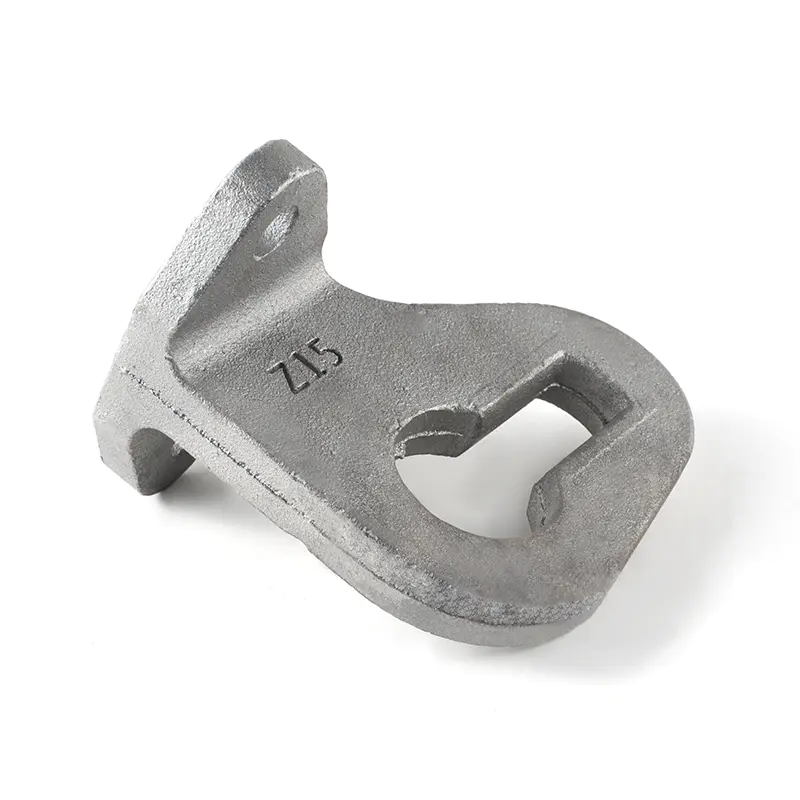
Not every casting supplier works across every casting process, and assuming they do is one of the more common sourcing errors. The casting method determines the dimensional tolerances achievable, the surface finish produced, the materials that can be used, and the economical production volume range. A supplier strong in sand casting for large industrial components is a different organization from a Precision Casting Company producing small, complex Lost Wax Casting Parts for aerospace or medical applications.
The main casting processes and where they fit:
- Die casting: High-pressure injection of molten metal into a steel tool. Suited to non-ferrous metals — Aluminium Casting Parts and zinc components are typical. Strong for high-volume production of parts with consistent geometry. Tooling investment is significant; unit cost drops meaningfully at volume. Common in automotive and consumer electronics.
- Investment casting (lost wax): Wax patterns coated in ceramic shell, melted out, and replaced with metal. Produces complex geometries with tight tolerances and good surface finish. Works across a wide range of alloys including stainless steel, Brass Casting Parts, and specialty alloys. Better suited to lower-to-medium volumes where complexity justifies the process cost.
- Sand casting: Lower tooling cost, wider material range, larger part sizes. Surface finish and dimensional tolerance are coarser than die casting or investment casting. Economical for low volumes and prototype work, or for large parts where other processes are impractical.
- Gravity and low-pressure die casting: Used for aluminium and some copper alloys where the high-velocity fill of high-pressure die casting would create porosity issues in structural parts.
A supplier's equipment list and production floor should be evaluated against the part drawings before any price discussion. Asking a Die Casting Parts Supplier to produce a part that genuinely requires the Precision Casting Process — or vice versa — leads to a product that either cannot be made correctly or costs far more than it should.
Factor 2: Material Knowledge and Alloy Range
Is the Supplier Genuinely Experienced with the Required Alloy?
Casting process and material are not independent choices. Certain alloys are well-suited to certain processes, and a supplier's depth of experience with specific alloys shapes their ability to manage the variables that affect part quality.
Key material considerations by casting category:
- Aluminium Casting Parts: Alloy selection affects strength, corrosion resistance, machinability, and pressure tightness. A supplier experienced in Casting Parts in Automobile applications will understand the difference between a structural aluminium casting and a housing part, and will specify alloys accordingly.
- Brass Casting Parts: Typically produced through sand casting or investment casting. Lead content, machinability, and corrosion behavior vary between brass alloys. Suppliers with brass experience understand how alloy composition affects porosity and surface finish.
- Precision Casting Process for stainless and specialty alloys: Shell thickness, burnout temperature, and pouring parameters all affect the outcome. Suppliers without consistent experience in the required alloy grade tend to show higher defect rates on first production runs.
- Casting Small Metal Parts: Thin walls, fine features, and small overall dimensions demand tighter process control than larger parts. A supplier's track record with similar part geometry — not just material — is the relevant reference.
During supplier evaluation, asking for previous production samples or material test certificates for the specific alloy relevant to the project provides more information than a general capability statement.
Factor 3: Tooling Quality and Mold Management
What Happens to the Tooling After It Is Made?
Tooling is typically a buyer-funded investment. How a casting supplier designs, manufactures, maintains, and stores tooling has a direct effect on part quality across the production lifetime of the tool — and on the buyer's ability to move production elsewhere if the relationship changes.
Points worth examining in tooling evaluation:
- In-house tooling versus outsourced: Suppliers who produce their own tooling have more direct control over tool quality and lead time. Suppliers who outsource tooling are dependent on their toolmaker's schedule and quality, which adds a variable that is difficult for the buyer to assess.
- Tool maintenance protocols: A die casting tool in production should be inspected, cleaned, and maintained on a defined schedule. Suppliers without documented maintenance procedures tend to run tools until they fail rather than preventing failures. Wear and damage in an unmaintained tool shows up as dimensional drift and surface defects in production parts.
- Tool storage and custody: When production is paused, how tooling is stored affects its condition when production resumes. Humidity, contamination, and mechanical damage during storage are real concerns for tools that sit idle between production runs.
- Tool ownership documentation: Buyers should receive clear written confirmation that tooling paid for by the buyer is owned by the buyer, and that the supplier will release the tool to the buyer or a designated alternative supplier if the relationship ends. Ambiguity on this point creates leverage problems later.
Factor 4: Quality Systems and Defect Control
How Does the Supplier Catch Problems Before They Ship?
A quality system on paper is not the same as a functioning quality system. The relevant question is not whether the supplier has ISO certification — though that provides a baseline — but what their actual defect detection and process control practices look like in production.
Quality indicators worth investigating:
- Incoming material inspection: Does the supplier verify chemical composition and mechanical properties of incoming raw material, or do they take the mill certificate at face value? For OEM Casting Parts going into regulated industries, traceable material verification matters.
- In-process controls: Statistical process control, dimensional checks at defined intervals, and process parameter monitoring during casting provide early warning of drift before it produces scrap or, worse, nonconforming parts that pass inspection.
- Final inspection methods: Visual inspection alone is insufficient for most casting applications. Non-destructive testing methods — X-ray for internal porosity, dye penetrant for surface cracks, CMM for dimensional verification — should be matched to the requirements of the part.
- Defect rate tracking and reporting: A supplier that tracks and reports defect rates openly, including trends and corrective actions, is demonstrating a different operational culture than one that shares defect data only when asked.
For Casting Parts in Automobile applications, where safety-critical parts require documented traceability, the quality system requirements are more stringent than for general industrial hardware. Evaluating a supplier against the actual requirements of the part's end application, rather than generic quality standards, gives a more accurate picture.
Factor 5: Production Capacity and Scalability
Can the Supplier Grow With the Program?
A supplier who can handle a sample order and initial production run may not have the capacity to maintain delivery schedules as volume increases. Evaluating capacity at the selection stage — before production commitment — avoids the disruption of finding this out during a ramp-up.
Capacity evaluation should cover:
- Current equipment utilization rate. A supplier running near capacity has less flexibility to absorb volume increases or to reprioritize when schedule pressure arrives.
- Machine count and size range relative to the program's part size and volume requirements.
- Workforce depth — particularly for skilled operators and quality staff who cannot be rapidly added in response to volume increases.
- Secondary operations capability: machining, surface treatment, assembly. If the supplier provides these in-house, the coordination is simpler. If they subcontract, the supply chain is longer and less transparent.
For Die Casting Parts Manufacturers specifically, the relationship between machine tonnage, shot size, and part geometry is direct. A supplier should be able to clearly explain which machines would run the program and why those machines are appropriate for the part.
Factor 6: Cost Structure Transparency
Is the Price Competitive, and Do You Understand What It Includes?
Price comparison between casting suppliers is straightforward in principle and misleading in practice if the comparison is not structured correctly. The variables that explain price differences between quotes for the same part are often not visible in the quoted unit price.
Elements that should be clarified before using price as a comparison basis:
- Tooling amortization: Some suppliers quote lower unit prices by amortizing tooling cost into unit price over the anticipated production volume. Others quote tooling separately. These structures are not directly comparable without understanding the assumptions.
- Material specification: A lower price may reflect a lower-grade alloy or a thinner specification that does not meet the drawing requirements. Confirming that quoted prices are based on the same material specification is essential.
- Secondary operations included versus excluded: Does the price include machining, surface treatment, or assembly? Quotes that exclude these operations look more competitive until the total landed cost is calculated.
- Minimum order quantities: Some suppliers, particularly China Casting Parts Manufacturers offering competitive unit pricing, require minimum order quantities that may not match the program's production schedule.
- Payment terms and currency exposure: For international sourcing, payment terms, currency of pricing, and any applicable import duties affect the total cost calculation.
A structured total cost of ownership comparison — including tooling, unit price, secondary operations, logistics, and the cost of quality failures — gives a more accurate basis for supplier selection than unit price alone.
Factor 7: Engineering Support and DFM Capability
Can the Supplier Help Improve the Design, or Only Execute It?
Design for manufacturability (DFM) feedback from a casting supplier is one of the undervalued elements of the supplier relationship, particularly in the early stages of a program when design changes are still feasible. A supplier with genuine engineering capability and casting process knowledge can identify features in a design that will cause tooling problems, surface defects, or dimensional instability — and suggest modifications that improve producibility without compromising function.
What useful engineering support from a casting supplier looks like:
- DFM review provided as part of the quoting process, not as a paid extra
- Specific feedback referencing draft angles, parting line placement, wall thickness uniformity, and gating location — not generic observations
- Prototyping capability, whether through rapid tooling, 3D-printed patterns for investment casting, or similar methods that allow design validation before production tooling is committed
- The ability to communicate engineering detail clearly in the buyer's language — a practical consideration for international sourcing that affects how efficiently design issues can be resolved
A Precision Casting Company with strong DFM capability can reduce first-article failures and tooling revision cycles, which translates directly into program cost and lead time savings.
Factor 8: Delivery Reliability and Supply Chain Transparency
| Evaluation Dimension | What to Ask the Supplier | What to Verify Independently |
|---|---|---|
| Lead time accuracy | Quoted lead time for production parts | Reference customer feedback on on-time delivery rates |
| Capacity buffer | How orders are scheduled during peak periods | Current machine utilization and backlog |
| Logistics support | Whether the supplier handles export documentation | Experience with shipping to the buyer's destination market |
| Subcontractor transparency | Which operations are subcontracted | Visit or audit subcontractor facilities if critical operations are outsourced |
| Communication responsiveness | Stated response time commitments | Test response speed during the quoting process — behavior during sales mirrors behavior during production |
| Contingency handling | Documented approach to production disruptions | Whether the supplier has redundant equipment for critical operations |
Delivery reliability is difficult to evaluate from a supplier's self-reported data. The most reliable assessment comes from speaking with existing customers who have experienced both normal operations and disruption scenarios with the supplier. For China Casting Parts Manufacturers, international logistics adds lead time variability that the supplier's factory lead time does not fully reflect.
Factor 9: Industry Experience and Reference Verification
Does the Supplier's Track Record Match the Program's Requirements?
General casting capability and specific industry experience are different things. A supplier experienced in decorative Brass Casting Parts may not have the process discipline, documentation requirements, or tolerance capability needed for Casting Parts in Automobile structural applications. A Die Casting Parts Supplier serving consumer electronics may not have the pressure-tightness controls needed for hydraulic components.
Evaluating relevant industry experience:
- Ask for references from customers in the same or closely related industries — not just any satisfied customer
- Request sample parts or production samples from comparable applications, with permission, to evaluate surface finish, dimensional accuracy, and general production quality
- Ask about the supplier's experience with the specific end-use requirements of the program: pressure testing, salt spray resistance, specific coating or surface treatment requirements, dimensional traceability
- For regulated industries — automotive, aerospace, medical — verify that the supplier has experience with the documentation and approval processes those industries require, not just that they claim capability
For OEM Casting Parts programs with multiple years of projected production, a supplier audit visit — evaluating production floor organization, equipment condition, quality laboratory capability, and workforce technical level — provides information that no written questionnaire or document review can substitute for.
Building a Supplier Comparison Framework That Works
Selecting a Casting Parts Manufacturer on the basis of a structured, multi-factor evaluation produces better outcomes than price-first selection because it surfaces the variables that determine total cost and supply chain risk over the program's full life — not just the cost of the first order. The nine factors covered here represent the dimensions where supplier performance actually diverges in practice: process capability, material knowledge, tooling management, quality systems, capacity, cost transparency, engineering support, delivery reliability, and relevant experience.
None of these factors operates in isolation. A supplier with strong process capability but poor tooling management will produce quality problems. A supplier with excellent engineering support but inadequate capacity will cause delivery failures at volume. The evaluation framework is most useful when it is applied holistically, weighting each factor against the specific requirements of the program — a high-volume Die Casting Parts Supplier for automotive applications needs to be evaluated differently from a Precision Casting Company producing low-volume Lost Wax Casting Parts for specialty industrial equipment.
If you are currently evaluating casting suppliers for an upcoming program and want to discuss process capability, material options, or quality system documentation, reaching out to an experienced Casting Parts Manufacturer with a structured capability overview is a practical starting point. Suppliers who engage in detail during the evaluation phase — providing DFM feedback, sharing quality data, and being transparent about capacity — typically behave the same way during production.
Related products
-

The HZ700-C Fully Automatic Core Shooter With Core Pulling is an advanced molding solution designed ...
See Details -

The Fully Automatic Environmentally Friendly Core Shooting Machine is a highly advanced, eco-conscio...
See Details -

The HZ700-X Fully Automatic Core Shooting Machine With Lower Mold Removal is designed to make core p...
See Details -

The HZ700-X Fully Automatic Core Shooting Machine With Lower Mold Removal is designed for molding ap...
See Details -

The HZ800-X Hydraulic Fully Automatic Core Shooting Machine is designed for efficient and accurate c...
See Details -

The environmentally friendly core shooting machine with lower mold removable is a high-performance s...
See Details -

The Lower Mold Removable Type Environmentally Friendly Core Shooting Machine with Door is an advance...
See Details -

The HZ800-X Hydraulic Environmentally Friendly Core Shooting Machine is an advanced automatic core p...
See Details

Welcome to our company to design according to your design and sample proofing.
Contact Infor
-
 Haixi Town, Pingyang County, Wenzhou City, Zhejiang Province, China
-
 +86-13868387823
-
 +86-577-65197155
-
 +86-577-65197166
-
 13868387823@139.com
huazhultd@outlook.com
Quick Links
Products
Copyright © Ruian Huazhu Machinery Co., Ltd. All Rights Reserved.

