 En
 русский
 Español
 عربى
 Deutsch

What Affects the Cost of Mechanical Parts Castings
Industry News-Two suppliers quote the same bracket, and their prices sit far apart. It happens often, and the casting step is rarely the whole explanation. Material, geometry, tooling, quantity, machining, and inspection each add something to the number.
For OEM and equipment buyers, understanding these pieces makes a budget easier to build and quotes easier to compare. A part that looks plain on the drawing may need extra tooling or a lot of machining. A part with a complicated shape may turn out to be straightforward if the design suits the process.
Price is shaped by material grade, part design, tooling, casting method, machining scope, inspection requirements, order quantity, and delivery terms. Before comparing totals, check that each quote covers the same scope.
Why Similar Cast Parts Get Different Quotes
Two parts can have the same size and the same job, and still cost different amounts to produce. The difference usually sits in details a finished part doesn't show.
A quotation can include raw material, pattern or mold preparation, casting, cleaning, machining, inspection, and packaging. Suppliers group and price these items in their own ways. One may quote the raw casting only. Another may include machining and a full inspection report. Put those two totals side by side and the comparison tells you very little.
A useful first step is to separate two figures: what it costs to make the casting, and what it costs to receive a part that is ready to assemble.
Material Selection
The metal affects raw material cost, melting requirements, casting behavior, machining effort, and how the part holds up in its working environment.
Matching the Material to the Application
Choose the material for what the part has to do, not for the price per kilogram. A few common examples:
- Gray iron is often used for machine bases and housings. It casts well and damps vibration.
- Ductile iron suits parts that need more toughness than gray iron offers.
- Aluminum alloys come up when weight matters.
- Steel castings fit applications with specific strength or impact requirements.
These are starting points, not rules. The right grade depends on the loads, the operating environment, and the standards the part must meet. When you request a quote, state the grade you need or ask the foundry to suggest alternatives. Swapping materials without reviewing the design can change how the part casts, how it machines, and how it performs.
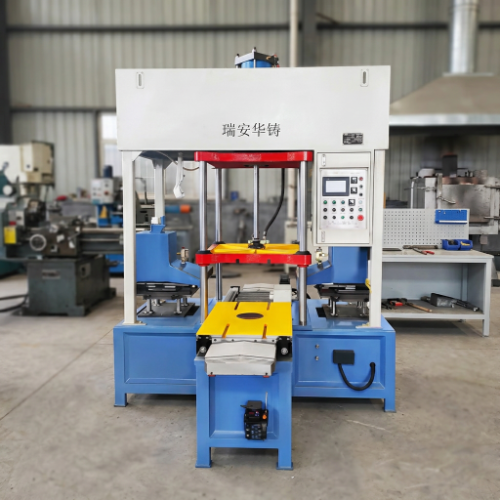
Why Material Cost Goes Beyond the Metal Price
Some alloys call for tighter temperature control or special handling in the furnace. Yield matters as well. A share of the molten metal ends up in the gating and feeding system instead of the finished part, and machining allowance adds more stock on top. What you pay for is the metal that went into the mold, not only the metal that ends up in your hands.
Part Design
Small drawing details can move the price. Geometry affects tooling, mold preparation, casting quality, and later machining, and a part that is easy to assemble can still be difficult to cast.
Complex Geometry
Deep cavities, thin ribs, internal passages, and undercuts add difficulty. Depending on the process, they may need cores, extra tooling elements, or a more involved mold layout. Draft angles and parting lines matter too, because the mold has to open and the part has to release cleanly.
That doesn't mean complex features should be removed. Some are there for good reasons. The practical move is to ask which features the function requires, and whether a different shape could do the same job with less trouble in the foundry.
Wall Thickness
Metal fills the mold and solidifies differently in thick and thin areas. Large jumps in thickness cool unevenly and raise the risk of shrinkage defects or distortion. Very thin walls can be hard to fill, depending on the alloy and process. Thickening the whole part isn't a cure either, since it adds weight and cost and can create new defects.
A foundry engineer can review the drawing and point out the transitions that need attention before tooling begins. Changes at that stage are usually simple. After production has started, they get expensive.
Tooling and Mold Preparation
Tooling is a major cost in custom casting. The amount depends on part geometry, size, casting method, mold layout, and the production plan.
Sand casting, investment casting, and die casting each use different tooling, so their relative cost depends on the job. A process with high upfront tooling cost can pay off on a long production program, while a simpler tooling route may suit smaller quantities or a design still being refined.
How Volume Changes Tooling Cost per Part
Tooling is typically paid before the main run. Spread over more accepted parts, its share of each unit price drops. Volume does not settle the matter by itself, though. Cycle time, yield, quality requirements, and how steady the orders are also affect the final unit cost.
Tell the supplier about expected demand instead of quoting only the first order. If repeat orders are likely, the foundry can plan tooling and scheduling around them. It also pays to agree early on who owns the tooling, who maintains it, and what happens if the design changes or production moves to another plant.
Choosing a Casting Process
The process influences tooling, workflow, achievable geometry, surface finish, dimensional capability, and how much finishing the part needs afterward.
| Casting Method | Potential Advantages | Cost Considerations |
|---|---|---|
| Sand casting | Handles a wide range of sizes and shapes | Mold preparation, finishing, material yield, machining needs |
| Investment casting | Produces intricate shapes and fine detail | Pattern preparation, shell production, process control, finishing |
| Die casting | Suits certain repeat-production parts and complex shapes | Die investment, equipment, volume, material compatibility |
Picking a process by name tends to produce a poor fit. Send the drawing, material requirements, expected quantity, and application, and let the foundry assess the options. Sometimes the design needs small adjustments to suit the chosen process, and those conversations are easiest before tooling is final.
Machining and Finishing
Castings often leave the mold unfinished. Depending on the function, they may need cleaning, gate removal, drilling, milling, turning, or dimensional correction.
Why Some Castings Need CNC Machining
Casting forms the main shape, but some features need tighter control than the process delivers economically. Mounting holes, bearing seats, threads, sealing surfaces, and mating faces are typical examples. Machining adds labor, machine time, tool wear, setup, and inspection. A housing machined on many faces costs more to finish than one where machining is limited to the functional areas.
Mark critical dimensions and functional surfaces clearly on the drawing. The foundry can then decide which areas get machined and which stay as-cast.
Surface and Heat Treatment
Cleaning, coating, heat treatment, and other specified operations add cost when the application calls for them. A part used in a corrosive setting may need a protective coating, while a part inside a sealed gearbox may not. State the required surface condition and any standards that apply. If the requirements are still open, ask for separate prices for each option rather than bundling extra steps into the first quote.
Quality Inspection
Inspection confirms that a part meets the agreed drawing, material, and performance requirements. The right level depends on what a failure would cost and which characteristics need to be verified.
Routine checks cover visual examination and dimensional measurement. Depending on the part, the requirements may extend to material verification, mechanical testing, or nondestructive testing. Each added step takes equipment, trained staff, documentation, and time, so it belongs in the quote from the start rather than appearing after production begins.
The aim is a plan that matches the real risk, not the longest list of tests. Procurement teams can settle a few questions early:
- Which dimensions are critical to assembly or function?
- Are material certificates or test reports required?
- Does any specific area need nondestructive testing?
- What inspection records should ship with the order?
- How will nonconforming parts be handled?
Clear answers reduce disputes at delivery.
Order Quantity and Production Planning
Quantity decides how tooling, setup, labor, and other fixed costs are spread across an order. It also affects purchasing, scheduling, and material use.
A small order can need almost the same preparation as a large one, which pushes the per-part cost up. Larger orders may let the foundry schedule more efficiently, depending on the process and how steady demand is. Long runs also bring storage and inventory questions on the buyer's side.
Look past the unit price. Consider annual demand, delivery schedule, storage space, and the likelihood of repeat orders. For a new product, it can help to separate sample approval from the production order, so you can review the part before committing to volume.
Packaging, Delivery, and Communication
The manufacturing price is one part of what it costs to receive usable components.
Packaging depends on size, shape, surface condition, and how easily the part is damaged or corroded. Machined surfaces may need separators or protective wrapping. Shipping depends on destination, shipment size, transport method, and delivery terms, and customs, insurance, and handling charges can shift the landed cost.
Communication has a cost too. Incomplete drawings, unclear revision control, and late specification changes lead to rework, tooling adjustments, and delays. Before production starts, confirm these points:
- Final drawing revision and technical requirements
- Material grade and approved alternatives
- Casting and machining scope
- Inspection documents and acceptance criteria
- Packaging method and delivery arrangements
- How design changes will be approved
Managing Cost Without Compromising Function
Start from what the part has to do. Cutting a needed feature or thinning a critical section to save material tends to create bigger problems later. A better route is to review the design and production plan with the foundry before approving tooling. These steps help:
- Clarify functional requirements. Note the loads, environment, assembly interfaces, and service conditions.
- Review the drawing before tooling. Discuss complex geometry, thickness transitions, machining allowances, and features that complicate the mold.
- Compare like with like. Check that each supplier has included the same material, tooling, machining, inspection, finishing, and packaging.
- Pick a suitable process. Weigh geometry, material, quantity, and finish together.
- Specify inspection needs. Name the checks and records the application requires.
- Plan for repeat orders. Share forecasts so the foundry can plan tooling use, scheduling, and material purchasing.
- Control revisions. Confirm the approved drawing and agree on a change process once planning starts.
These steps won't remove cost variation, but they make quotes easier to read and cut down on changes during production.
What to Send for an Accurate Quote
A detailed request gives the foundry a clear basis for pricing and makes supplier offers easier to compare. Prepare the following where available:
| Information | Why It Matters |
|---|---|
| Part drawing or 3D model | Shows geometry and manufacturing features |
| Material requirements | Supports material suitability and sourcing |
| Expected order quantity | Informs tooling and production planning |
| Critical dimensions and tolerances | Highlights areas needing close attention |
| Machining requirements | Defines the work needed after casting |
| Surface treatment requirements | Clarifies finishing operations |
| Inspection and documentation needs | Sets acceptance criteria |
| Delivery destination and schedule | Supports logistics and production planning |
If some details aren't final, say which are confirmed and which are still open. The foundry can often flag questions to resolve before the project moves forward.
The cost of Mechanical Parts Castings comes from how material, design, tooling, casting method, machining, inspection, quantity, and delivery work together. No one item sets the price for every component.
For buyers, the practical task is to understand what a quote includes and whether the proposed route fits the part's use. A low first price may cover a narrower scope than another offer, especially when tooling, machining, testing, or finishing are handled differently.
Bringing the manufacturer in early helps surface production issues, clarify technical requirements, and test cost adjustments before tooling begins. Prepare your drawings, material requirements, estimated quantity, and inspection expectations as a starting point. Related product information is available at China HZJX.
Related products
-

The HZ700-C Fully Automatic Core Shooter With Core Pulling is an advanced molding solution designed ...
See Details -

The Fully Automatic Environmentally Friendly Core Shooting Machine is a highly advanced, eco-conscio...
See Details -

The HZ700-X Fully Automatic Core Shooting Machine With Lower Mold Removal is designed to make core p...
See Details -

The HZ700-X Fully Automatic Core Shooting Machine With Lower Mold Removal is designed for molding ap...
See Details -

The HZ800-X Hydraulic Fully Automatic Core Shooting Machine is designed for efficient and accurate c...
See Details -

The environmentally friendly core shooting machine with lower mold removable is a high-performance s...
See Details -

The Lower Mold Removable Type Environmentally Friendly Core Shooting Machine with Door is an advance...
See Details -

The HZ800-X Hydraulic Environmentally Friendly Core Shooting Machine is an advanced automatic core p...
See Details

Welcome to our company to design according to your design and sample proofing.
Contact Infor
-
 Haixi Town, Pingyang County, Wenzhou City, Zhejiang Province, China
-
 +86-13868387823
-
 +86-577-65197155
-
 +86-577-65197166
-
 13868387823@139.com
huazhultd@outlook.com
Quick Links
Products
Copyright © Ruian Huazhu Machinery Co., Ltd. All Rights Reserved.

