 En
En
 русский
 Español
 عربى
عربى Deutsch
How to Choose Automobile Castings for Auto Structures
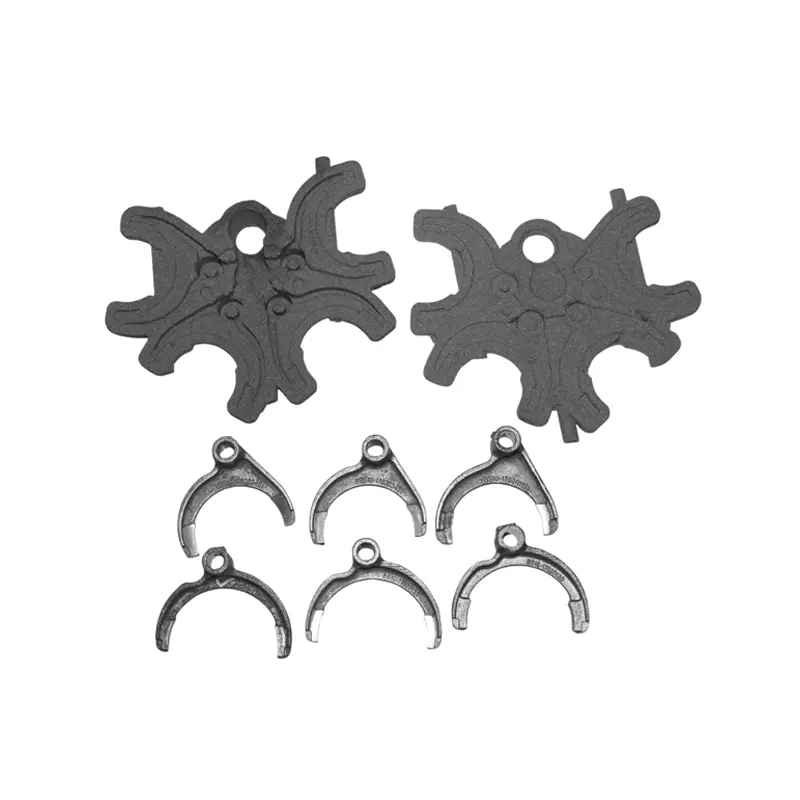
Industry News-You are responsible for a suspension component or chassis bracket that has to survive tens of millions of load cycles, meet crash performance standards, pass fatigue validation, and still come in under a weight target that keeps getting tighter every program cycle. The material choice is not abstract — it has real consequences for tooling cost, production lead time, supplier qualification, and ultimately whether the part performs in the field. Automobile Castings sit at the center of that decision for a large portion of structural automotive applications, and the selection logic is more nuanced than any simplified material comparison chart suggests. What makes this decision genuinely difficult is that structural parts do not share a single performance profile. A steering knuckle, a subframe bracket, and an electric vehicle battery housing all carry the label "structural," but they face different load paths, different corrosion environments, different weight sensitivities, and different manufacturing volume realities. Understanding how material type and casting process interact with those variables — and where the trade-offs actually land — is what separates a well-specified part from one that creates problems downstream.
What Defines a Structural Requirement in Automotive Context?
The term "structural" in automotive engineering refers to components that carry load between major vehicle systems — body, suspension, powertrain, and occupant restraint systems among them. These parts are subject to fatigue loading, impact events, and sustained stress conditions that cosmetic or trim parts never encounter.
Structural classification matters for casting selection because it sets the performance floor:
- Fatigue life: Structural parts cycle under road load for the vehicle's service life. The casting material must resist crack initiation and propagation under repeated stress, not just handle peak loads.
- Impact resistance: Crash-relevant structural components must absorb or redirect energy without catastrophic fragmentation. Ductility — the ability to deform before fracturing — is as important as yield strength.
- Dimensional stability: Structural castings often serve as locating features for other components. Dimensional consistency across a production run affects assembly quality and NVH performance.
- Surface integrity: Porosity, shrinkage, and cold shuts in the casting affect fatigue performance in ways that are not always visible in incoming inspection. Process control and non-destructive evaluation matter.
Each of these requirements influences which casting material and process combination is viable for a given application.
How Do the Core Casting Materials Compare for Structural Use?
Material selection is where most structural casting decisions start, and the choice typically narrows to a handful of alloy families with established track records in automotive applications.
Gray Cast Iron
Gray iron is the historical baseline for many structural castings — brake rotors, engine blocks, transmission housings. Its graphite flake microstructure provides good damping and compressive strength, and it machines predictably. The limitation for structural applications is brittleness: gray iron fractures rather than deforming under impact, which makes it poorly suited to parts that must survive crash events or high-impact loading conditions.
For non-crash-relevant structural parts — engine mounts in certain configurations, some housing components — gray iron remains viable where its damping properties and machinability justify the choice. For suspension and chassis components subject to dynamic loading and potential impact, it is generally not the appropriate selection.
Ductile Iron
Ductile iron — also referred to as nodular or spheroidal graphite iron — modifies the microstructure by introducing spherical graphite nodules rather than flakes. The result is a dramatic improvement in ductility and impact resistance compared to gray iron while retaining much of the stiffness advantage that ferrous materials carry over aluminum.
For structural automotive castings where strength, fatigue resistance, and impact performance are all required, ductile iron covers a wide range of applications effectively:
- Steering knuckles and wheel carriers
- Control arm brackets and subframe components
- Differential and axle housings
- Heavy-duty suspension links
The weight disadvantage relative to aluminum is real, but for parts where the cross-section is constrained by other packaging factors, the higher strength-per-volume of ductile iron can result in a thinner-walled part that partially offsets the density difference.
Aluminum Alloys
Aluminum casting alloys have become the default choice for structural automotive parts where weight reduction is a primary program objective — which describes an increasing proportion of new vehicle programs, particularly in electrified powertrains.
The density advantage of aluminum over iron is substantial, and it translates directly into unsprung mass reduction for suspension components, which has measurable effects on both ride dynamics and the effective range of electric vehicles. Structural aluminum castings are now standard in:
- Front and rear subframes
- Suspension knuckles and control arms in performance and EV applications
- Battery enclosures and structural trays
- Shock towers and strut housings
The trade-off is that aluminum alloys generally carry lower fatigue strength than ductile iron at equivalent section thickness, and they require careful alloy selection and heat treatment to achieve the mechanical properties structural applications demand. Die casting, permanent mold, and sand casting all produce different property profiles in aluminum, and the process choice affects the final part performance as much as the alloy selection.
Magnesium Alloys
Magnesium is lighter than aluminum and has been applied to interior structural components — instrument panel carriers, seat frames, transfer case housings — where weight reduction is valuable and the corrosion environment is less aggressive than the underbody. For exterior structural castings exposed to road spray and temperature cycling, magnesium's corrosion susceptibility and limited fatigue performance restrict its application without significant protective treatment.
Which Casting Process Fits Which Structural Application?
Material selection and process selection are not independent decisions. The same alloy cast by different processes produces parts with different microstructures, different porosity levels, and different achievable geometries — all of which affect structural performance.
| Casting Process | Suited Material | Volume Suitability | Geometric Complexity | Structural Notes |
|---|---|---|---|---|
| Sand casting | Iron alloys, aluminum | Low to medium | High complexity possible | Good for large, lower-volume structural parts |
| Die casting | Aluminum, magnesium | High volume | High complexity, thin walls | Fast cycle time; porosity control critical for structural use |
| Permanent mold | Aluminum | Medium volume | Moderate complexity | Better mechanical properties than die casting |
| Lost foam / EPC | Iron, aluminum | Medium volume | Very high complexity | Good for complex structural geometries |
| Investment casting | Steel, aluminum | Low volume | Very high precision | High cost; used for safety-critical precision parts |
Sand Casting for Structural Iron Parts
Sand casting remains widely used for ductile iron structural components, particularly at lower production volumes or for larger parts where die tooling costs would not be recovered. The process accommodates complex internal geometries through coring, and wall thickness variation is manageable with good foundry process control. Structural sand castings benefit from controlled solidification practice and targeted testing to verify mechanical properties in the actual casting rather than from separately cast test bars.
Die Casting for High-Volume Aluminum Structural Parts
High-pressure die casting dominates high-volume aluminum structural production because of its cycle time efficiency and dimensional consistency. The challenge is porosity: entrapped gas in the die casting can reduce fatigue performance and makes heat treatment — which would otherwise improve mechanical properties — difficult without blistering.
Vacuum-assisted die casting and squeeze casting reduce porosity levels enough to make heat treatment viable, enabling structural die castings that meet fatigue requirements previously achievable only through more expensive processes. For EV structural applications where production volumes are high and weight targets are aggressive, these process variants are increasingly the answer.
How Does the Shift Toward Electric Vehicles Change Casting Specification?
The transition toward battery electric vehicles has reshaped what structural castings need to do, not just in terms of which parts exist but in terms of the integrated functions those parts must perform.
Battery housings and structural trays are among the higher-growth casting applications in EV programs. These components must:
- Carry mechanical load as part of the vehicle structure
- Protect battery cells from intrusion in a side or bottom impact
- Manage thermal performance through integrated cooling channels
- Seal against water and contaminant ingress
The combination of structural, protective, and thermal management functions in a single casting pushes toward complex aluminum die castings — sometimes very large ones — designed to consolidate multiple previously separate components. Large structural die castings, sometimes called mega castings in industry discussion, reduce part count and assembly labor while introducing their own challenges around die scale, process control, and repair versus replace decisions after damage.
For suspension and chassis components in EVs, the additional unsprung mass sensitivity created by heavy battery packs increases the value of aluminum structural castings compared to iron alternatives. The engineering trade-off between material cost, tooling investment, and lifecycle weight savings shifts in aluminum's favor for a larger share of applications in electrified programs than in equivalent internal combustion engine vehicles.
What Should Engineers Evaluate Before Finalizing a Casting Selection?
The selection decision is a convergence of material properties, process capabilities, program volume, cost targets, and supplier capability. Running through a structured evaluation before finalizing a specification reduces the risk of discovering incompatibilities after tooling investment.
Key evaluation points:
- Load case analysis: What are the fatigue cycles, peak loads, and crash energy levels the part must survive? This establishes the material property floor.
- Weight target sensitivity: How much weight reduction is the casting expected to contribute, and what is the cost tolerance for achieving it?
- Production volume: Volume determines which processes are economically viable. A part running at low annual volume may not justify die casting tooling cost even if the process is technically ideal.
- Geometry complexity: Internal passages, variable wall thickness, and integrated features influence which processes can produce the geometry without unacceptable cost or yield loss.
- Quality assurance requirements: What inspection methods are specified — X-ray, CT scanning, pressure testing — and does the manufacturing process produce castings that can pass those inspections consistently?
- Surface finish and machining requirements: Casting allowances and surface as-cast condition affect downstream machining cost and dimensional capability.
Supplier certification requirements: Automotive structural castings often require IATF 16949 quality system certification, PPAP submission, and material traceability. Confirm that the foundry can meet these requirements before advancing the relationship.
How Does Supplier Capability Affect Structural Casting Quality?
A technically correct specification produces structural castings of the intended quality only when the foundry supplying them has the process capability, quality systems, and metallurgical knowledge to execute it consistently across a production run.
Factors that differentiate capable structural casting suppliers:
- Process monitoring and control: Real-time monitoring of pour temperature, fill time, die temperature (for die casting), and chemical composition produces consistent results. Suppliers who rely on periodic sampling rather than continuous monitoring introduce avoidable variation.
- Metallurgical testing capability: In-house spectrographic analysis, mechanical property testing, and microstructure evaluation allow the foundry to verify that the material they are pouring meets specification before parts leave the facility.
- Non-destructive evaluation capability: X-ray or CT scanning capability, either in-house or through a qualified service provider, allows detection of internal defects before parts reach assembly.
- Design-for-manufacture input: A foundry with engineering capability can identify features in the casting design that will cause fill problems, shrinkage, or distortion and propose modifications before tooling is cut. This input reduces development time and improves the likelihood of a robust process from launch.
Partnering With a Supplier Who Understands Structural Requirements
Automobile Castings for structural applications are not a commodity purchase. The combination of material selection, process control, quality verification, and application knowledge required to consistently produce parts that meet structural performance requirements is the distinguishing capability between a foundry that can quote the job and one that can actually deliver it reliably at production volume. Ruian Huazhu Machinery Co., Ltd. produces automotive castings for structural and functional applications, with manufacturing capability across iron and aluminum alloy families and process experience in applications where mechanical performance and quality consistency are defining requirements. If you are working through a casting specification for a structural application — evaluating material options, comparing process routes, or assessing supplier capability for a new program — reaching out directly allows a technical conversation grounded in the actual requirements of the part rather than a generic capability overview. Structural casting decisions made with the right manufacturing partner involved early in the process tend to produce better outcomes than those where the foundry is engaged only after the design is locked.
Related products
-

The HZ700-C Fully Automatic Core Shooter With Core Pulling is an advanced molding solution designed ...
See Details -

The Fully Automatic Environmentally Friendly Core Shooting Machine is a highly advanced, eco-conscio...
See Details -

The HZ700-X Fully Automatic Core Shooting Machine With Lower Mold Removal is designed to make core p...
See Details -

The HZ700-X Fully Automatic Core Shooting Machine With Lower Mold Removal is designed for molding ap...
See Details -

The HZ800-X Hydraulic Fully Automatic Core Shooting Machine is designed for efficient and accurate c...
See Details -

The environmentally friendly core shooting machine with lower mold removable is a high-performance s...
See Details -

The Lower Mold Removable Type Environmentally Friendly Core Shooting Machine with Door is an advance...
See Details -

The HZ800-X Hydraulic Environmentally Friendly Core Shooting Machine is an advanced automatic core p...
See Details

Welcome to our company to design according to your design and sample proofing.
Contact Infor
-
 Haixi Town, Pingyang County, Wenzhou City, Zhejiang Province, China
-
 +86-13868387823
-
 +86-577-65197155
-
 +86-577-65197166
-
 13868387823@139.com
huazhultd@outlook.com
Quick Links
Products
Copyright © Ruian Huazhu Machinery Co., Ltd. All Rights Reserved.

