 En
En
 русский
 Español
 عربى
عربى Deutsch
Aluminum Alloy Castings vs. Copper Alloy Castings Guide
Industry News-Choosing between aluminum alloy and copper alloy castings is rarely a straightforward decision, and it becomes even more layered in automotive applications where weight, durability, heat management, and production cost all compete for priority. Engineers and procurement teams working on Automobile Castings projects often know which material they lean toward - but the deeper question is whether that lean is justified by the actual demands of the part in question. Both materials have earned their place in automotive manufacturing. The real decision is about matching the right material to the specific load, temperature, friction, and weight conditions a component will face in service.
What Separates These Two Material Families?
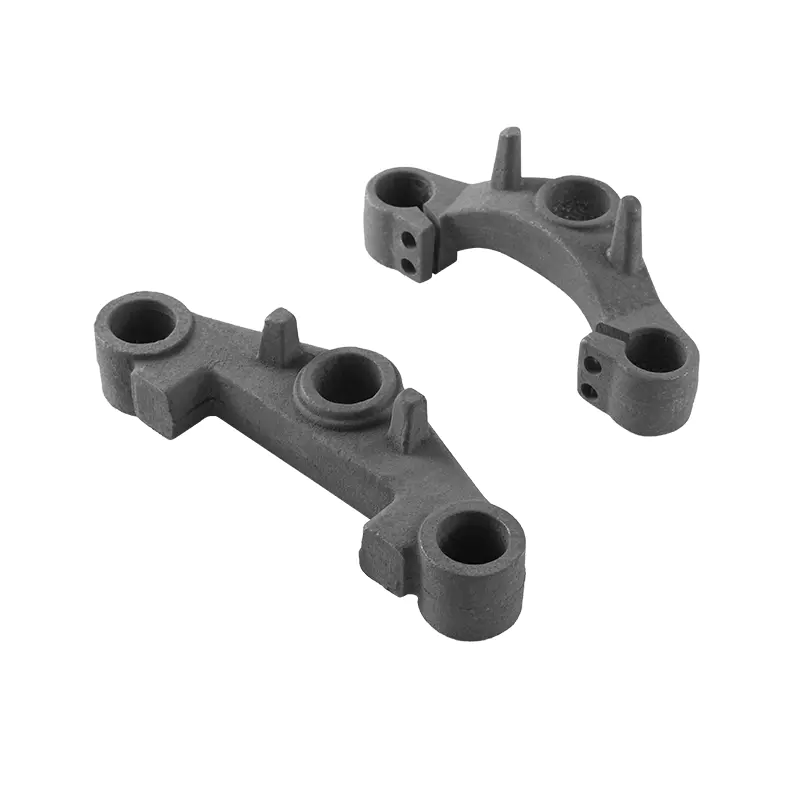
Aluminum Alloys: Lightweight Structural Performance
Aluminum alloy castings are made by introducing elements such as silicon, magnesium, copper, and manganese into the base aluminum matrix. Each addition shifts the alloy's mechanical profile - silicon improves fluidity and wear resistance, magnesium raises strength without significantly adding mass, and copper additions improve hardness and elevated-temperature performance.
What defines the aluminum alloy family for automotive use:
- Density roughly one-third that of copper, making it the default material where weight reduction is a design objective
- A naturally forming oxide layer that provides passive corrosion resistance in standard ambient and light-exposure environments
- Good thermal conductivity that supports heat dissipation in engine-adjacent components
- Compatibility with high-pressure die casting, permanent mold, and sand casting processes, enabling a wide range of part geometries and production volumes
Copper Alloys: Functional Durability Under Stress
Copper alloy castings cover a broader family than is sometimes recognized. Bronze, brass, and aluminum bronze alloys each have distinct property profiles. What they share is a base material - copper - with a density considerably higher than aluminum but with strengths in wear resistance, electrical conductivity, and performance under friction loads that aluminum cannot match.
Key properties that characterize copper alloy castings:
- Strong natural resistance to wear and friction, making copper alloys the default choice for bushings, bearings, and sliding contact surfaces
- Electrical conductivity far higher than aluminum alloys, which matters in components involved in current transfer
- Thermal conductivity comparable to or higher than a broad range of aluminum alloys, supporting performance in high-heat applications such as heat exchangers
- Greater resistance to deformation under sustained compressive loads, which extends service life in high-load contact applications
How Do the Mechanical Properties Compare?
Strength-to-Weight Ratio: Where Aluminum Has a Clear Advantage
When structural load is carried per unit of mass - the strength-to-weight calculation - aluminum alloy castings outperform copper alloys significantly. A well-selected aluminum casting alloy can carry substantial structural load while contributing a fraction of the mass that an equivalent copper alloy component would add.
This advantage has practical implications across the vehicle:
- Engine block and cylinder head castings in aluminum reduce overall powertrain mass, which supports fuel efficiency targets
- Suspension arms and knuckles in aluminum alloy reduce unsprung weight, improving handling dynamics
- Transmission housings and gearbox cases in aluminum reduce drivetrain mass without sacrificing the structural rigidity the application requires
For components where structural loading is the primary design criterion and the operating environment does not impose exceptional wear or friction demands, aluminum alloy is often the more rational engineering choice.
Wear Resistance and Fatigue Under Friction: The Copper Alloy Strength
In applications where two surfaces contact each other under load, wear resistance governs the service life of the component. Aluminum alloys can be formulated with silicon additions to improve surface hardness, and surface treatments can further extend wear resistance - but copper alloy castings, particularly bronze formulations, carry inherent wear resistance that requires no additional treatment and holds up over long service intervals.
Applications where copper alloys retain a clear advantage:
- Bearing shells and bushings in engine and drivetrain applications where surfaces rotate under load
- Valve guides and seat inserts in cylinder heads where repeated impact and friction at elevated temperatures accelerate wear
- Worm gear wheels and drive components where sliding contact between dissimilar metals requires a material that wears predictably and slowly
- Hydraulic valve bodies where tight dimensional tolerances must be held under cyclic pressure loading over a long service life
The reason copper alloys perform well in these scenarios comes down to their microstructure. The grain structure of bronze and brass alloys accommodates small amounts of surface deformation without the progressive material removal that would compromise a softer aluminum surface.
Thermal Performance: Is One Material Clearly Better for Heat Management?
Thermal Conductivity Compared
Both aluminum and copper alloys conduct heat effectively compared to ferrous materials, but the two families behave differently under sustained thermal loads.
Aluminum alloys conduct heat efficiently across the temperature ranges typical of passenger vehicle operation. This makes aluminum alloy castings a practical choice for components that need to transfer heat away from a source - engine cylinder heads, heat shields, and intake manifolds all benefit from aluminum's thermal conductivity combined with its low mass.
Copper alloys conduct heat at a higher rate than a wide range of aluminum alloys, which gives them an advantage in applications where rapid heat transfer per unit of contact area is the design objective. Heat exchangers, coolant valve housings, and thermal interface components sometimes favor copper alloy castings for exactly this reason.
Elevated Temperature Behavior
At the temperature ranges encountered in automotive engine applications, aluminum alloys begin to soften sooner than copper alloys. This means that for components operating continuously at elevated temperatures - turbocharger housings, exhaust-adjacent brackets, engine mounts in high-output applications - copper alloys may maintain dimensional stability and mechanical integrity that aluminum alloys cannot sustain without heat treatment or alloy modification.
Corrosion Resistance Across Automotive Environments
Aluminum's Passive Protection
The oxide layer that forms spontaneously on aluminum surfaces provides effective passive protection in many automotive environments - general outdoor exposure, salt spray in road applications, and contact with coolant fluids. This natural protection reduces the need for surface coatings on many aluminum casting applications and simplifies the manufacturing process.
Where aluminum's passive corrosion resistance has limits:
- In highly alkaline environments, the oxide layer breaks down and the base metal becomes susceptible
- In applications with galvanic coupling to dissimilar metals in an electrolytic environment, aluminum can corrode preferentially
- In environments with concentrated acids, aluminum alloys need additional protection
Copper Alloy Corrosion Behavior
Copper alloys, and bronze alloys in particular, have a long history of use in marine and harsh industrial environments because of their resistance to corrosion across a wide range of chemical conditions. In automotive applications involving contact with fuels, lubricants, hydraulic fluids, and cooling media, bronze and brass castings resist chemical attack reliably without surface treatment.
For components such as fuel system fittings, coolant pump housings, and valve bodies in hydraulic systems, copper alloy castings often outlast aluminum alternatives in corrosive media - justifying their higher material cost over the life of the component.
Production Considerations: What Does Each Material Require?
Casting Process Compatibility
Both material families are compatible with a range of casting processes, but they perform differently within each process type. Understanding this matters for any Automobile Castings program where production volume, tooling investment, and part complexity interact.
Aluminum alloys have a lower melting point, which reduces energy consumption during casting and reduces thermal wear on tooling. The alloy's fluidity at casting temperature allows it to fill intricate mold geometries with less risk of cold shuts or incomplete fill, supporting the production of complex, thin-walled components at high volumes through die casting.
Copper alloys require higher casting temperatures, which increases energy input and accelerates tooling wear relative to aluminum. However, copper alloys have strong castability in sand casting and permanent mold processes, and for the bearing and bushing applications they are designed for, the part geometries are typically simpler than structural aluminum components - which offsets some of the process complexity.
Cost Implications of Material Choice
Copper alloy castings carry higher raw material costs than aluminum alloys, reflecting the base metal price differential. For components where the application genuinely demands the wear resistance, electrical conductivity, or corrosion performance of a copper alloy, that cost premium is justified over the component's service life. For components where aluminum alloys deliver equivalent performance, the material cost advantage of aluminum compounds across production volume.
Production volume also affects the calculation. At high volumes, aluminum die casting achieves a cost efficiency that copper alloy casting processes cannot fully match. At lower volumes or for complex geometries where sand casting is appropriate, the cost gap between the two materials narrows.
A Practical Comparison for Automotive Decision-Making
The properties that matter vary by component type. Here is how the two material families compare across the dimensions that drive automotive casting specifications:
| Property | Aluminum Alloy Castings | Copper Alloy Castings |
|---|---|---|
| Density | Low — significant weight advantage | High — heavier for equivalent volume |
| Strength-to-weight ratio | High — structural efficiency | Lower — but raw strength can be higher |
| Wear resistance | Moderate — can be improved with Si content | High — inherent in alloy microstructure |
| Thermal conductivity | Good — effective for heat transfer | High — faster heat transfer per unit area |
| Electrical conductivity | Low relative to copper | High — preferred for current-carrying applications |
| Corrosion resistance (general) | Good — passive oxide protection | Good — naturally resistant in many media |
| Corrosion resistance (harsh media) | Requires treatment in aggressive environments | Strong — reliable in fuels, coolants, hydraulic fluid |
| Raw material cost | Lower | Higher |
| High-volume production economy | High — die casting suited to large runs | Moderate — sand and permanent mold standard |
| Typical automotive applications | Engine blocks, transmission cases, structural parts | Bearings, bushings, valve bodies, gear components |
Where Each Material Fits in Automotive Manufacturing
When Aluminum Alloy Castings Are the Right Choice
The case for aluminum alloy castings in Automobile Castings programs is clearest when:
- Weight reduction is a primary engineering objective - powertrain, chassis, and body structure components
- The component requires mass production at volume, where die casting economics favor aluminum
- The operating environment falls within the corrosion resistance range of aluminum without additional treatment
- Thermal management through heat dissipation is a design goal, and the density penalty of copper alloy is not acceptable
When Copper Alloy Castings Are the Right Choice
The case for copper alloy castings is clearest when:
- The component involves sustained surface contact under load - bearings, bushings, sliding components
- Electrical conductivity is a design requirement that aluminum cannot satisfy
- The operating environment exposes the component to aggressive fluids or chemical media where copper alloy's resistance outperforms aluminum's passive layer
- Dimensional stability under sustained compressive or cyclic load is required beyond what aluminum formulations can provide
Selecting the Right Casting Partner for Your Application
Material selection in Automobile Castings is a decision that belongs upstream in the design process, not after a prototype has already been tooled. The interaction between alloy choice, casting process, component geometry, and heat treatment significantly affects how a finished casting performs in service - and those interactions are understood at the supplier level, not just on a datasheet.
Ruian Huazhu Machinery Co., Ltd. produces aluminum alloy and copper alloy castings for automotive applications, supporting component specifications across engine, drivetrain, structural, and functional categories. If you are working through a material selection decision, evaluating casting options for a new component program, or looking for a manufacturing partner with experience across both material families, reaching out with your component requirements and operating conditions is the practical way to move the evaluation forward. The right material decision is one that reflects the actual demands of the application - and getting it right at the specification stage prevents the downstream cost of changing course after production tooling has been committed.
Related products
-

The HZ700-C Fully Automatic Core Shooter With Core Pulling is an advanced molding solution designed ...
See Details -

The Fully Automatic Environmentally Friendly Core Shooting Machine is a highly advanced, eco-conscio...
See Details -

The HZ700-X Fully Automatic Core Shooting Machine With Lower Mold Removal is designed to make core p...
See Details -

The HZ700-X Fully Automatic Core Shooting Machine With Lower Mold Removal is designed for molding ap...
See Details -

The HZ800-X Hydraulic Fully Automatic Core Shooting Machine is designed for efficient and accurate c...
See Details -

The environmentally friendly core shooting machine with lower mold removable is a high-performance s...
See Details -

The Lower Mold Removable Type Environmentally Friendly Core Shooting Machine with Door is an advance...
See Details -

The HZ800-X Hydraulic Environmentally Friendly Core Shooting Machine is an advanced automatic core p...
See Details

Welcome to our company to design according to your design and sample proofing.
Contact Infor
-
 Haixi Town, Pingyang County, Wenzhou City, Zhejiang Province, China
-
 +86-13868387823
-
 +86-577-65197155
-
 +86-577-65197166
-
 13868387823@139.com
huazhultd@outlook.com
Quick Links
Products
Copyright © Ruian Huazhu Machinery Co., Ltd. All Rights Reserved.

